ARMA
Inducted into the World Martial Arts Union
The ARMA is now the official representative for the
martial arts of Renaissance Europe to the World Martial Arts Union (WoMAU).
Under the official patronage of UNESCO, the WoMAU
is a Non-Governmental Organization for sustaining Intangible Cultural
Heritage.
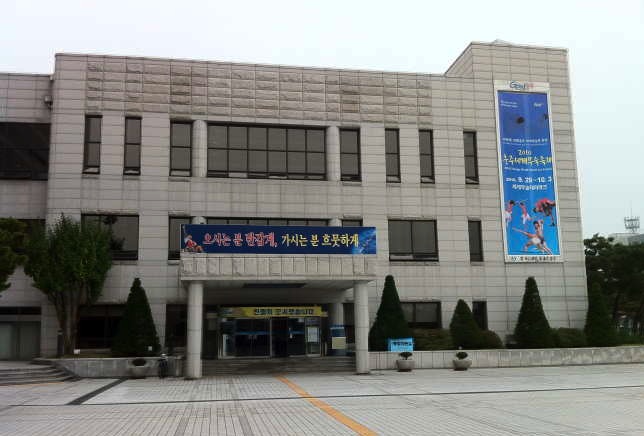 In
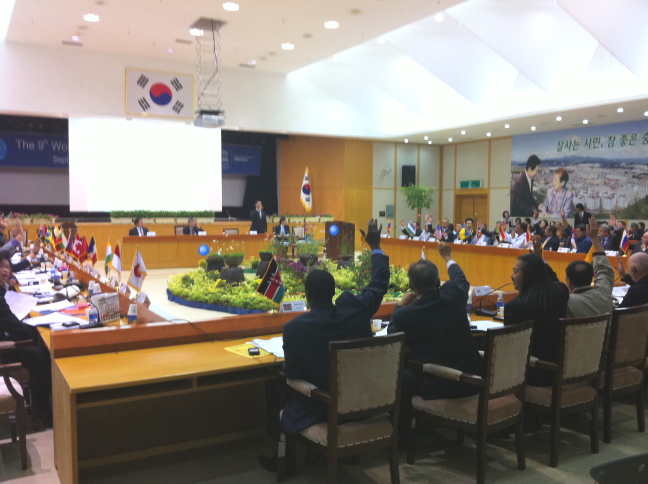
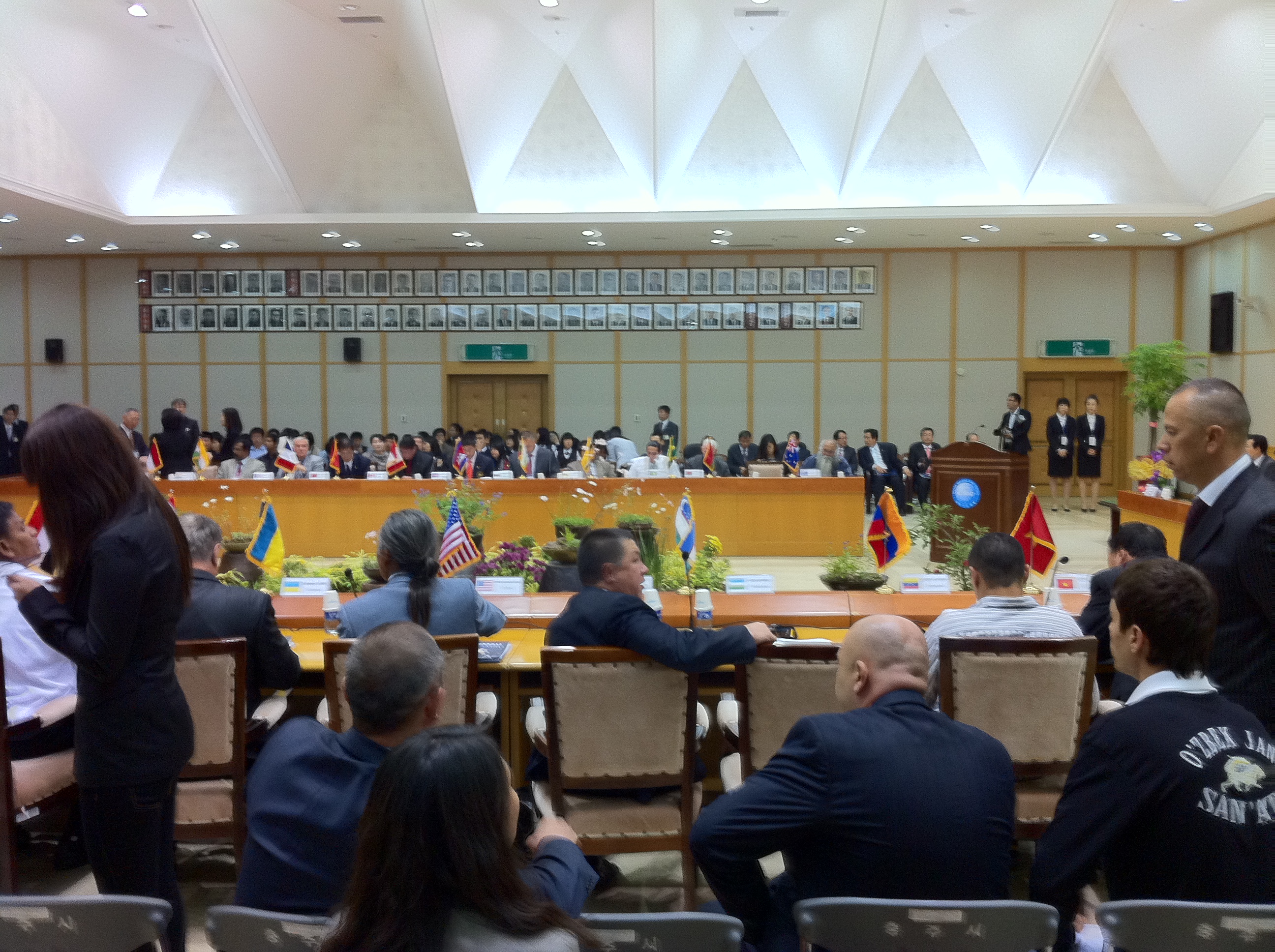
September 2010, at the 9th general meeting in Chungju, South Korea, ARMA
Director John Clements had the privilege of presiding for Renaissance
close-combat methods when he was officially seated as a delegate to the
World Martial Arts Union's committee. In
September 2010, at the 9th general meeting in Chungju, South Korea, ARMA
Director John Clements had the privilege of presiding for Renaissance
close-combat methods when he was officially seated as a delegate to the
World Martial Arts Union's committee.
The ARMA was selected as a WoMAU delegate for its recognized
expertise and long-time international educational efforts in the authentic
practice of these transnational pan-European historical teachings. Representing
the entire historical fencing community, the ARMA now advises the Union
on reviving and promoting authentic Western European fighting styles from
the 14th to 17th centuries.
 As
Clements remarks, "This is an unprecedented and prestigious opportunity
to advance the legitimacy and credibility of the modern study of these
forgotten fighting disciplines." Clements added, "Regardless of what source
work you study, what weapon skills you pursue, how you do it, who you're
affiliated with or what country you're in, the benefit of this to our
subject is in everyone's interest." As
Clements remarks, "This is an unprecedented and prestigious opportunity
to advance the legitimacy and credibility of the modern study of these
forgotten fighting disciplines." Clements added, "Regardless of what source
work you study, what weapon skills you pursue, how you do it, who you're
affiliated with or what country you're in, the benefit of this to our
subject is in everyone's interest."
This development (in the works for more than two years)
came about directly because of the notice given to ARMA's dedicated efforts
to revive these extinct teachings as a living tradition that acknowledges
a cultural framework and character values.As an international educational
fighting guild, our goal has long been recovering and preserving martial
heritage as a restored tradition. This combined with our demonstrated
physical expertise made the ARMA an ideal candidate.
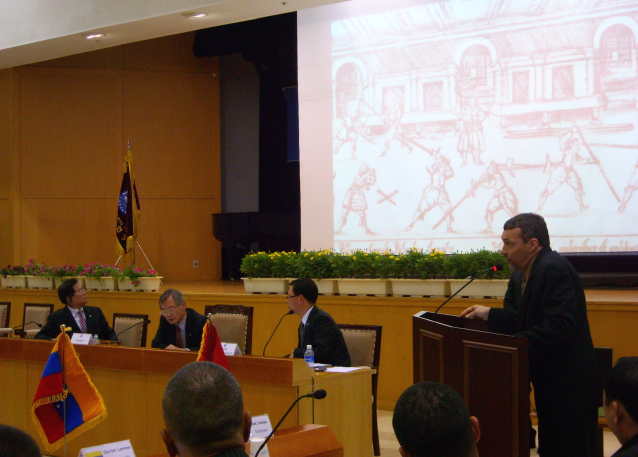 Notified of ARMA's candidacy and invited just two weeks before the general meeting, Clements
notes: "In my presentation to the chairman and secretary general of the
Union I was able to establish how there can be no question our surviving
fight lore is factually among the best documented material on martial
arts teachings in all history. There's also no doubt that it can now be
legitimately reconstructed and restored in a manner that is both historically
accurate and martially sound." Notified of ARMA's candidacy and invited just two weeks before the general meeting, Clements
notes: "In my presentation to the chairman and secretary general of the
Union I was able to establish how there can be no question our surviving
fight lore is factually among the best documented material on martial
arts teachings in all history. There's also no doubt that it can now be
legitimately reconstructed and restored in a manner that is both historically
accurate and martially sound."
Since the WoMAU is an NGO under the auspices of
UNESCO, as an officially recognized expert delegate member, Clements by
extension now represents the practice of authentic Medieval and
Renaissance fighting disciplines not just for them but also for the
United Nations. The ARMA is now accredited by the highest possible
authority conceivable for this subject: a world body that specifically
recognizes efforts at the conservation and revival of martial
traditions by expert practitioners. This may come to have a profound
positive impact on our subject. However, nothing will change or be
affected regarding the ARMA's structure, function, mission, or
curricula. It should be understood that recognition and assistance from
the Union does not grant it any power or influence over any aspect of
our subject.
 While
the Union makes the exception that it is a body for "martial arts" rather
than "traditional martial arts," preserving and encouraging perishable
knowledge is its main goal. The inclusion of the martial arts of Renaissance
Europe will be valuable in helping them better determine vernacular from
historical fighting disciplines in all the world's combatives. While
the Union makes the exception that it is a body for "martial arts" rather
than "traditional martial arts," preserving and encouraging perishable
knowledge is its main goal. The inclusion of the martial arts of Renaissance
Europe will be valuable in helping them better determine vernacular from
historical fighting disciplines in all the world's combatives.
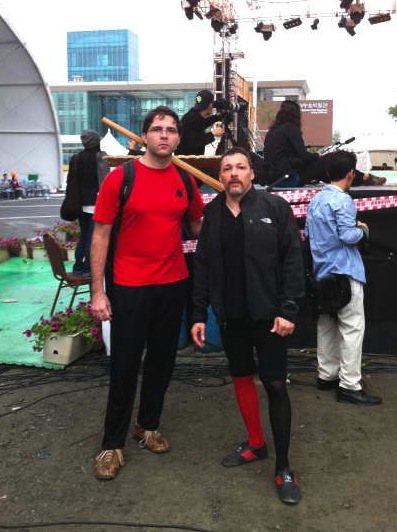 Says
Clements: "My role in the WoMAU will be to represent the worldwide community
of students and enthusiasts studying this craft. As an advocate promoting
this subject, I will be acting to advise on modern efforts to revive the
source teachings and consult on criteria for authentic practice. It is
a responsibility I take seriously and will use to foster the integrity
and standing of this craft. Chief among my goals will be preventing contamination
of study by modern activities or its deterioration into mere sport." Says
Clements: "My role in the WoMAU will be to represent the worldwide community
of students and enthusiasts studying this craft. As an advocate promoting
this subject, I will be acting to advise on modern efforts to revive the
source teachings and consult on criteria for authentic practice. It is
a responsibility I take seriously and will use to foster the integrity
and standing of this craft. Chief among my goals will be preventing contamination
of study by modern activities or its deterioration into mere sport."
In welcoming our member delegation, the WoMAU was able
to avoid contending with the divergent numbers of emerging groups and
organizations all posturing to represent a different portion of the modern
practice of Medieval and Renaissance fencing. In other words, having to
consider every federation, club, society, or school in the world claiming
some unique ethnographic authority or special proprietary ownership over
a part of these historical teachings. This way the Union is able to steer
clear of the problem of selecting individual representatives from every
modern nation or state for every possible fighting tradition or martial
culture associated with the martial arts of Renaissance Europe, conveniently
abbreviated as "MARE."
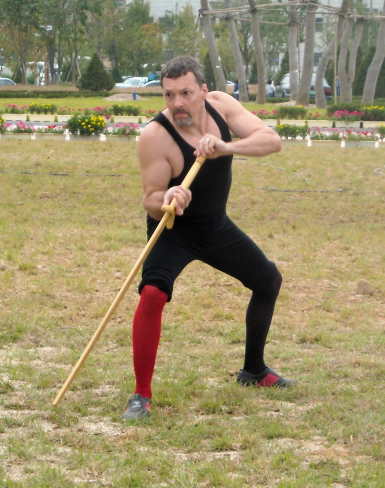 As
Clements points out: "I come to this as a professional martial arts instructor,
full-time researcher, and educator who has international experience in
not only an open public curriculum, but also a private fight curriculum,
as well as my own personal curriculum. Because of such experience I understand
the challenges and difficulties people face at every level, from beginner
to novice to teacher." As
Clements points out: "I come to this as a professional martial arts instructor,
full-time researcher, and educator who has international experience in
not only an open public curriculum, but also a private fight curriculum,
as well as my own personal curriculum. Because of such experience I understand
the challenges and difficulties people face at every level, from beginner
to novice to teacher."
At present, the WoMAU (made up of numerous world-class
martial artists and veteran instructors) is undergoing some changes. Yet
it had been entirely unaware of the existence of any historical European
martial arts. Originally it admitted members only from individual nation
states. (In effect, presuming that each country / ethnic culture simply
had "one traditional art" with various "styles" that embodied the entirety
of their martial history.) As would be expected, this inconsistency has
proven... less workable. The Union has plenty of time ahead of it to improve
its standing and establish its influence -- especially in regard to how
it determines what unfamiliar styles are genuine arts.
Clements comments: "There are some elements that are not
very satisfying. But we know we are the best possible source to help on
this as the Union grows. I believe the addition of a recovered European
martial art further credits the Union as being the highest authoritative
body possible on martial arts. Whatever method you follow, provided you
are trying to reestablish the historical craft and not trying to reformulate
it into a new modern thing, all practitioners today are in the same boat.
We all study the same core sources and are all essentially self-taught,
with no one coming from any surviving school or 'living lineage.' Because
our martial art is so well documented in terms of authentic source material,
as a community we are in a unique position to be able to say we know a
great deal about researching, recovering, and reviving extinct fighting
methods that in some cases were fully integrated self defense systems.
In my view it makes us ideal for advising on claims to 'secret' knowledge
in extinct styles or sudden 'discoveries' of long-forgotten 'traditions'
and new hybrid arts invented from East-West amalgams. This is something
the WoMAU has been in need of -- if not entirely welcomed by every current
delegate member."
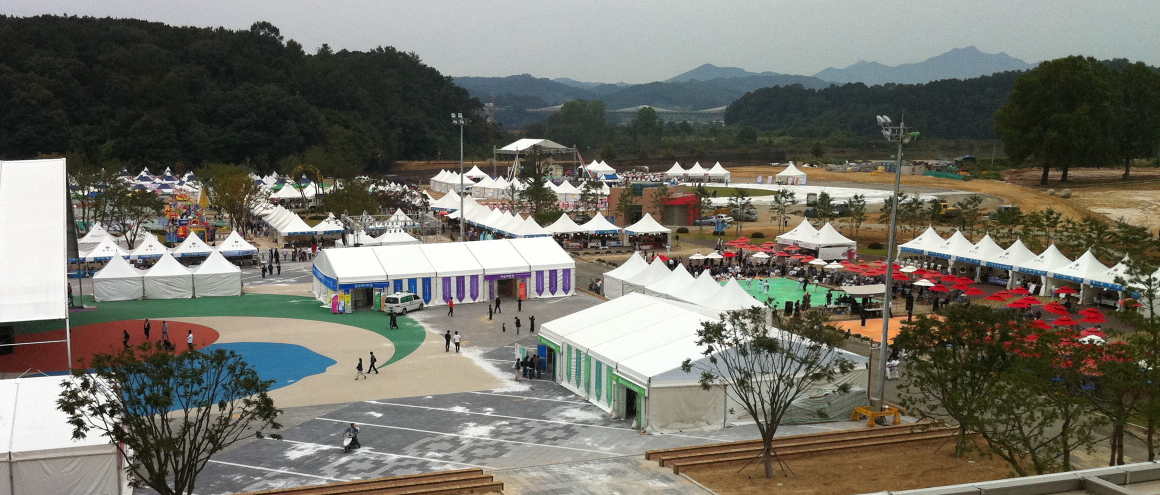
 While
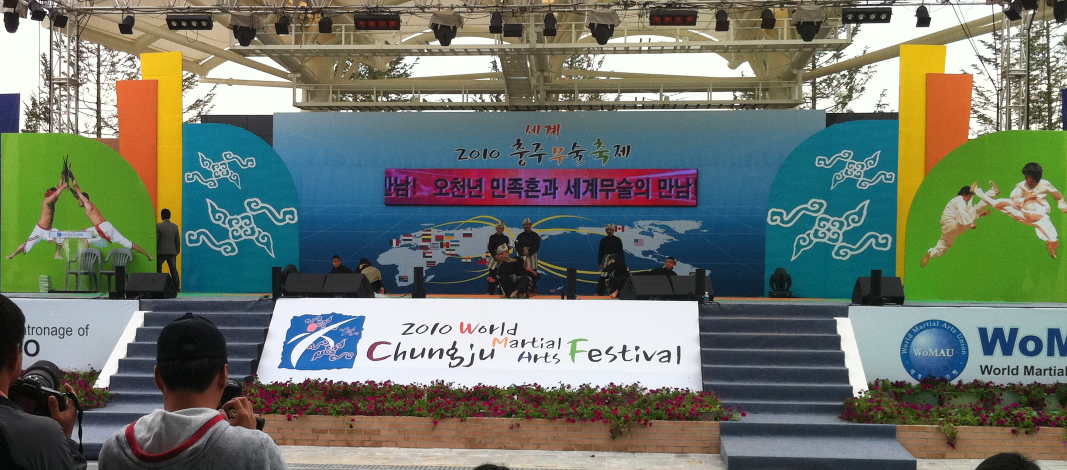
in attendance at this meeting of the Union, John also visited the 2010
World Martial Arts Festival and toured the new World Martial Arts Museum
in Chungju. The festival features select WoMAU representatives of traditional
indigenous martial art styles as well as reconstituted or vernacular fighting
arts from dozens of U.N. member nations. A full ARMA delegation will perform
a demonstration on MARE at the 2011 World Martial Arts Festival. The museum,
which is still new, is set to soon expand its exhibits as well as include
material on Medieval and Renaissance combatives. It still has a great
deal of room for improvement ahead of it, particularly in regard to its
current examples of supposedly historical European artifacts. While
in attendance at this meeting of the Union, John also visited the 2010
World Martial Arts Festival and toured the new World Martial Arts Museum
in Chungju. The festival features select WoMAU representatives of traditional
indigenous martial art styles as well as reconstituted or vernacular fighting
arts from dozens of U.N. member nations. A full ARMA delegation will perform
a demonstration on MARE at the 2011 World Martial Arts Festival. The museum,
which is still new, is set to soon expand its exhibits as well as include
material on Medieval and Renaissance combatives. It still has a great
deal of room for improvement ahead of it, particularly in regard to its
current examples of supposedly historical European artifacts.
Time will tell what benefits recognition by the WoMAU
will bring to our subject, but there is no denying that the historical
fighting styles of the Renaissance now stand on equal footing with all the
world's traditional combat arts. Whether you call it the Art of Fighting,
the Art of Defence, the Noble Science, or the discipline of arms, this
achievement brings an overdue recognition to the modern practice of Renaissance
martial arts. It has been a long time coming and every serious student
of this craft should take pride in this achievement.
Direct any questions to John Clements via the ARMA here.
|
