|
||||||||
|
|
||||||||
|
||||||||||||||||||||
| Thimm's fellow British fencer and sword scholar,
Captain Alfred Hutton, was one of several who pursued his own
study of the styles chronicled in Renaissance fighting manuals.
In the preface to his 1892, Old Swordplay, Captain
Hutton declared, "There are those who affect to ridicule the
study of obsolete weapons, alleging that it is of no practical
use; everything, however, is useful to the Art of Fence which
tends to create an interest in it, and certain it is that such
contests as 'Rapier and Dagger', 'Two hand Sword',
or 'Broadsword and Handbuckler,' are a very great embellishment
to the somewhat monotonous proceedings of the ordinary 'assault
of arms'" (i.e., the classical fencing sport).
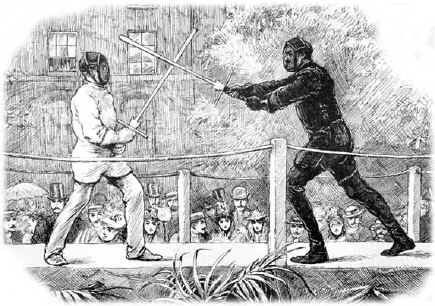
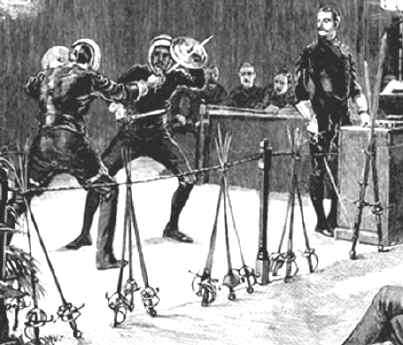
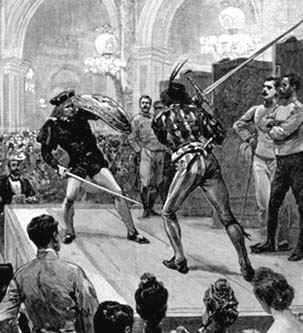
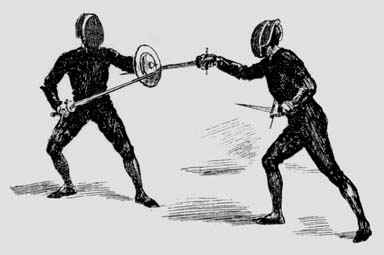
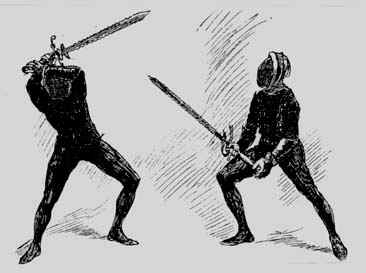
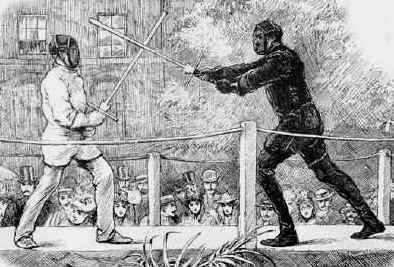
Hutton also tells us that, "the fence of the case of rapiers, as of all the other Elizabethan weapons, is much in vogue at the present time at the Baritsu club, now the headquarters of ancient swordplay in this country." The Baritsu club ironically was itself teaching an eclectic English form of self-defense created by combining boxing, wrestling, and Savate with elements from Japanese jujitsu and had among its members Arthur Conan Doyle. The group of Hutton and his associates was quite active in studying and practicing historical fencing. Sir Frederick Pollock had written numerous articles on the subject and in 1890 given a lecture at Oxford on "The Forms and History of the Sword". In an 1891 exhibition of historical fencing at the Lyceum theater in London, Alfred Hutton and Egerton Castle along with Sir Frederick even included a demonstration of the so-called "mysterious circle" in their presentation. Thimm described the event as "an actual, living, panoramic display of the evolution of the fencing art." Illustrations of the event from a London newspaper of the time depicted Hutton and Castle fencing with the two-handed sword, sword and buckler, rapier and cloak, rapier and dagger, single-rapier, and small sword. Another such display was given in 1895 by Hutton's own fencing students from the London Rifle Brigade. |
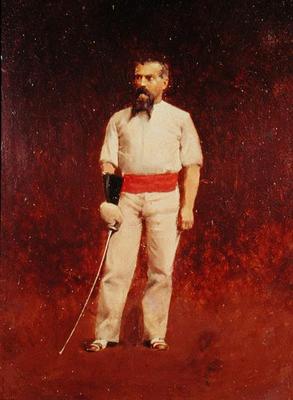
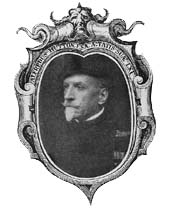
Hutton in his Prime |
|
|
In 1892, the Oxford University Fencing Club presented a demonstration and lecture by club president Sir Frederick, "explaining the transition of swordsmanship from the old English Sword and Buckler fight to Rapier and Dagger" accompanied by "prominent fencing historians" Egerton Castle and Captain Alfred Hutton re-creating an "Elizabethan prize at verie many weapons". In 1893, Hutton gave a presentation of "Swordsmanship, Medieval and Modern" at the Manchester Gentlemen's Concert Hall. In 1897, Hutton wrote an article for The Indian Fencing Review on "Sword Fighting and Sword Play", directed toward the infantry officer and which among other things observed differences between military fencing needs and classroom teaching by invoking material from Silver's newly discovered Brief Instructions. Foreshadowing much of today's historical fencing presentations on the teachings of the old masters, in 1897 Hutton (at the age of 57) also gave a related display of George Silver's "grips" at the Whitton Park Club. While elaborate "assaults of arms", or displays of civilian and military fencing, were not uncommon in Victorian Britain, the events of Hutton and Castle were something else entirely.
| Thimm
also recounted a "magnificent display of historical fencing
which took place in Brussels in the spring of 1894".
He tells us the charity event, called Le Cycle de l'Epée,
"derived its chief element of success from the presence and
active help of Captain A. Hutton and several English officers
of Volunteers who went over to lend the weight of their special
and remarkable dexterity". That
same year, Hutton recounted a historical fencing display (perhaps
the very same one) held in Belgium by the fencers of the London
Rifle Brigade.
Hutton was very active in his presentations. He wrote an article in 1867 called, The Cavalry Swordsman, one in 1887 called, Swordsmanship, for the use of Soldiers, and delivered a lecture on "Our Swordsmanship" at the Royal United Service Institution, Whitehall, in 1893. In 1895 he gave another, "Notes on Ancient Fence" at the Albany Club. Hutton described how when the participants first "began to interest themselves in this ancient work they were mere boys in their teens, but they attained to such proficiency in the handling of two-hand swords, rapiers, and the like, that they were able to visit various schools and to enthuse those by exhibitions of fighting with all kinds of weapons". This is much the same approach today. Neither then nor now could they rely on traditional fencing schools for instruction. |
|
To put the research and efforts of these men in context, it is important to establish upfront that the old methods of Medieval and Renaissance fencing skills did not survive past the 1600s. The changes in warfare and in society over the centuries precluded these skills from being used or passed on. The advent of the French system of small-sword duelling in the 17th century also eclipsed older obsolete methods of armed combat. While rival schools of French and Italian fencing styles were dominant in the 19th century, and some elements of older Spanish traditions were still active, nothing survived like the methods from the 1400s and 1500s. The newer style of small-sword play, suited specifically for single combat duels of single sword, adapted rapier fencing but did not much carry it on. By the late 19th century, the older classical styles were rapidly fading and the sporting form of fencing which had developed was slowly but surely dominating. The rediscovery of essentially lost methods of swordplay was therefore a new field of inquiry. Speaking in 1891 on the "story of swordsmanship", Captain Hutton's colleague and fellow student of the sword, Egerton Castle explained how his recent displays of "historical" fencing methods were "an attempt to promote a revival of an art which may be said to be almost dead."
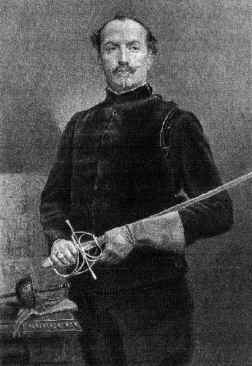 Hutton
from Old Swordplay, posing with a rapier Hutton
from Old Swordplay, posing with a rapier |
Born in 1839, Alfred Hutton served with the army cavalry in India and learned several Oriental languages. He was a member of the King's Dragoon Guards and founded a School of Arms in all three of his regiments wherein he gave "many exhibitions of ancient and modern fencing". Hutton had written numerous articles on historical fencing in the 1890s. He was President of the Amateur Fencing Association in England and considered "quite an authority on the history of the sword." His first work, Old Swordplay– The Systems of Fence in Vogue During the XVIth, XVIIth, and XVIIIth Centuries, with lessons arranged from the works of ancient masters, Hutton presented material for practicing the use of the sabre and stick as well as historical lessons based primarily on a reading of Achille Marozzo's 1536, Opera Nova. Much like any martial arts writer, Hutton attempted to provide simple lessons for students without their having to go through the labor of searching, as he put it, "old books in various languages some of which are very difficult to procure and much more so to understand." In 1889, he produced, Cold Steele: A Practical Treatise on the Sabre, covering sabre, baton, epee, and dagger, based on 18th century English backsword combined with modern Italian duelling sabre. In addition to a method of military saber use, the book offered a variety of exercise material from 16th century texts, including Marozzo and also included self-defense material on the modern constable's truncheon and the short sword-bayonet. In 1901, Hutton published his delightful, The Sword and the Centuries - Or Old Sword Days and Old Sword Ways, a brief survey of Medieval and Renaissance fencing attempting to cover five centuries of sword duels and the changes in fencing that took place. Hutton was not only an accomplished fencer and military man with a realistic appreciation for swordplay, he was a keen student of history with a sincere interest in reviving Renaissance martial arts. His colleague Colonel Matthey said in England Hutton's name had long been a "household word" among "lovers of the art of fence". He died in 1910 at the age of 71. (The Sword and the Centuries is still available in modern reprint and Old Swordplay is to be republished in 2002.) His collection of fencing books is now in the Victorian and Albert Museum in London while some of his antique swords, including blunt practice rapiers, are now in the Royal Armoury in Leeds. |
 In
many ways, the assumptions and views of a gentleman of his time accordingly
colored Hutton's views and understanding of earlier fencing as well
as those of his colleagues. But they were also combined with a military
man's practical skill at arms. The same
can be said for Castle who in 1885 with his famous and influential,
Schools and Masters of Fence: From the Middle Ages to
the Eighteenth Century, did so much to codify forgotten fencing
culture. This colossal tome became the
standard reference work on the subject throughout the 20th century.
Castle dedicated his work in part to Hutton and also the Baron de
Cosson "in recollection of many pleasant hours spent…among old
books and old arms". First
published in 1885, then revised in a 1892 second edition, a third
updated edition was not published until 1969 –and then a mere
1000 copies. More than thirty years later, a modern reprint
is finally underway.
In
many ways, the assumptions and views of a gentleman of his time accordingly
colored Hutton's views and understanding of earlier fencing as well
as those of his colleagues. But they were also combined with a military
man's practical skill at arms. The same
can be said for Castle who in 1885 with his famous and influential,
Schools and Masters of Fence: From the Middle Ages to
the Eighteenth Century, did so much to codify forgotten fencing
culture. This colossal tome became the
standard reference work on the subject throughout the 20th century.
Castle dedicated his work in part to Hutton and also the Baron de
Cosson "in recollection of many pleasant hours spent…among old
books and old arms". First
published in 1885, then revised in a 1892 second edition, a third
updated edition was not published until 1969 –and then a mere
1000 copies. More than thirty years later, a modern reprint
is finally underway.
 Castle's
Schools and Masters of Fence
presented an overview of fencing styles and methods discerned from
readings of major 16th and 17th century manuals. Though somewhat uncommon
to locate a copy today, Castle's influential work is invaluable for
students of historical fencing. Until the recent publication of Dr.
Sydney Anglo's new voluminous and matchless labor (Renaissance
Martial Arts), Castle's remained unsurpassed for more than 100
years. Castle's book brought considerable
awareness of Renaissance fencing to new generations of fencers who
typically were, frankly, ignorant of their own heritage.
That his work presented substantial material that the major
European fencing schools in his day were seemingly no longer aware
(or at least appreciative) of is justified by the appreciation shown
to him at the time. His was elected a
member of the French Academie of Arms in Paris and given the honorary
title of master di scherma "in recognition of the service rendered
to artistic swordsmanship."
Castle's
Schools and Masters of Fence
presented an overview of fencing styles and methods discerned from
readings of major 16th and 17th century manuals. Though somewhat uncommon
to locate a copy today, Castle's influential work is invaluable for
students of historical fencing. Until the recent publication of Dr.
Sydney Anglo's new voluminous and matchless labor (Renaissance
Martial Arts), Castle's remained unsurpassed for more than 100
years. Castle's book brought considerable
awareness of Renaissance fencing to new generations of fencers who
typically were, frankly, ignorant of their own heritage.
That his work presented substantial material that the major
European fencing schools in his day were seemingly no longer aware
(or at least appreciative) of is justified by the appreciation shown
to him at the time. His was elected a
member of the French Academie of Arms in Paris and given the honorary
title of master di scherma "in recognition of the service rendered
to artistic swordsmanship."
 Egerton
Castle's early youth was spent on the Continent studying in Paris.
He came to England at the age of sixteen to study at Glasgow University
followed by time spent at King's College (London), Trinity (Cambridge),
the Inner Temple, Sandhurst, and Chatham. "He became, in turns, student
of History, Law, and Natural Science; and lastly soldier." Interestingly,
he was a free-lance journalist, eventually joining the staff of the
old Saturday Review. He was vice-president of the Navy
League, of which he was one of the earliest members. He was even a
successful novelist, writing several romance fictions with his wife.
A contemporary account of Castle described him thusly: "Mr. Egerton
Castle hides a kindly nature beneath his bellicose expression. His
figure is one emphatic protest against the sombre utilitarianism of
twentieth century clothes. A neat rapier would be something; but even
that comfort is denied to him in modern walking dress. His method
of fence is as graceful and romantic as the construction of his novels.
He says that his pen is mightier than his sword; as a matter of perfection,
there is little to choose between them. In Mr. Egerton Castle, indeed,
the play of the sword and the work of the pen have a definite relation."
Egerton
Castle's early youth was spent on the Continent studying in Paris.
He came to England at the age of sixteen to study at Glasgow University
followed by time spent at King's College (London), Trinity (Cambridge),
the Inner Temple, Sandhurst, and Chatham. "He became, in turns, student
of History, Law, and Natural Science; and lastly soldier." Interestingly,
he was a free-lance journalist, eventually joining the staff of the
old Saturday Review. He was vice-president of the Navy
League, of which he was one of the earliest members. He was even a
successful novelist, writing several romance fictions with his wife.
A contemporary account of Castle described him thusly: "Mr. Egerton
Castle hides a kindly nature beneath his bellicose expression. His
figure is one emphatic protest against the sombre utilitarianism of
twentieth century clothes. A neat rapier would be something; but even
that comfort is denied to him in modern walking dress. His method
of fence is as graceful and romantic as the construction of his novels.
He says that his pen is mightier than his sword; as a matter of perfection,
there is little to choose between them. In Mr. Egerton Castle, indeed,
the play of the sword and the work of the pen have a definite relation."
 |
|
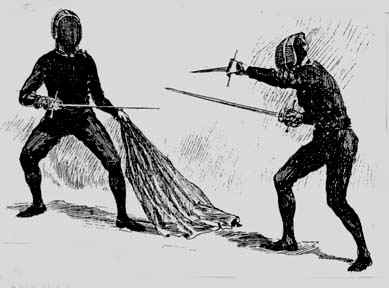
Hutton
and Castle at rapiers (from |
Monumental as it was in exploring the "all but forgotten origins of modern fencing", Schooles and Masters was still flawed in many areas. Castle was among the first to document the perceived idea of Western fencing being a "process of progressive transformation" or linear "evolution". This pervasive view of "old swordplay" survived and influenced nearly all masters, historians and writers of fencing from the early 20th century on through to the present. Much of this can be traced back to Castle's work.
Though he endeavored in his work to understand the reality of earlier swordplay, as a fencing scholar more than a martial artist, Castle lacked an appropriate conception of the effectiveness of Medieval weapons or the nature of fighting either in armor or in group combat. Therefore, in hindsight, some constructive criticism of Castle is justified after all these years. Castle's biggest weakness was that he was unaware of any fencing texts earlier than the 1530s. He missed the entire range of 15th century texts and masters. He revealed a frequent Victorian bias in favor of the traditional fencing conceptions of his day (i.e., foil/epee/saber) with statements such as: "There are many reasons to believe that the art of fencing made very little progress in the right direction until about the middle of the sixteenth century." This "progress", of course being defined by the standards of his time as that which lead directly to "proper" foyning fence of single duel. He also made statements about the "clumsy old fashioned sword" and the "relatively barbarous sword and buckler". Ironically, Castle himself observed, "Writers on the Art of Fence have hardly ever found it worth while inquiring on the origins of the methods they expounded."
|
|
|
|
Writing in 1911 Castle still mistakenly believed "the first cultivation of refined cunning in fence dates from that period, which corresponds chronologically with the general disuse of armour." Castle even became aware of the work by the great 15th century Italian martial arts master, Fiore dei Liberi, and (though he offered no source) stated he "was known to be flourishing as a master of fence as early as 1383." Castle continued to maintain that it was in "the latter half of the 16th century, that swordsmanship pure and simple may be said to find its origin; for then a great change is perceptible in the nature and tendency of fence books: they dissociate themselves from indecorous wrestling tricks, and approximate more and more to the consideration of what we understand by swordsmanship." His last statement of what "we" understand is most telling. He continued to miss the whole essence of earlier forms of fencing as being martial arts, not mere single sword play, when writing for instance: "The older works expounded the art of fighting generally; taught the reader a number of valuable, if not 'gentlemanlike,' dodges for overcoming an adversary at all manner of weapons." Indeed, they did. That was their entire objective.
Despite his many observations and insights into Renaissance fencing, more than once Castle contradicted himself terribly in his opinions. For, while he recognized that the fencing of his day had changed considerably in both form and character from styles of earlier ages, and that earlier methods were quite formidable, he was unable to see deeper. Even with his and Hutton's remarkable exploration of the subject, Castle's views on earlier swords and fighting skills occasionally tended to reflect a multitude of simplistic, inaccurate, and often unfounded views. For example, he declared: "The rough untutored fighting of the Middle Ages represented faithfully the reign of brute force…The stoutest arm and the weightiest sword won the day…Those were the days of crushing blows with mace or glaive, when a knight's superiority in action depended on his power of wearing heavier armour and dealing heavier blows then his neighbor, when strength was lauded more than skill". In a classic example of period bias, Castle also maintained, "It can be safely assured that the theory of fencing has reached all but absolute perfection in our days, when the art has become practically useless."
Unwittingly, Castle also claimed: "Instead of 'down right blowes,' Medieval fencers devised a multitude of wily attacks, and, in the absence of any very definite mode of self-defence (which had yet to be invented), everyone indulged in as much as fantasy in his sword-play as his individual energy allowed him to carry out." He further described the Renaissance as "the days when something more than brute strength became a requisite in personal combat." He even suggested a knight "otherwise learned little of what would avail him were he deprived of his protecting amour" and astoundingly further held that, "Indeed the chivalrous science never had anything but a retarding effect on the science of fence."
However, Castle did display an appreciation for the brutal practicality of earlier methods as distinguished from classical academic fencing. Writing in 1891, for instance, he cited the importance of knowing, not only the proper manner of "coming to point" in "matters of honourable difficulty", but also of the "less decorous methods of dealing scientifically with a rough antagonist, by enclosing and disarming in case of a sudden encounter". To be fair, Castle did update and revise his Schools and Masters of Fence several times and indications were that he would have continued doing so under Hutton's influence. Given a subject as broad as a history of fencing, it is by all means excusable to have errors, especially in a work as large as Castle's. As a major secondary source, his text is among the most useful references for this subject. Studying at length its almost 300 pages is like taking a university course in the history of Renaissance martial arts. Castle also published articles such as, "Some Historic Duels", in 1894 and, "The Sword Duel, its history and its practice", in 1895.
In considering Castle's contribution, (or that of any writer of fencing history for that matter) we might recall the words of an earlier British writer on the subject, Joseph Roland, fencing master of the Royal military Academy at Woolwich, Greenwich, who in his 1809, Amateur of Fencing, shrewdly noted: "That there are persons of mistaken ideas in almost every Art or Science, is what few will deny. Yet I am inclined to believe there are more erroneous opinions entertained with regard to the Art of using the Sword than on most other subjects."
|
|
Perhaps it may have been the lack of a surviving indigenous British fencing "tradition" which encouraged the exploration of Medieval and Renaissance methods by these gentlemen. In a sense this left them free to pursue all European fencing legacies, Italian, French, German, Spanish, etc. However, the growing interest in Medieval and Renaissance arms at this time was no doubt fueled by English antiquarian Samuel R. Meyrick who in 1824 published the successful three-volume, A Critical Inquiry into Ancient Armour, while in 1845 John Hewitt produced his, Ancient Armour & Weapons. Each was a significant contribution to the study of historical arms and helped channel a growing interest in chivalric culture. In 1839 English nobles had even organised a tournament re-enactment at Eglinton complete with attempts at jousting in antique and replica armor. Swedish arms historian William Reid speculated: "Perhaps it was a reaction against the massive social changes brought about by the Industrial Revolution that made the distant past take on a new romance in the late eighteenth century. Throughout Europe, but perhaps in Britain more than anywhere else, men were tending to look back to the seemingly marvelous chivalry of the Middle Ages and of the early Renaissance."
This is in no way to diminish the important historical fencing research done by other great practitioner/researchers of the age such as Auguste Demmin, Emil Merignac, Gustav Hergsell, Karl Wassmandorf, Jacopo Gelli, Gabriel Letainturier-Fadin, A. Weyersberg, W. Boeheim, E. De Leguina, and Francesco Novati. However, unlike these researchers and writers, the British were actively forming clubs to practice and study the old skills and bring them to the public's attention. In the 1890s, the French AcadŽmie de Escrime (revived in 1886) was also doing similar experiments in resurrecting what had been done with antique weapons, but more as a curiosity than a matter of a surviving tradition or attempt to reconstruct Renaissance martial arts. As well, the Germans at the beginning of the 20th century were as fanatic about early arms and armor as the British, perhaps more so given their unique heritage. They wrote voluminously on Medieval and Renaissance weaponry and fencing up until the 1930s. Sadly, much was lost in post war years and what little remains has gone largely unappreciated. Interestingly enough, Carl Thimm recounted an 1891 display at the Empire Theater of Varieties in London by "Professor Hartl's Corps of Viennese fencing ladies" who conducted "masterful" fencing displays including "rapier and dagger duels" wearing masks and padded cuirasses of leather. A rare photo from c.1888 recently discovered of "Hartl's ladies" actually shows them posing on stage with modern foils and flexible daggers.
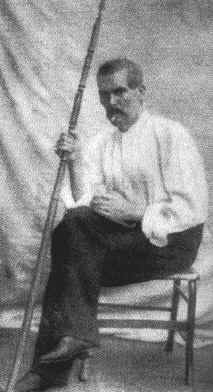 A rare photo of Burton late in his life (taken from his biography) |
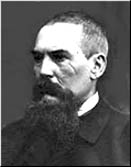
Another important figure from this period must be mentioned. Though his death in 1890 at the age of 70 prevented his active participation in the revival of historical fencing spawned by Hutton and Castle, Captain Sir Richard Francis Burton is unique in the annals of fencing historians. Burton was the first to call the history of the sword the "history of humanity." A soldier and erudite scholar, Sir Richard was at various times a swordsman, duelist, secret agent, explorer, adventurer, translator, world traveler, ambassador, and historian. Of Burton, the arms curator Forbes Seiveking wrote in 1910, he "was throughout his life an ardent student of the theory, and an acknowledged master of the practice, of the art of swordsmanship". A fencer who had personally engaged in combat, Burton was also the first to discover, translate, and bring to the West both the Kama Sutra and the Arabian Nights, and was the first non-Muslim to visit the holy city of Mecca (disguised as a Muslim at that).
|
|
The introduction to his work contains some of the most eloquent testaments to the cultural and historical importance of the sword yet written. He had planned two follow-on volumes, with part II covering Medieval and Renaissance swords. But, as the first book oddly was a commercial failure, the others were never finished. Tragically, his widow later burned all his notes. Burton's knowledge was unrivaled in his day and his experience in the ethnographic study of the sword was unparalleled. It would have been very interesting if Burton has finished his planned second volume. In 1898, Colonel Cyril Matthey, colleague of Hutton and Castle, reintroduced the world to, The Works of George Silver. Cyril G. R. Matthey was Captain of the London Rifle Brigade, a member of the London Fencing Club, and member d'honneur du cercle d'escrime de Bruxelles. He also wrote the introduction to Hutton's, The Sword and The Centuries. Matthey was the first to present Silver's two Elizabethan texts, Paradoxes of Defence and Bref Instructions on My Paradoxes of Defence, in one volume. |
|
|
|
Perhaps influenced by Silver and Hutton, or perhaps just being a pragmatic old soldier, Matthey had much to say about the lack of earnest martial intent in modern fencing practice. Of the fencing in his own time he declared, "I suggest that sword fighting is not taught and that it ought to be. Fencing should be encouraged to the utmost, but fighting should be regarded, as a distinct subject, and of much greater importance in the majority of cases."
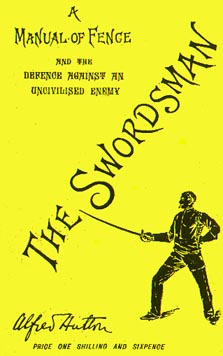
Captain Hutton declared it most accurately when, in his 1898 text on sabre, bayonet, and arm seizes, The Swordsman - A Manual of Fence and the Defense Against an Uncivilised Enemy, he similarly stated, "Those old masters taught fighting, we teach nothing but fencing nowadays". These sentiments are of course very nearly the same of George Silver some 300 years earlier when he complained the dueling style of the rapier did not prepare Englishmen for the needs of the battlefield. Hutton's work ends by stressing the need among British colonial soliders for realistic fighting skills for facing an "uncivilised enemy." |
Matthey felt so strongly that fencing in his time, or at least the quality within the British military which was formulated by continental teachers, was no longer a martial art that he suggested: "Why not, having decided upon the pattern of a regulation sword, have drawn up, or have caused to be drawn up, by one of our well-known swordsmen...a simple, common-sense method of swordfighting suitable for service requirements...That such a system can be drawn up, and that there are those who are thoroughly qualified to do it well, there is no doubt." Here he was perhaps referring to his colleagues, Hutton and Castle. Matthey was not talking about fencing for the increasingly vanishing private duel to "first blood" with its associated frequent etiquette and urbane ritual, but the battlefield encounters of British soldiers against what he called "savage native contingents".
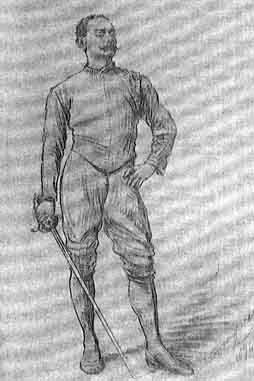 In
contrast to its continental neighbors of the 19th century,
it was the British Empire that was sending its armies all over the
globe to engage indigenous inhabitants –who, unlike most all
Europeans, were still fighting effectively with ancient traditional
swords, knives, spears, clubs, and bows. The British army's
experiences in East Africa, South Africa, India, Afghanistan, and
Asia taught them well the lessons of ill-preparing men for earnest
hand-to-hand fighting by using the "dueling school" approach.
…As the saying goes, if you don't use it you lose it. Hutton
said nearly this very thing in his earlier 1891 work, The Swordsman,
describing how with their swords and shields native Afridi
warriors would effectively engage British soldiers in assaults.
In
contrast to its continental neighbors of the 19th century,
it was the British Empire that was sending its armies all over the
globe to engage indigenous inhabitants –who, unlike most all
Europeans, were still fighting effectively with ancient traditional
swords, knives, spears, clubs, and bows. The British army's
experiences in East Africa, South Africa, India, Afghanistan, and
Asia taught them well the lessons of ill-preparing men for earnest
hand-to-hand fighting by using the "dueling school" approach.
…As the saying goes, if you don't use it you lose it. Hutton
said nearly this very thing in his earlier 1891 work, The Swordsman,
describing how with their swords and shields native Afridi
warriors would effectively engage British soldiers in assaults.
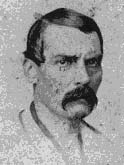 At
the risk of being labeled "Anglo-centric", what is unique about these
19th century British soldier-scholar antiquarians, such as Hutton,
Castle, Thimm, Matthey, Pollock, and Burton, is that rather than an
academic game of the fencing salle or a skill of the
fading duel of honor, they viewed swordsmanship as practical knowledge
that was still a necessity for military men. Yet, rather than using
then current systems of fencing, they pursued the old forgotten styles
using the historical manuals as their guide. Though often dismissed
or criticized as mere "Victorian romantics", their influence was significant
in its day. It perhaps has had a greater
impact on historical fencing study today than ever before.
At
the risk of being labeled "Anglo-centric", what is unique about these
19th century British soldier-scholar antiquarians, such as Hutton,
Castle, Thimm, Matthey, Pollock, and Burton, is that rather than an
academic game of the fencing salle or a skill of the
fading duel of honor, they viewed swordsmanship as practical knowledge
that was still a necessity for military men. Yet, rather than using
then current systems of fencing, they pursued the old forgotten styles
using the historical manuals as their guide. Though often dismissed
or criticized as mere "Victorian romantics", their influence was significant
in its day. It perhaps has had a greater
impact on historical fencing study today than ever before.
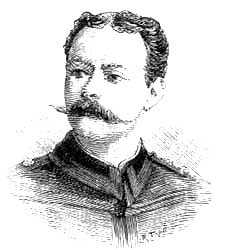 The
discoveries and advances in this subject made by men like Hutton,
Castle, and their comrades evidently did not survive past WWI.
The generation of youth whom they taught and inspired perished
in the horror of the trenches. It was not really until the 1990s that
the approach to historical fencing studies they promoted was attempted
again. The ARMA itself was to a large part created as a way of following
the effort these men first began. John Waller, head of fight interpretation
at the Royal Armouries in
Leeds, has expressed how the efforts of Hutton and Castle were a direct
influence upon the museum's conception of historical fencing demonstration.
In many ways, today's enthusiasts of Historical European Martial
Arts attempting to construct a modern curriculum are the inheritors
of the efforts by these "private gentleman devoted
to the noble science". It can only
be hoped that in a hundred years, some of us today are remembered
as fondly for our contributions.
The
discoveries and advances in this subject made by men like Hutton,
Castle, and their comrades evidently did not survive past WWI.
The generation of youth whom they taught and inspired perished
in the horror of the trenches. It was not really until the 1990s that
the approach to historical fencing studies they promoted was attempted
again. The ARMA itself was to a large part created as a way of following
the effort these men first began. John Waller, head of fight interpretation
at the Royal Armouries in
Leeds, has expressed how the efforts of Hutton and Castle were a direct
influence upon the museum's conception of historical fencing demonstration.
In many ways, today's enthusiasts of Historical European Martial
Arts attempting to construct a modern curriculum are the inheritors
of the efforts by these "private gentleman devoted
to the noble science". It can only
be hoped that in a hundred years, some of us today are remembered
as fondly for our contributions.
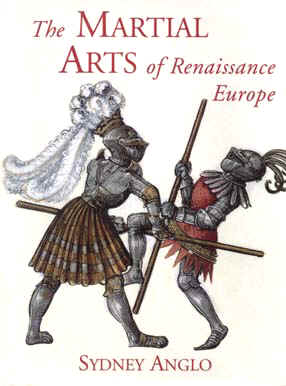
Today, the legacy of Castle and Hutton has been carried on in the research of professor of Renaissance studies, Dr, Sydney Anglo, culminating in his monumental book in 2000, The Martial Arts of Renaissance Europe, has become profoundly important in the reemergence of this subject. Dr. Anglo's body of work is to the field of historical fencing today what Castle's was in the 1890s. It's unparalleled content has become the Bible of study for any serious student of historical European fighting arts. While at once celebratory and revisionist, the sheer volume of detail and scope of material Anglo covered both surpasses and pays homage to the efforts of earlier explorers. Viewed in perspective then, in their attempt to recover historical fencing methods, what Castle and Hutton et al were doing was without question what we today now call practicing Renaissance martial arts. In light of his efforts into both academic scholarship and physical reconstruction of the art, as well as educating the public and teaching youths, Castle himself was the pioneer—an inspiration as the first "professor of historical fencing studies." If anyone were to be declared "the father of Western martial arts" it would indisputably be Egerton Castle. Though, given the company he kept, I imagine he himself would never presume such a title.
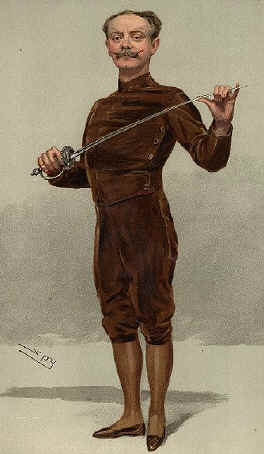
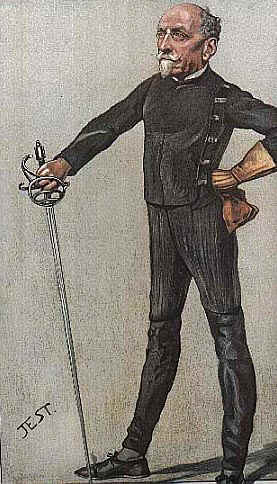
Egerton Castle
"Father of Historical Fencing Studies"
- from a Vanity Fair profile, age 42
Note: the preceding was excerpted from a forthcoming book on the modern practice of Renaissance martial arts. All reference footnotes have been removed from this online version. All images (excluding Burton's photo) are from original copies in the author's collection.
© Copyright 2001 by John Clements All rights Reserved. No part of this may be reproduced without the explicit permission of the author. Revised march 2011.
|
|
|||
|
|
|||
|
|||
 Historical
Fencing Studies
Historical
Fencing Studies 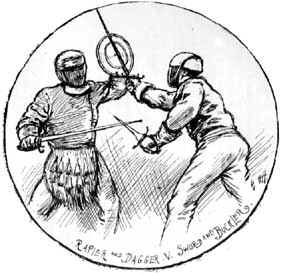 In
the preface to his famous 1896 complete bibliography of fencing and
dueling, British researcher Carl Thimm stated "all forms of fencing"
were seeing at the time a "revival" after a "long period of abeyance".
In
the preface to his famous 1896 complete bibliography of fencing and
dueling, British researcher Carl Thimm stated "all forms of fencing"
were seeing at the time a "revival" after a "long period of abeyance".
 He
traveled throughout the Middle East, India, and Afghanistan,
trekked crossed Africa and eventually became ambassador
to Brazil. Burton was a lifelong writer and studied fencing
at Boulogne, where he became a maître d'armes in 1853 at
the age of only 31. He had first started fencing at the
age of twelve. Colonel Arthur Shuldham described seeing
Burton fence in 1851 against a skilled sergeant of the French
Hussar in Boulogne. He wrote how Burton wearing only a mask
and shirtsleeves faced his adversary who wore a leather
jacket and head guard. To the astonishment of the
gathered crowd, seven times in a row he disarmed his man
on the first blow. With the exception of a single
poke in the neck Burton was unscathed.
He
traveled throughout the Middle East, India, and Afghanistan,
trekked crossed Africa and eventually became ambassador
to Brazil. Burton was a lifelong writer and studied fencing
at Boulogne, where he became a maître d'armes in 1853 at
the age of only 31. He had first started fencing at the
age of twelve. Colonel Arthur Shuldham described seeing
Burton fence in 1851 against a skilled sergeant of the French
Hussar in Boulogne. He wrote how Burton wearing only a mask
and shirtsleeves faced his adversary who wore a leather
jacket and head guard. To the astonishment of the
gathered crowd, seven times in a row he disarmed his man
on the first blow. With the exception of a single
poke in the neck Burton was unscathed.