
|
||||||||
|
|
||||||||
ARMA Editorial - Sept. 2010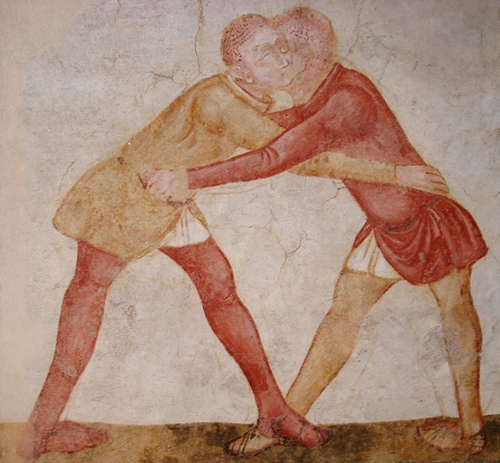 The Intangible Cultural
Heritage of Martial Traditions The Intangible Cultural
Heritage of Martial TraditionsBy John Clements Something interesting occurs to me when I consider the larger picture of reclaiming and recovering our Renaissance martial heritage. The martial arts of Renaissance Europe (which we might conveniently abbreviate as “MARE”) are a subject that has to be reconstituted and restored by holistic study of its surviving teachings. Experts from the 14th to 17th centuries left behind for us unmatched historical documentation for their personal combat methods covering the reality of self-defense in battle, duel, and street encounter. This vast technical literature represents time-capsules of authenticity for us, in that they are undiluted and unpolluted by the civilianizing de-martialization that later occurs as generation after generation no longer has need to practice such integrated combat skills. A heritage is something that’s inherited. That is, it is knowledge preserved from the past for the future. Our source material on MARE is undeniably something that was very much retained in written and illustrated form. This instructional literature, surviving among voluminous treatises and collected works, is therefore something that as a community of students we have very much inherited. Despite being extinct and little known, this material is unequaled in its technical and iconographic detail. It arguably represents the most well documented martial arts teachings in history—even more so than any extant Asian equivalent. In this regard, it is certainly a powerful (albeit broken) “tradition”—far more so than something recently invented out of a known Asian-style restructured and reformatted for para-military or competitive application. While it’s recorded teachings were not saved as any pedagogic tradition (certainly not among modern or classical fencing instructors who focused only on gentlemanly dueling and sport), its study reveals an indigenous science of defense—self-defense systems and fighting methodologies based on established principles of close combat. The means by which these skills were once acquired may be what is now missing to us, but the methods themselves were preserved. As we uncover, recover, and reproduce these forgotten combative disciplines, we are not reinventing today, but rather, preserving them once again. 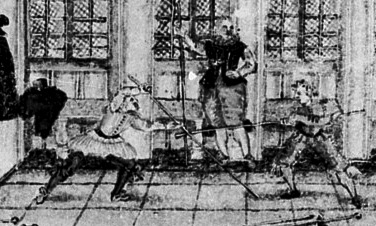 While
we may never know with full confidence how our craft was
authentically
performed or practiced by the historical Masters of
Defence, our source
teachings don’t suffer from being commercialized,
sportified,
idealized, or mythologized. Thus, we have come to
know -- with
great depth -- their theories, principles, concepts,
techniques, and
philosophy of self-defense. To be able at this point to
say these were
highly sophisticated and systematic close-combat methods
almost sounds
like a cliché, since virtually every fighting
discipline on the planet regularly assumes such a label
now. While
we may never know with full confidence how our craft was
authentically
performed or practiced by the historical Masters of
Defence, our source
teachings don’t suffer from being commercialized,
sportified,
idealized, or mythologized. Thus, we have come to
know -- with
great depth -- their theories, principles, concepts,
techniques, and
philosophy of self-defense. To be able at this point to
say these were
highly sophisticated and systematic close-combat methods
almost sounds
like a cliché, since virtually every fighting
discipline on the planet regularly assumes such a label
now.  I
have come to see ironic in how I grew being told by so
many people
that the “West” had no martial arts only to become a
champion
pioneering the revival of their genuine teachings.
I have seen
the shock (even cognitive dissonance) such voices
experience when they now
encounter just how truly diverse and rich this very same
subject
is. All the more because it seems every culture
and society now
makes claim to having some version of their own "arts of
Mars" –
somehow suitably retained or preserved so as to now be
passed along as
a viable "tradition." I
have come to see ironic in how I grew being told by so
many people
that the “West” had no martial arts only to become a
champion
pioneering the revival of their genuine teachings.
I have seen
the shock (even cognitive dissonance) such voices
experience when they now
encounter just how truly diverse and rich this very same
subject
is. All the more because it seems every culture
and society now
makes claim to having some version of their own "arts of
Mars" –
somehow suitably retained or preserved so as to now be
passed along as
a viable "tradition."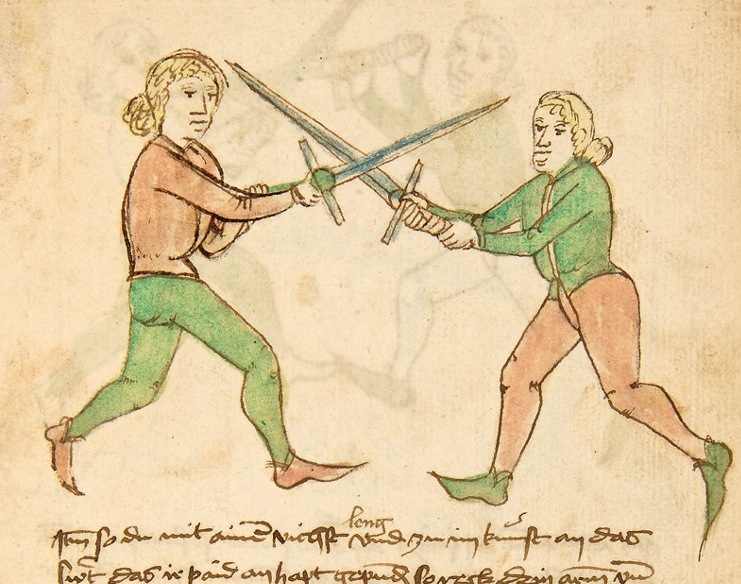 It’s
no secret to observe that not all martial art traditions
can be equally
substantiated. But in past decades I witnessed
first hand
attempts to practice Medieval and Renaissance fencing
skills that were
little more than regurgitated stage combat
cliché’s mixed with sport
fencing and Asian swordplay. So, having rediscovered so
much genuine material perhaps I find myself more
sensitive
to assertions of "historical" fighting styles that seem
to me less
representative of a martial cultural than an eclectic
mix of exposure
to popular contemporary styles. If I compare the depth
of our authentic instructional material to some
“vernacular”
fighting styles that were ostensibly "preserved" --
despite their
having long ago lost the necessity of being utilized in
lethal
situations or taught with formalized curricula -- the
result leaves me
feeling personally quite confident about the
re-development of our
craft. My own skill set convinces me the rest of the
way. It’s
no secret to observe that not all martial art traditions
can be equally
substantiated. But in past decades I witnessed
first hand
attempts to practice Medieval and Renaissance fencing
skills that were
little more than regurgitated stage combat
cliché’s mixed with sport
fencing and Asian swordplay. So, having rediscovered so
much genuine material perhaps I find myself more
sensitive
to assertions of "historical" fighting styles that seem
to me less
representative of a martial cultural than an eclectic
mix of exposure
to popular contemporary styles. If I compare the depth
of our authentic instructional material to some
“vernacular”
fighting styles that were ostensibly "preserved" --
despite their
having long ago lost the necessity of being utilized in
lethal
situations or taught with formalized curricula -- the
result leaves me
feeling personally quite confident about the
re-development of our
craft. My own skill set convinces me the rest of the
way. 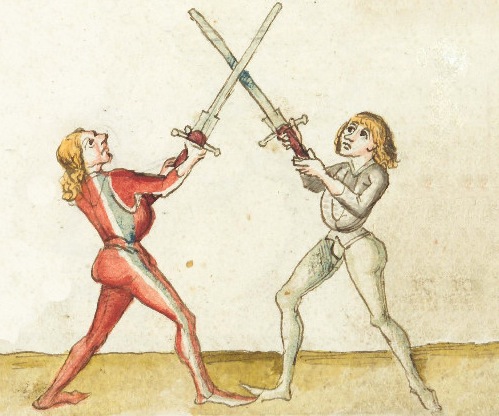 When
you think about it, while
a traditional established or extant martial art may
proclaim
that what they do is something extant or "living" --
having been
"passed down" or transmitted person to person in an
ostensibly unbroken
process -- that in no way insures it has been immune to
change or
subject to inaccuracies over time. Like the old
children’s game
of "telephone," both external forces and internal
subjectivity can have
influence on the supposed immutability of any
“unchanging” tradition. When
you think about it, while
a traditional established or extant martial art may
proclaim
that what they do is something extant or "living" --
having been
"passed down" or transmitted person to person in an
ostensibly unbroken
process -- that in no way insures it has been immune to
change or
subject to inaccuracies over time. Like the old
children’s game
of "telephone," both external forces and internal
subjectivity can have
influence on the supposed immutability of any
“unchanging” tradition.  By
contrast, our lost martial “tradition” is being revived
and
reconstituted from the very technical instructions of
the actual
fighting masters of the age as presented in the
unrivaled collective
material of their own words and images. We have at our
disposal
documented sources covering a host of authentic
teachings from over
four centuries of sophisticated combatives. What we
study is also a
largely repertoire of specific techniques from specific
sources, along
with underlying principles and concepts formulated into
systems or
methods -- what we might, dare I say, call styles. We
also understand
the cultural and social context in which this Noble
Science was
practiced and employed, with its associated chivalric
and humanist
values. All of this means, in my opinion, our
craft is arguably
more documented and verifiable in its authenticity
because it has been
subject to far less distortion and contamination over
time. By
contrast, our lost martial “tradition” is being revived
and
reconstituted from the very technical instructions of
the actual
fighting masters of the age as presented in the
unrivaled collective
material of their own words and images. We have at our
disposal
documented sources covering a host of authentic
teachings from over
four centuries of sophisticated combatives. What we
study is also a
largely repertoire of specific techniques from specific
sources, along
with underlying principles and concepts formulated into
systems or
methods -- what we might, dare I say, call styles. We
also understand
the cultural and social context in which this Noble
Science was
practiced and employed, with its associated chivalric
and humanist
values. All of this means, in my opinion, our
craft is arguably
more documented and verifiable in its authenticity
because it has been
subject to far less distortion and contamination over
time.  Yes,
we do have a continual task of research and ongoing
analysis
facing us -- even as we gain increasing confidence in
understanding the
totality of their teachings -- but such interpretation
and subsequent
experimental application is a necessary aspect of its
revival. After
all, the real richness of any martial tradition is in its
physical
movement and lessons on applying core principles, the things
learned in
person from those who know. The work involved
certainly produces a sense of investigation and
exploration that makes our
discipline dynamic and once again living. They are
not fixed and
"completed" arts that go are unquestioned and unexamined
as to their
efficacy and viability by virtue of an authority
claiming ownership of
a pedagogical lineage. The real difficulty for us
in seeking
accurate approximation of extinct fighting methods today
is far less in
mis-interpretation or avoiding orthodoxy. The danger we
face instead
lies in avoiding the role-playing reenactment and
costumed escapism
mentality that still plagues so much interest in
historical combat and
which, at the least, invariably leads to sportification
and the underperformance of mediocrity. Yes,
we do have a continual task of research and ongoing
analysis
facing us -- even as we gain increasing confidence in
understanding the
totality of their teachings -- but such interpretation
and subsequent
experimental application is a necessary aspect of its
revival. After
all, the real richness of any martial tradition is in its
physical
movement and lessons on applying core principles, the things
learned in
person from those who know. The work involved
certainly produces a sense of investigation and
exploration that makes our
discipline dynamic and once again living. They are
not fixed and
"completed" arts that go are unquestioned and unexamined
as to their
efficacy and viability by virtue of an authority
claiming ownership of
a pedagogical lineage. The real difficulty for us
in seeking
accurate approximation of extinct fighting methods today
is far less in
mis-interpretation or avoiding orthodoxy. The danger we
face instead
lies in avoiding the role-playing reenactment and
costumed escapism
mentality that still plagues so much interest in
historical combat and
which, at the least, invariably leads to sportification
and the underperformance of mediocrity. So,
when I hear about, say, traditional Eskimo martial
arts, it’s
proponents may contend some justifiable restoration from
a vernacular
source to then set up a modern program with its own
unique name.
Maybe it’s genuine; maybe not. I can't help but
think that
nearly everyone in every ethnic group, geographic
region, and society
today has seen enough martial arts books and movies that
they can adapt
some techniques, invent some routines, put on some
indigenous garb, and
use some arcane terminology until -- poof! – they’ve
authoritatively
reconstituted an "art" and a "tradition" (one that
"somebody’s family in
the old country kept secret until now"). But, a
mere 50 or 100
years ago (coincidentally before pop culture exported
Bruce Lee and
related material to the world) no one documented it as
having sustained and preserved a fighting art
-- if it ever existed as a methodology. Go figure.
Meanwhile, I'm waiting for sophisticated
"Cro-Magnon martial arts" to soon be
"re-discovered." So,
when I hear about, say, traditional Eskimo martial
arts, it’s
proponents may contend some justifiable restoration from
a vernacular
source to then set up a modern program with its own
unique name.
Maybe it’s genuine; maybe not. I can't help but
think that
nearly everyone in every ethnic group, geographic
region, and society
today has seen enough martial arts books and movies that
they can adapt
some techniques, invent some routines, put on some
indigenous garb, and
use some arcane terminology until -- poof! – they’ve
authoritatively
reconstituted an "art" and a "tradition" (one that
"somebody’s family in
the old country kept secret until now"). But, a
mere 50 or 100
years ago (coincidentally before pop culture exported
Bruce Lee and
related material to the world) no one documented it as
having sustained and preserved a fighting art
-- if it ever existed as a methodology. Go figure.
Meanwhile, I'm waiting for sophisticated
"Cro-Magnon martial arts" to soon be
"re-discovered." |
|
|
|||
|
|
|||
|
|||