|
||||||||
|
|
||||||||
By Kevin Cashen
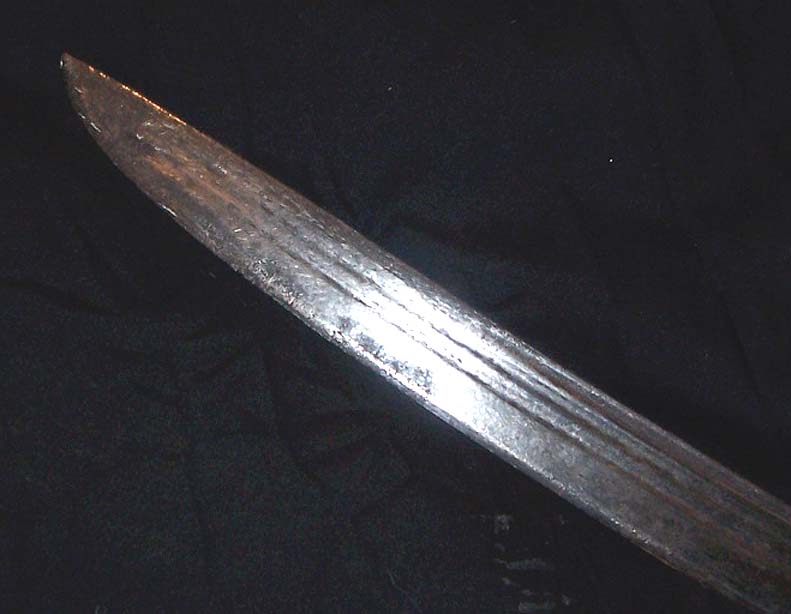
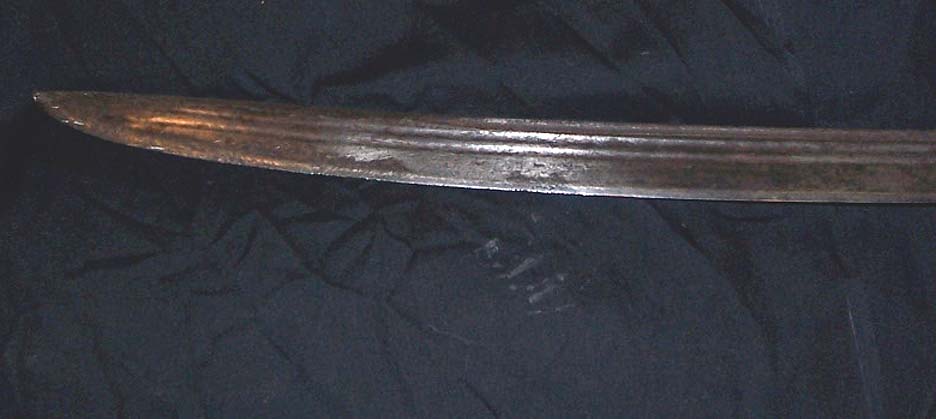
Surviving specimens of historical fighting swords, such
as this 19th century one above, often show tell-tale signs of
edge damage from hard material impacts but the causes and origin
of such trauma, as well as the time and conditions under which
they actually occurred, are now very difficult to determine.
As with many real cutting swords, the piece above shows noticeable
wear from impacts on its flat side, but only minute damage to
its edge along spots associated with its natural center of percussion,
indicating these may very well have been from striking at targets,
not from being parried by the edge of another sword. -ed.
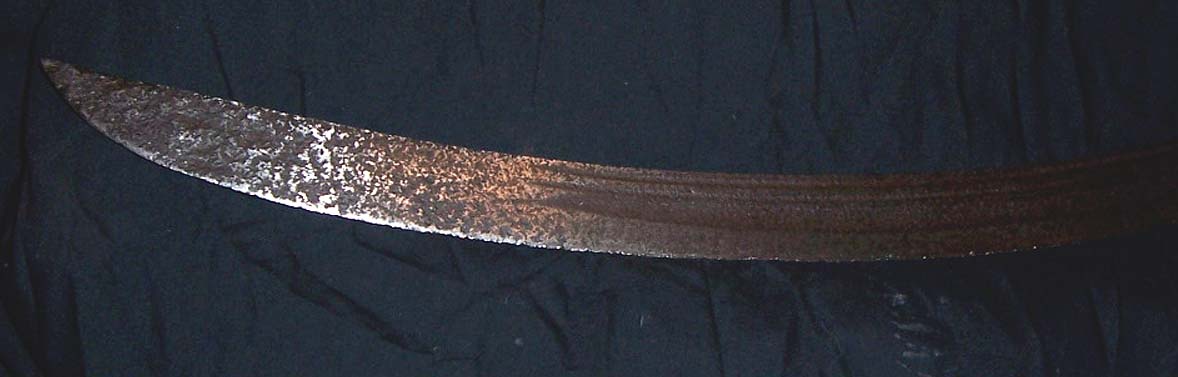
The wide curved slashing sword below, also from the 19th
century, is an example of one showing more significant trauma
along most of its edge, including minute nicks and gouges, particularly
at the optimal cutting portion. However, none of these are indicative
of forcible edge-to-edge impacts, nor are they significant enough
that they could not be ground down. Surprisingly, as with the
above sword, neither shows noticeable edge trauma near the hilt,
where most edge-to-edge contact would be expected to occur in
defensive actions. -ed.
See also: The Physical Reality of Impacts and Edges |
|
|
|||
|
|
|||
|
|||
 The
Physical Reality of Forceful Edge-to-Edge Impacts - Historical
Examples
The
Physical Reality of Forceful Edge-to-Edge Impacts - Historical
Examples