|
||||||||
|
|
||||||||
|
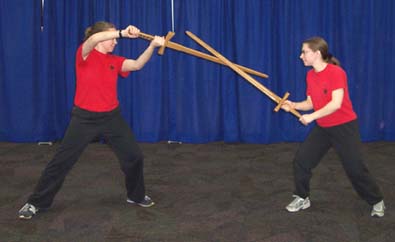
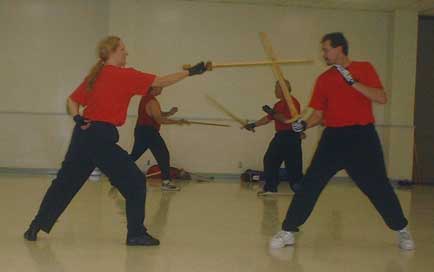
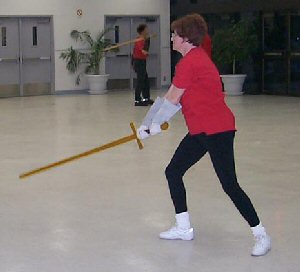
By J. Clements I was recently asked [once again] for my view on the subject of what, if any, considerations there might be for female practitioners of Renaissance martial arts –a historically masculine activity, as women had better things to do than killing each other. Since over the decades I have had, and currently do have, female students, I present here some thoughts on the topic.
As to general training and exercises, I make no distinctions between the sexes, except during certain drills (such as the “touch” and “press” ones) where for safety and courtesy I instruct not to touch/strike to the chest. Generally, in the same manner that I recommend a cup for males, for any contact sparring I strongly recommend to female practitioners a chest protector such as used in some Asian martial arts.
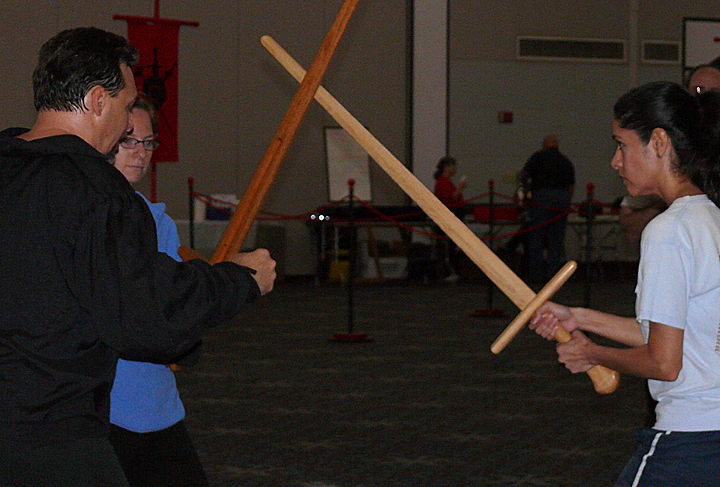 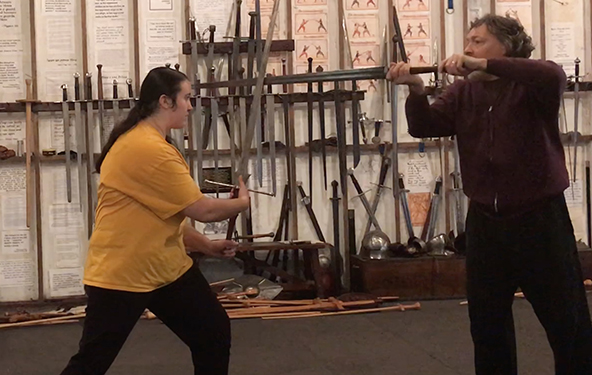 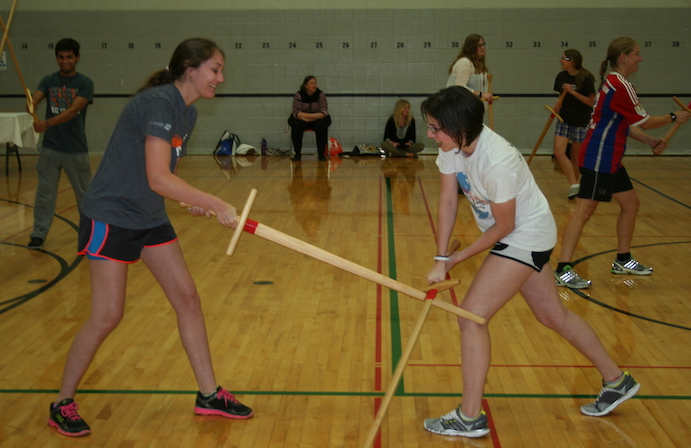 For similar reasons to learning with a bastard sword, I also find my
female students enjoy study of the spear or long staff, it being an
equalizing weapon which requires more precision than strength. Its
length and agility permit the novice practitioner to focus more readily
on the tactical rather than on the direct physical in application of
techniques. Further, I’ve observed that in general female students often
take to learning the rapier more easily than do most of the male
colleagues. As it is a foyning weapon of grace and finesse, its
initial learning requires elegant repetition of core motions much more
than strenuous physical exertion (indeed, it's been said before that
female students are at first often more technically proficient in the
rapier than males of equal ability). For similar reasons to learning with a bastard sword, I also find my
female students enjoy study of the spear or long staff, it being an
equalizing weapon which requires more precision than strength. Its
length and agility permit the novice practitioner to focus more readily
on the tactical rather than on the direct physical in application of
techniques. Further, I’ve observed that in general female students often
take to learning the rapier more easily than do most of the male
colleagues. As it is a foyning weapon of grace and finesse, its
initial learning requires elegant repetition of core motions much more
than strenuous physical exertion (indeed, it's been said before that
female students are at first often more technically proficient in the
rapier than males of equal ability). 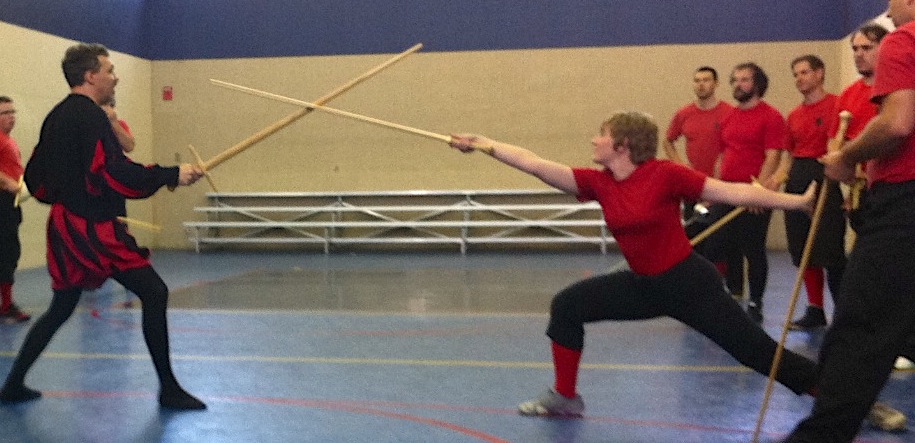
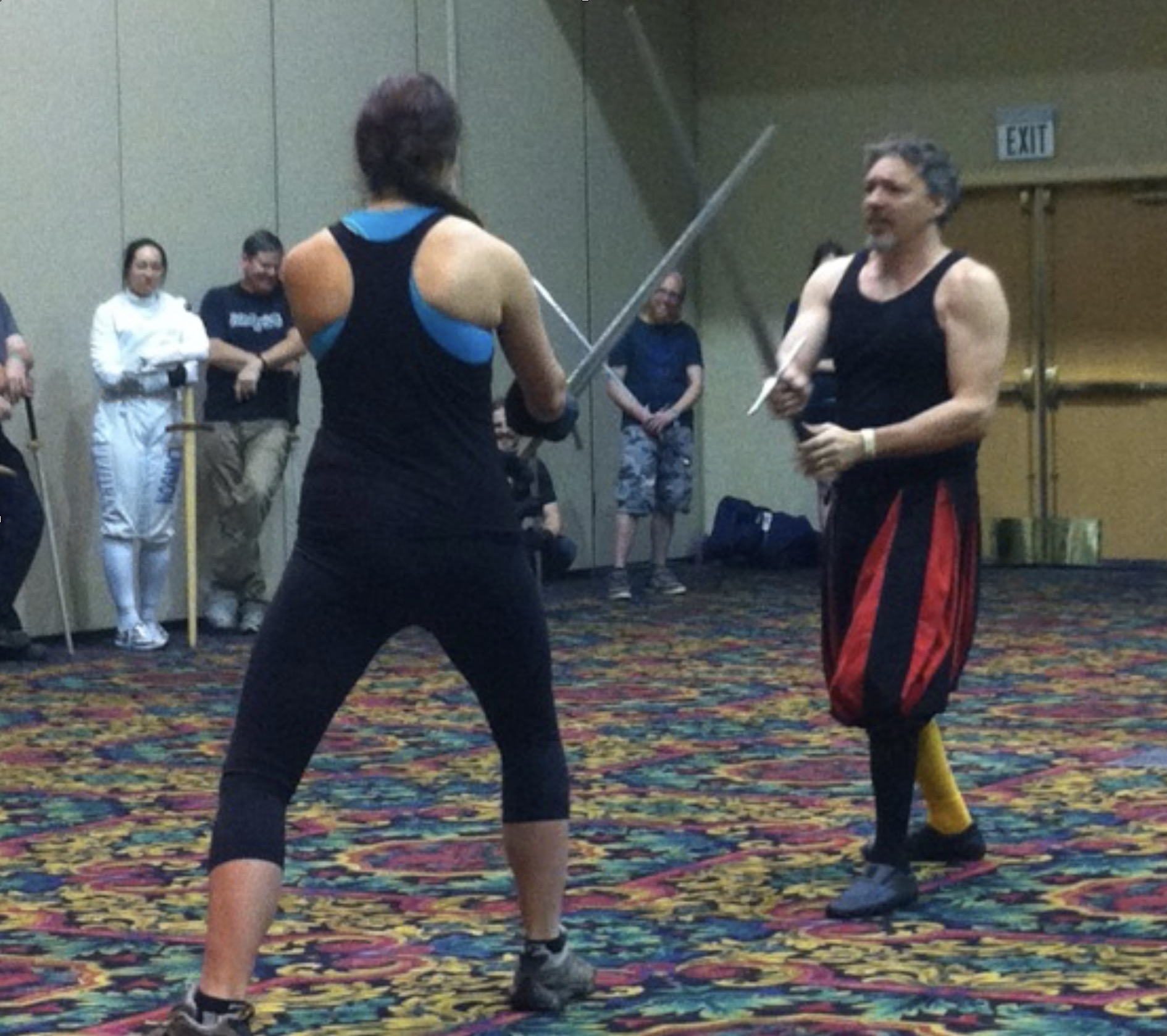 One question often asked is about the obvious advantage male combatants
have over females in terms of muscularity, bone density, and body mass.
Does physical strength play a role in Renaissance martial arts? Yes,
certainly, as it does in any highly physical activity. Obviously, a
stronger build can also wear more armor —though at the price of less
mobility. However, the historical source teachings are more than clear
that skill transcends strength alone and skill is a matter of several
blending factors that are independent of gender. Physical size and
strength is certainly an advantage in close combat just as is audacity.
Yet, as the great Master Liechtenauer taught in the late 14th century,
the Art must go before strength, for the whole point of the Art is to
overcome an opponent who is stronger than you. Or, as the the 15th
century Master Vadi stated, cunning defeats any strength. One question often asked is about the obvious advantage male combatants
have over females in terms of muscularity, bone density, and body mass.
Does physical strength play a role in Renaissance martial arts? Yes,
certainly, as it does in any highly physical activity. Obviously, a
stronger build can also wear more armor —though at the price of less
mobility. However, the historical source teachings are more than clear
that skill transcends strength alone and skill is a matter of several
blending factors that are independent of gender. Physical size and
strength is certainly an advantage in close combat just as is audacity.
Yet, as the great Master Liechtenauer taught in the late 14th century,
the Art must go before strength, for the whole point of the Art is to
overcome an opponent who is stronger than you. Or, as the the 15th
century Master Vadi stated, cunning defeats any strength. 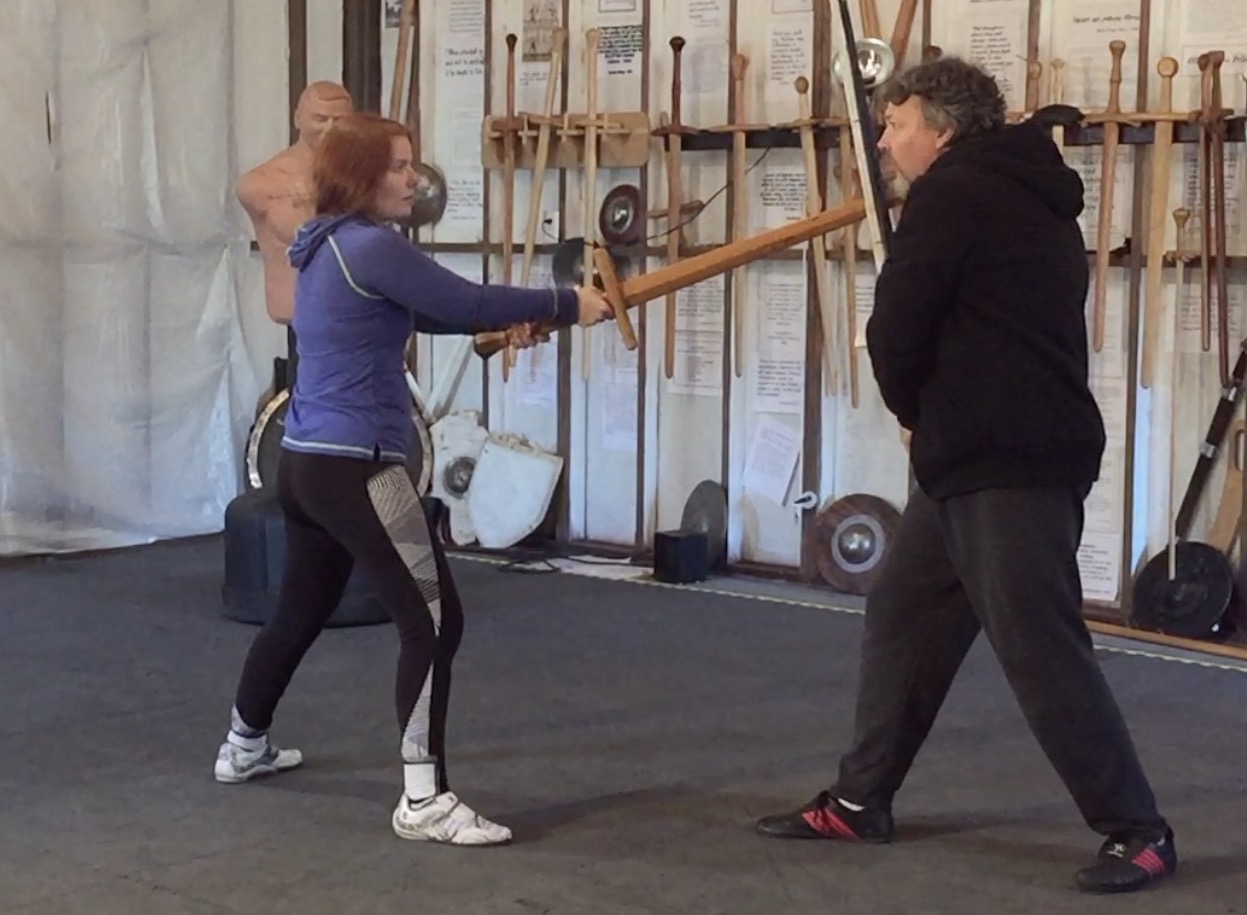 The major modern problem faced by many female practitioners of this
craft in my experience is one faced equally by many males today: the
need for physical fitness. A degree of conditioning is requisite for
higher learning and progress in the art. Besides this persistent issue,
another is differences in physical toughness between the sexes in the
realm of how easily each bruises and heals. Occasional muscular bruising
and minor injuries are an inherent part of any strenuous close-combat
weapon training. For biological and psychological/cultural reasons,
males are generally more inured to this, but females in my opinion can
more than aptly compensate by an appropriate mental toughness, thereby
reducing it as a potential impediment to learning. The major modern problem faced by many female practitioners of this
craft in my experience is one faced equally by many males today: the
need for physical fitness. A degree of conditioning is requisite for
higher learning and progress in the art. Besides this persistent issue,
another is differences in physical toughness between the sexes in the
realm of how easily each bruises and heals. Occasional muscular bruising
and minor injuries are an inherent part of any strenuous close-combat
weapon training. For biological and psychological/cultural reasons,
males are generally more inured to this, but females in my opinion can
more than aptly compensate by an appropriate mental toughness, thereby
reducing it as a potential impediment to learning.  The example I often
give of the affect of “nature’s design protocols” on fighting ability
is, if you were to hypothetically jab the average female and male
students equally hard in the chest with a stick, the male is invariably
going to recover use of any disruption to his pectorals at a noticeably
faster rate than his female peer. The same is true for a blow the lower
abdomen or on the deltoid and bicep. The objective then for any student,
is to learn to avoid getting hit altogether while sufficiently hitting
back. The example I often
give of the affect of “nature’s design protocols” on fighting ability
is, if you were to hypothetically jab the average female and male
students equally hard in the chest with a stick, the male is invariably
going to recover use of any disruption to his pectorals at a noticeably
faster rate than his female peer. The same is true for a blow the lower
abdomen or on the deltoid and bicep. The objective then for any student,
is to learn to avoid getting hit altogether while sufficiently hitting
back.  Unquestionably, temperament varies among all fighters. Psychologically
of course, most males are arguably brought up participating more often
in aggressive sports and aggressive play-fighting (even mock swordplay)
from childhood. Overwhelmingly without hesitation they take
instinctively to the entire dynamic of "hurting someone" with a weapon
while "trying to keep from being injured" in turn. Female
practitioners, I note with respect, are naturally more nurturing and
empathetic, and so must often be “taught” the concept of the necessary
“martial mindset” for training in adversarial skills that traditionally
were a brutal affair of gruesome violence. Unquestionably, temperament varies among all fighters. Psychologically
of course, most males are arguably brought up participating more often
in aggressive sports and aggressive play-fighting (even mock swordplay)
from childhood. Overwhelmingly without hesitation they take
instinctively to the entire dynamic of "hurting someone" with a weapon
while "trying to keep from being injured" in turn. Female
practitioners, I note with respect, are naturally more nurturing and
empathetic, and so must often be “taught” the concept of the necessary
“martial mindset” for training in adversarial skills that traditionally
were a brutal affair of gruesome violence. 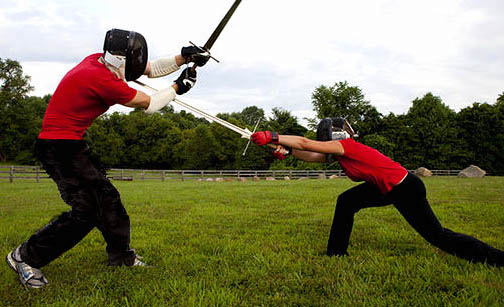 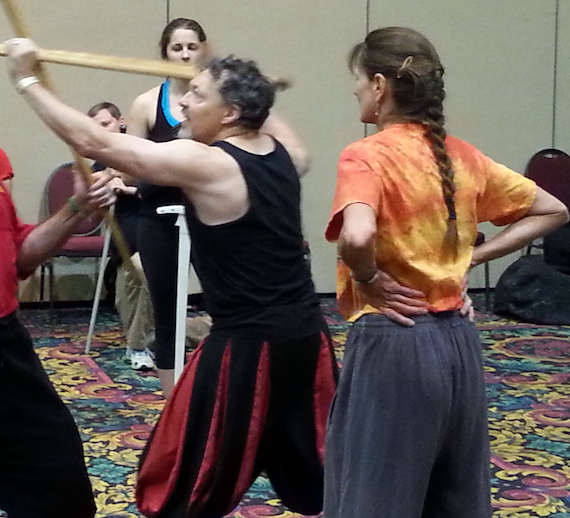 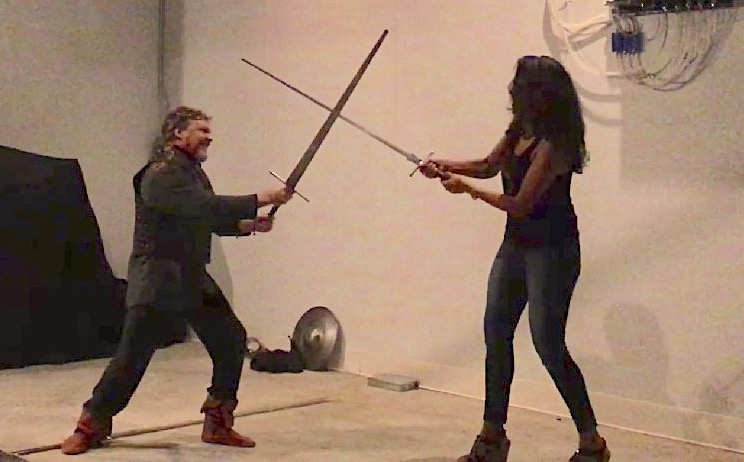 In order to attain the proper
bearing essential for approaching the subject as something more than
just a pastime or game, appreciation for the warrior ethos is crucial.
This is a matter of effort on behalf of the individual practitioner. It
is up to each student of this Art to endeavor to challenge themselves to
both know and overcome whatever inadequacies or inefficiencies they may
have. As the master Hanko Doebringer so aptly advised in 1389, those
are brave who fight their own weaknesses. In my opinion, there is
absolutely no reason this cannot exist regardless of a practitioner’s
biological sex. When this aspect is absent, it is an element which as, a
martial arts teacher, I find the most challenging to instill in any
student. In order to attain the proper
bearing essential for approaching the subject as something more than
just a pastime or game, appreciation for the warrior ethos is crucial.
This is a matter of effort on behalf of the individual practitioner. It
is up to each student of this Art to endeavor to challenge themselves to
both know and overcome whatever inadequacies or inefficiencies they may
have. As the master Hanko Doebringer so aptly advised in 1389, those
are brave who fight their own weaknesses. In my opinion, there is
absolutely no reason this cannot exist regardless of a practitioner’s
biological sex. When this aspect is absent, it is an element which as, a
martial arts teacher, I find the most challenging to instill in any
student. 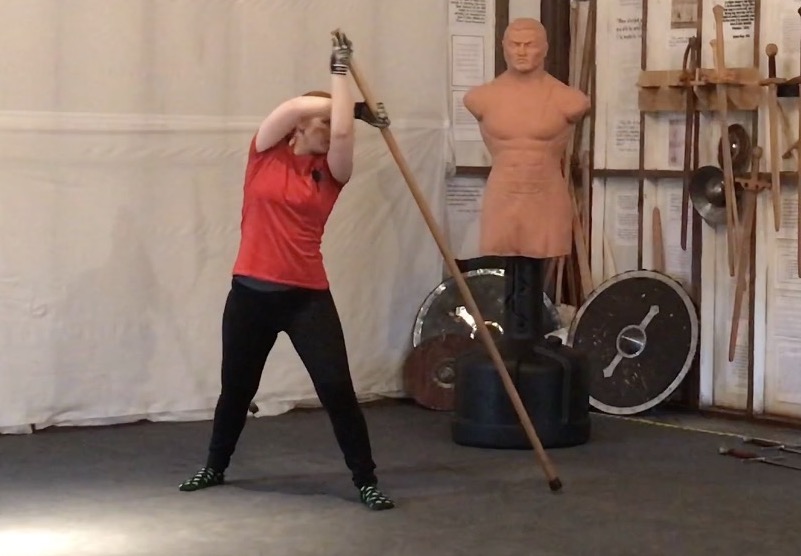 A practitioner must always judge themselves following the same criteria
they would judge any opponent — their reach, stride, speed, strength,
center of gravity, aggression, attitude, and any idiosyncrasies. But
these should be always considered with concerns to protocols of safe
training —experience, physical fitness, athletic capacity, physical
size, etc. These apply across the board to every fighter regardless of
differences between them. A practitioner must always judge themselves following the same criteria
they would judge any opponent — their reach, stride, speed, strength,
center of gravity, aggression, attitude, and any idiosyncrasies. But
these should be always considered with concerns to protocols of safe
training —experience, physical fitness, athletic capacity, physical
size, etc. These apply across the board to every fighter regardless of
differences between them. The strengths and weaknesses of the student must be assessed and their aptitude to the demands of the craft evaluated. How a teacher approaches those demands and how they present them differs. For myself, I follow the keen wisdom of Master Francois Dancie who in the early 17th century wrote that a good fight master must adapt the Art to the particular needs and capacity of every student. The individual’s aptitude for the craft derives from their inherent physical gifts, from their natural talent, their physical fitness, and from their martial spirit. Thus, when it comes to "considerations" for female practitioners, we must defer to the wisdom of Master Joachim Meyer from his 1570 treatise in declaring of all practitioners:
“everyone thinks differently from everyone else, so he behaves differently in combat.”
“For as we are not all of a single nature, so we also cannot have a single style in combat, yet all must nonetheless arise and be derived from a single basis.” “the Art depends upon the person, so that a poor move will be executed by an ingenious mindful person much more usefully in the action, than the best one will be executed by a fool.”
This article was originally posted in 2004 and updated in 2020
|
|
|
|||
|
|
|||
|
|||
 Considerations
for Female Practitioners
Considerations
for Female Practitioners