Postby Michael J Pierce » Mon Oct 24, 2005 3:32 pm
Just to add somecommentary to the interesting conversation:
It wouldmake sense to find such accounts of deadly thrust damage amoung smallsword records, however the historical rapier would be differient from what people generally think of the weapon. Having a tip like that of a sharpen pencil and virutally little edge (if any at all, the shape of the blade looking down on it, would be diamond or triangualar, also refer to the Rapier on pork test cut videos) Rapier and "smallswords" such as a "cut and thrust" or arming sword would have a different type of damage when thrusting. In contrast, the rapier's wound would be narrow and relatively small compared to the trust of a sword with a wider blade, in which casemaking the wound more deadly and more difficult to recover from. So, though painful, an attacker would not nessecary give a stoping blow with the thrust unless it hit something solid like bone or armor. From the pork test thrust you can see that it offered no resistance as you pointed out.
Thus, George Silver's obsveration. Writing against rapier fighting, george, must have observed men after reseiving a deadly thrust, "catch" thier attackers weapon as to render it stuck in their own bodies, then using the moment to end the life of their enemy before they themselves slip into oblivion.
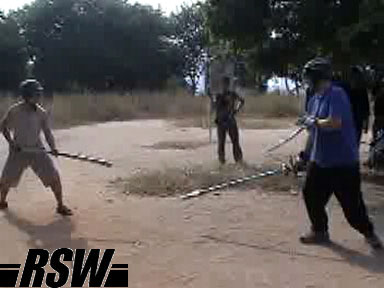
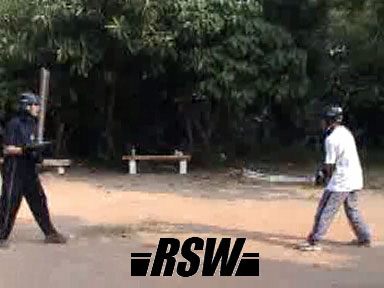
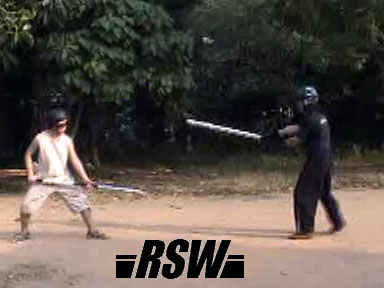
As for the video, I really liked it, for the purpose of seeing some practitioners of the science in action. My first thought on this man's rapier technique was his slow foot work, he seemed rooted to the ground. I'd like to see a video simular to this again where your guest are not "going easy."
Michael