Hi John,
I make these statements and I stand by them. I can see what you are trying to achieve by holding Vom Tach the way that you do, I just don't agree that holding it in order to make the fastest possible blow in necessary. As I may have said before, the other guy will be attacking you in the time of the hand, body and foot. You can defend in the same (but a slightly shorter) time. If someone cuts at me from above on a pass I can make a short pass/step to counter it.
I am not saying you should move slowly, just that any move the attacker makes will be slowed by the time of his foot. I am saying this but I am not alone. Silver says it too. People who don't even study Silver uses his times, grounds and governors in their "fencing speak" which I would take to mean that Silver knew what he was talking about.
Although the attacker may be able to swing at you quickly, he can't because he has to wait until his feet bring him into distance. If you swing as fast as you can then your sword will have completed it's arc long before you are in distance for it to take effect. So given that you can't swing as fast as your arms will let you anyway then you might as well lie in the position in which as little of your body is exposed as possible.
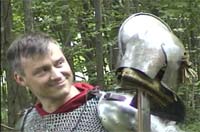
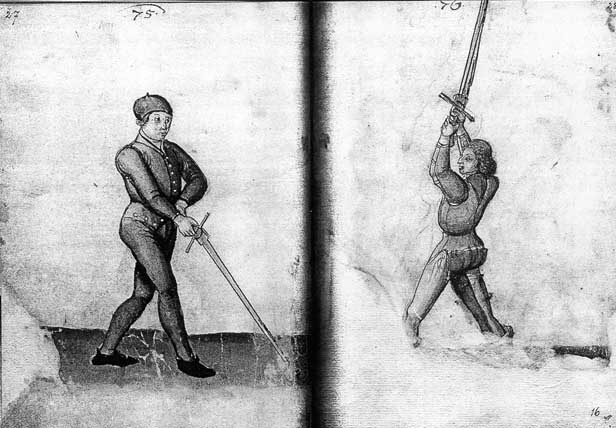
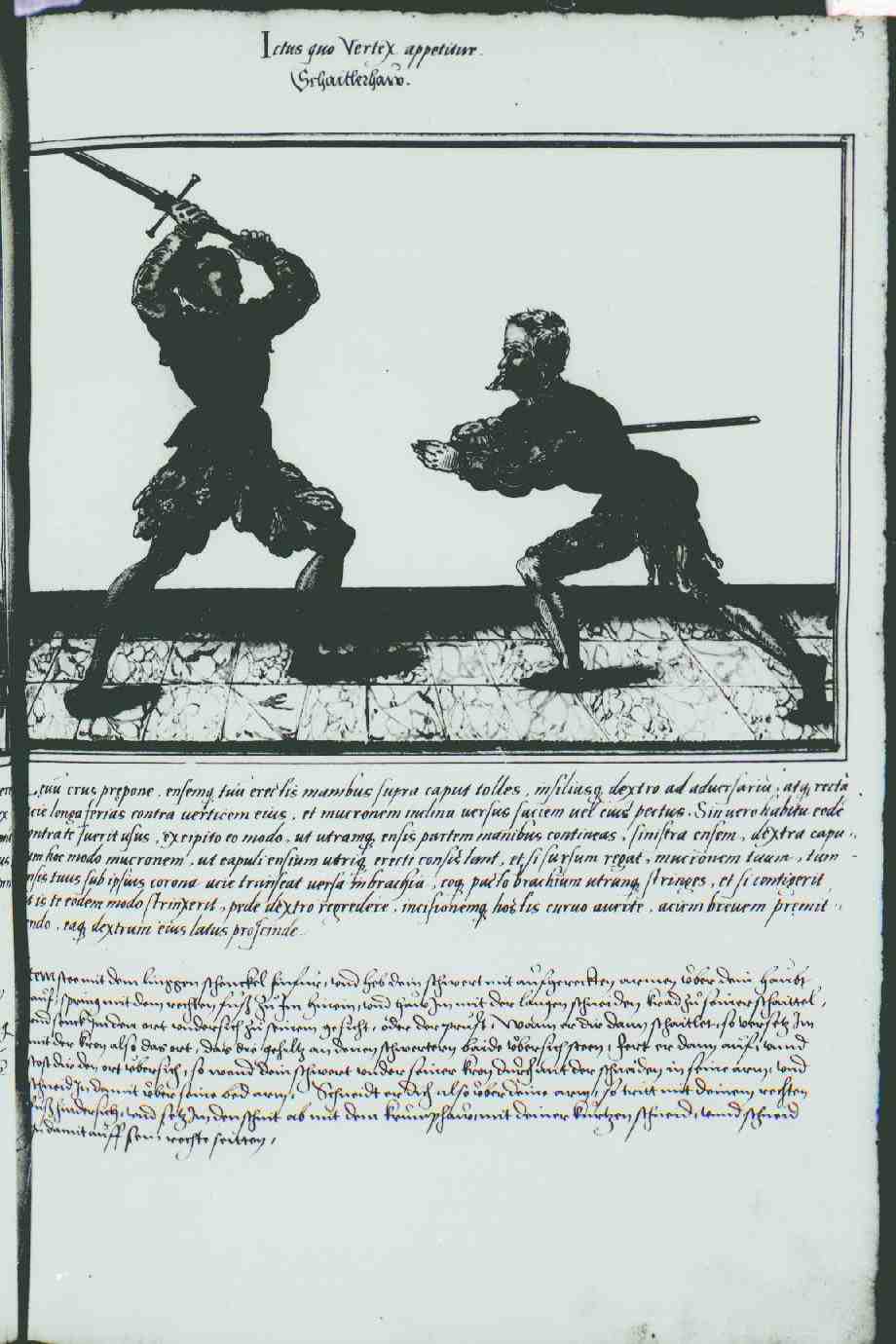
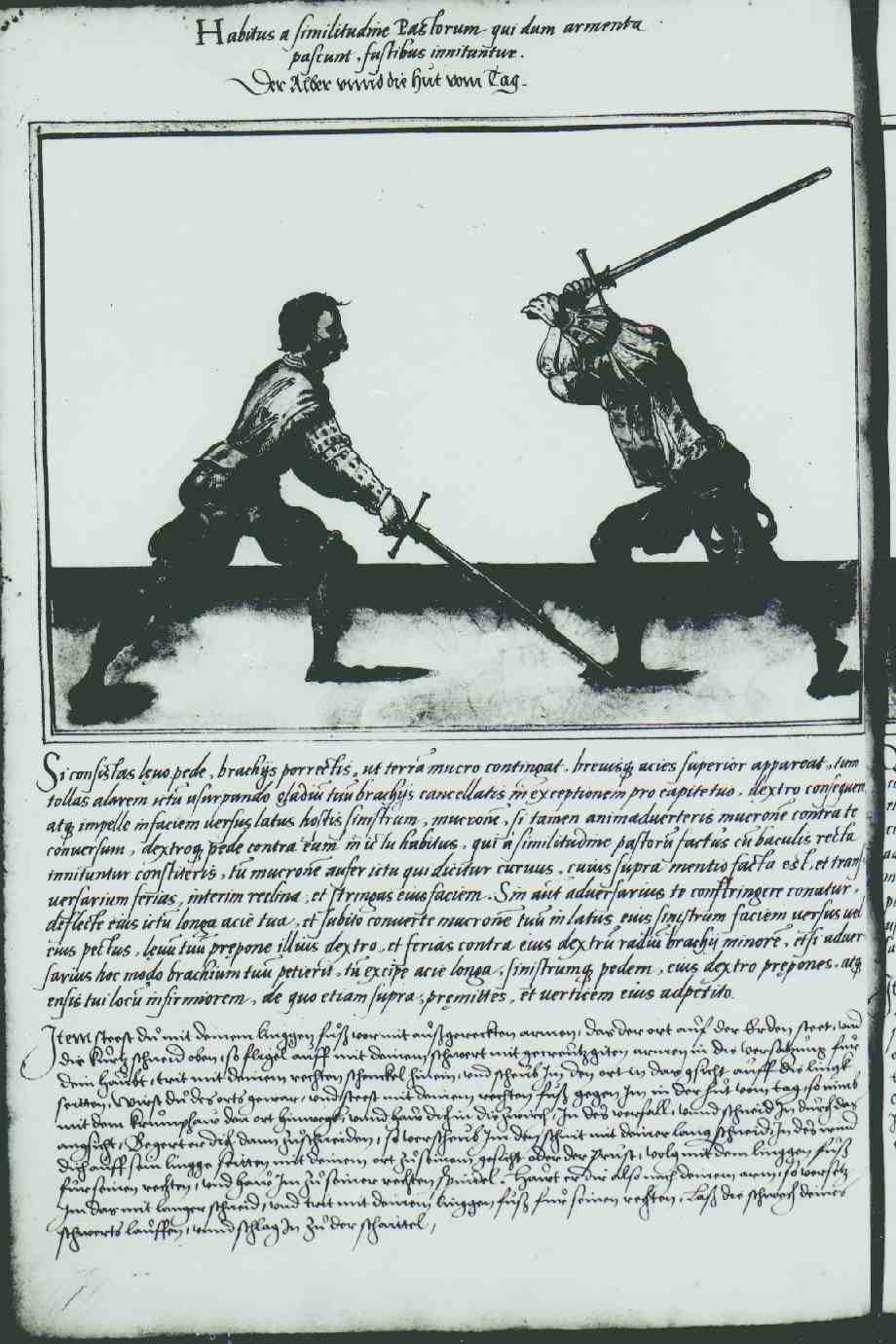
Having the elbows up as you do in the photo's above serves no purpose other than to increase your vulnerability for no gain. In the pictures from Danzig above, the fighter in Vom Tach is in a nice relaxed posture where he is expending little energy and not exposing his arms at all. I am at a loss to explain how you can justify having your elbows up based on both my evidence above and the fact that in no manual is this position you have chosen shown.
I am disappointed to learn that you make use of Kenjutsu in your method. Perhaps you should advertise what you teach as your own personal method (nothing wrong with that btw, just ask Guy Windsor) rather than as an eclectic form of Historical European Swordsmanship as you do now.
What you do may actually be more use in sparring than what most other "One manual at a time no kenjutsu" clubs are doing but I think we all need to bear in mind that ARMA's goals are not the same as many other clubs. I doubt many people are aware of your Kenjutsu influence at all. I hope you make it clear when you sign new students up.
I look forward to what will hopefully be a nice scientific debate of my comments above.
Just wanted to also congratulate Claus on some great scholarly posting. His knowledge and recall of the manuals is excellent. Keep it up Claus.
Cheers,
Stu.
 |
||||||||
|
|
||||||||