William Harrison's
Description of England, written about 1577, mentions both long staves and pairs of rapiers as being in use in England at that time, in both cases by rogues and troublemakers:
"This nevertheless will I add of things at home, that seldom shall you see any of my countrymen above eighteen or twenty years old, to go without a dagger, at the least, at his back or by his side, though they be aged burgesses, or magistrates of any city, who in appearance are most exempt from brabbling and contention. Our nobility wear commonly swords or rapiers with their daggers, as doth every common serving man also that followeth his lord and master. Some desperate cutters we have in like sort, which carry two daggers or
two rapiers in a sheath always about them, wherewith in every drunken fray they are known to work much mischief; their swords and daggers also are of great length, and longer than the like used in any other country, whereby each pretendeth to have the more advantage of his enemy. But as many orders have been taken for the intolerable length of these weapons, so I see as yet small redress; but where the cause thereof doth rest, in sooth for my part I wot not. I might here speak of the
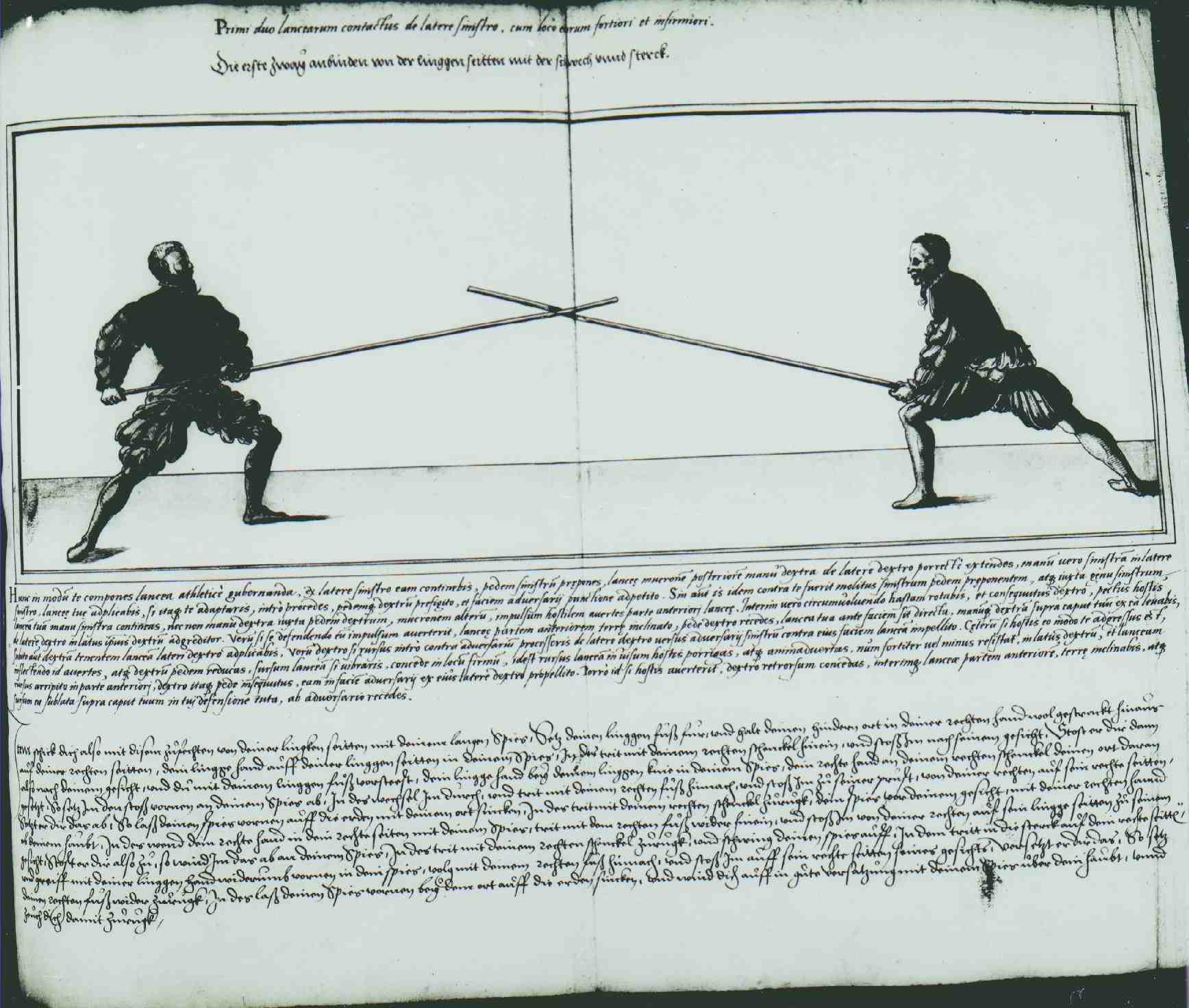
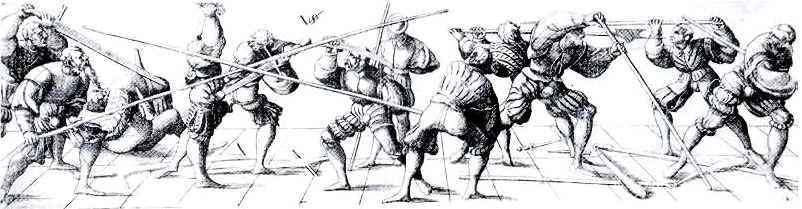
excessive staves which divers that travel by the way do carry upon their shoulders, whereof some are twelve or thirteen foot long, besides the pike of twelve inches: but as they are commonly suspected of honest men to be thieves and robbers, or at the leastwise scarce true men that bear them; so by reason of this and the like suspicious weapons, the honest traveller is now enforced to ride with a case of dags at his saddle-bow, or with some pretty short snapper, whereby he may deal with them further off in his own defence, before he comes within the danger of these weapons. Finally, no man travelleth by the way without his sword, or some such weapon, with us; except the minister, who commonly weareth none at all, except it be a dagger or hanger at his side." [Students of Silver take note - the pistol hath the vantage against the staff. <img src="/forum/images/icons/laugh.gif" alt="" />]
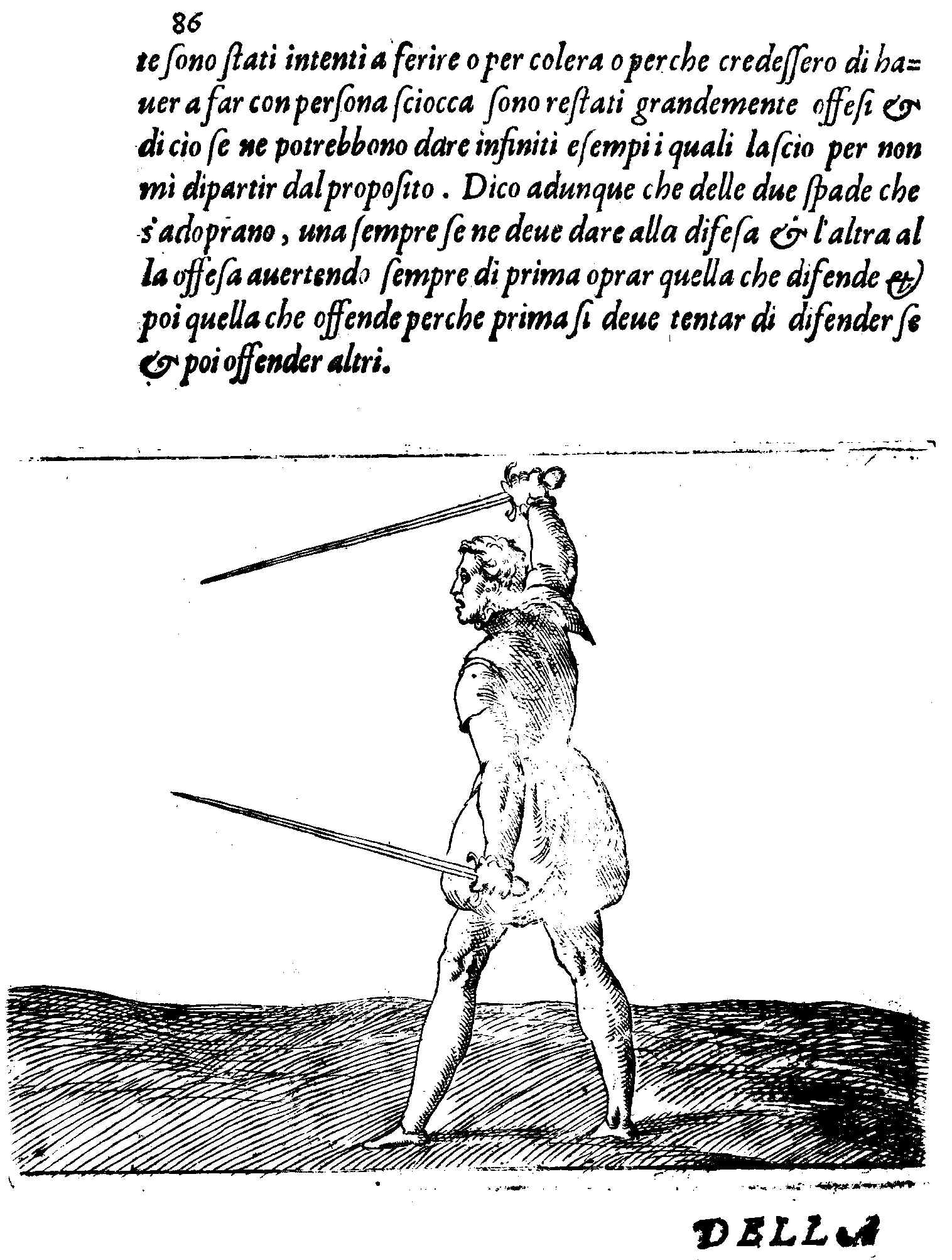
two weapons- there is virtually no evidence of any European "style" using 2 "cutting" weapons. Towards the 1600's we see a "case of rapiers" being used but the attention to it is minimal of the manuals that do adress it.
I have to disagree here. There was the use of the case of falchions on rare occasions in the 17th (18th?) century. In addition, both Marozzo and Manciolino (early 16th c.) have two sword material, and they were certainly using cutting swords. Granted though, it seems to have been more an exhibition style than anything.
Cheers