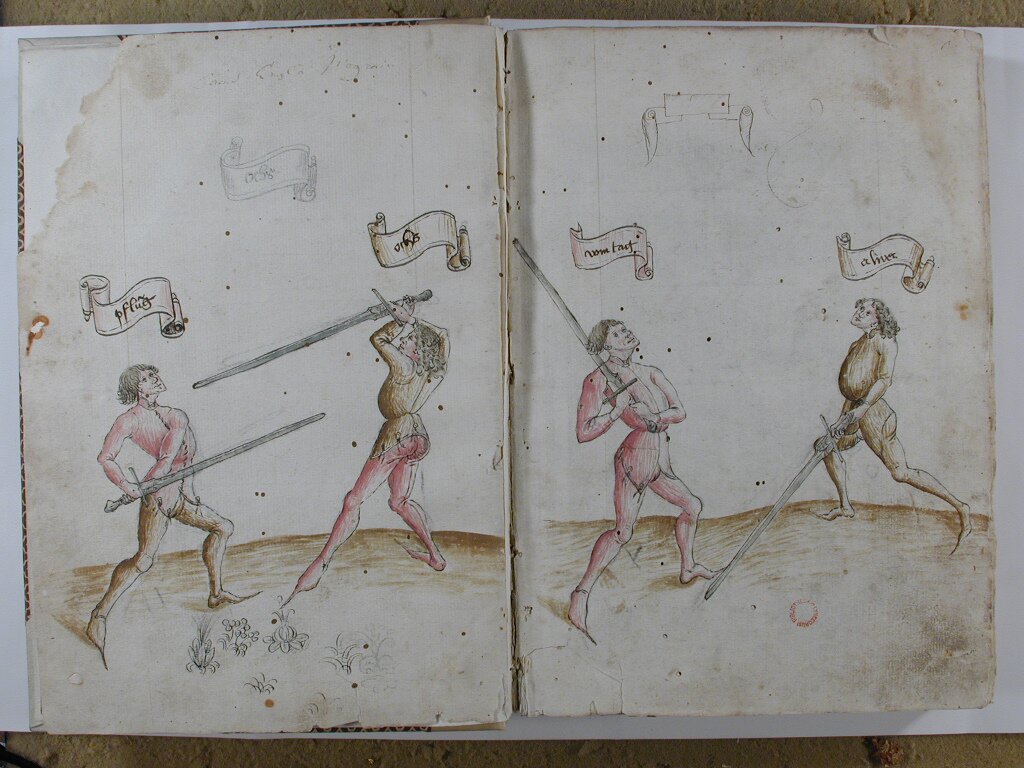
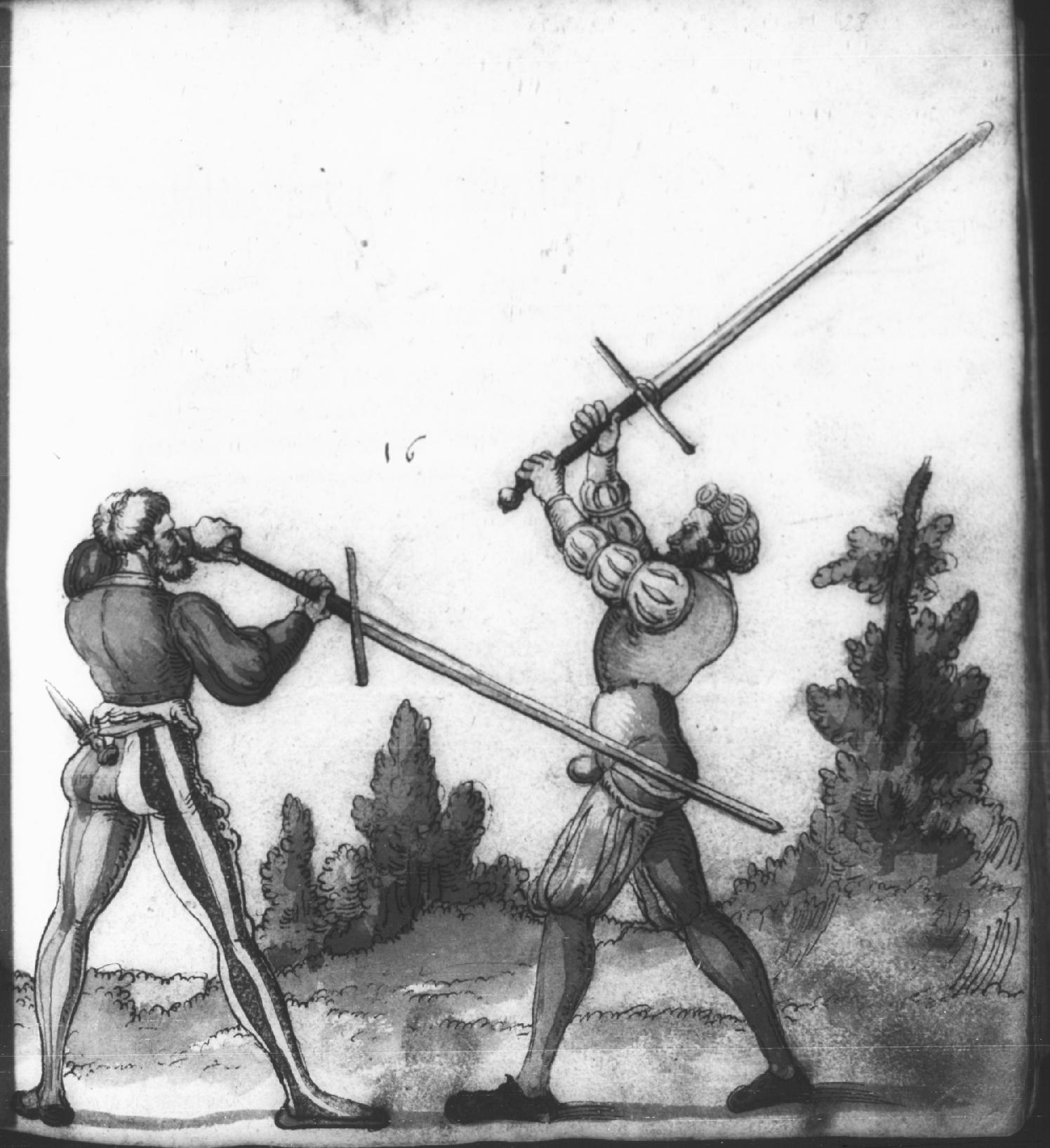
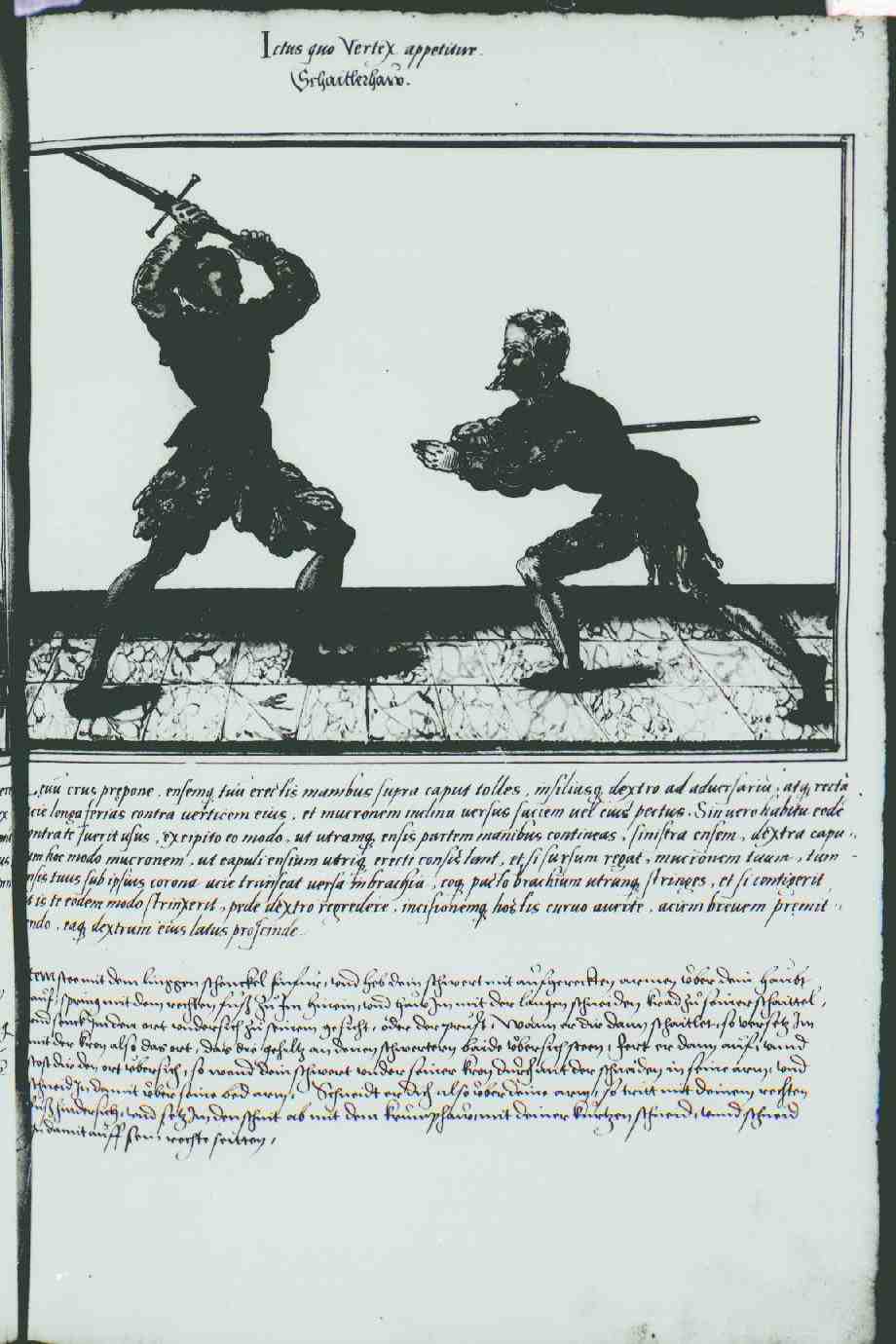
Sam,
It seems to me that the "Posta Di Donna" as seen in these examples is more comparable to the "Zornhut." I haven't spent much time with the Italian though, don't know it (I only have poor Latin skills). I think a closer example of the "lazy" Vom Tag is the upper right in the second picture, which is actually a Kron. The biggest clue that posta di donna is not the same is that in Fiore, his head is turned with the sword behind his head (as I could see from your posted picture). With the weight on the back foot, that would indicate that one is going for a big strike (like the Zorn).
As to the use of the "high" and "low" Vom Tag, yes, in the German usage you have to use both. But, relying on the "lazy" is not going to be as effective at ending the fight the quickest way possible (in my opinion).
I would be careful in saying that a "lazy" Vom Tag always (or almost) ends in edge on edge. That can be controlled very easily. In my experience, the "lazy" does bring about binden und winden, which is not necessarily a bad thing...
My thoughts, free, for nothing. And worth every penny.
-Jeremiah (SA)
Sam Nankivell wrote:To me it looks like the "lazy"
vom tag is the German version of the Italian
posta di donna.
If we look at Vadi's manual we can see that the Italian tradition uses both the "lazy" and non-"lazy"
vom tag. These are referred to as the
posta di donna and the
posta de falcone.
Here is the non-"lazy"
vom tag (Posta de Falcone, top right corner):
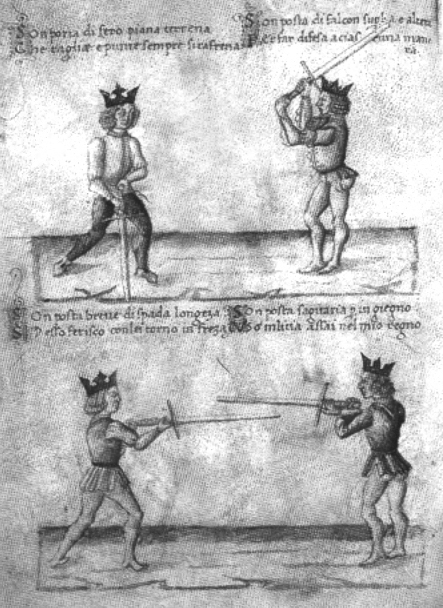
Here is the "lazy"
vom tag (Posta di Donna, top left corner):
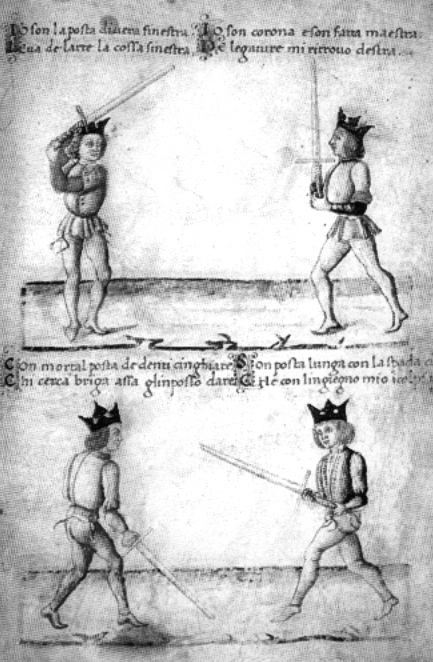
Here is another picture of the "lazy"
vom tag (Posta di Donna) from Fiore Dei Liberi's Flos Duellatorum (top right corner):
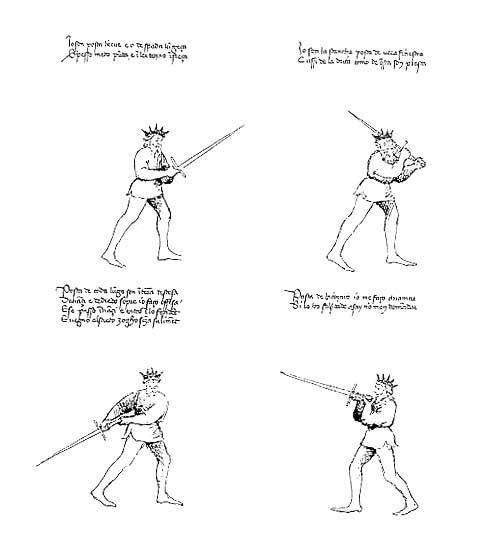
Both can be used according to the Italian tradition, is this not so in the German tradition?
Repetitio mater studorum est.