Home | About ARMA | Where to Start | What's New | Forum | Spotlight | Articles & Essays | Research & Reading | Index
ARMAtitlebar.jpg (47555 bytes)


The ARMA National Training Program Workshops

ARMA has aimed its efforts at guiding the experienced student as well as directing the beginning novice.

Our program is designed to take students through our curriculum, providing them with a certified set of skills. It is arranged as a two-tier track, one for general enthusiasts of all interest levels and dispositions, and another for long-term oriented practitioners seeking eventual instructor-level certification from ARMA. Our certification program is interested in educating and sincerely training students in these skills, not merely "endorsing" them as "approved."

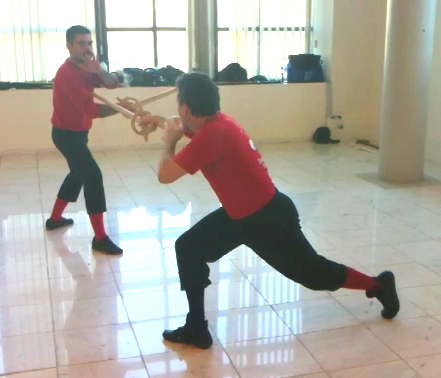
We provide a series of drills & exercises (Armatura) that enable students to acquire the skill base to teach themselves and make progress quickly.  The ARMA system of exploring real techniques places emphasis on proper intent –i.e., learning and executing moves with realistic speed and range in order to acquire a correct sense of counter-timing, balance, and motion.  ARMA stresses a “martial” approach to this subject –by this we mean emphasizing that these skills and techniques were intended to be used with force to cause injury –even though we never use them for this.  To be relearned properly today it is only logical that they must –must –be performed in earnest, with energy and speed and we must make the effort to practice them in this way.  This doesn’t come at first and has to be developed over time. The degree to which each student achieves it may vary. Thus, one of the things we try to inspire in modern students is a realistic appreciation of the martial content of the subject we study.  We therefore place value on the mental or psychological aspects as well as the physical or technical. 

See ARMA's 3-Tier Curricula


Ratings & Certifications
Within ARMA we have certification ratings for Scholars or students in each weapon (longsword, dagger, staff weapons, short sword & buckler, sword & dagger, rapier, rapier & dagger, etc.). The first two of these are:

General Free-Scholar: The general Free Scholar rating represents the absolute minimal core elements necessary for beginning study of Renaissance martial arts.  It includes fundamental components from historical sources. It revolves around the foundational drills and exercises required to train using the ARMA System and develop basic practice skills in the student.  Competency at the Free Scholar level requires 1-1.5 years of active study.

Senior Free-Scholar: The Senior rating reflects a deeper commitment of study on the part of the student as well as a higher degree of understanding of core concepts and principles. It incorporates more complex elements and demonstrates progress in performance. Material reflects a greater use of proper energy and intent in actions. Expect 1-2 years of study to acquire working knowledge of theories and skills at the Senior level.

Senior Researcher Ranking: ARMA also features an academic achievement ranking called Senior Researcher. The Senior Researcher title was established to recognize important and sizeable scholarly contributions of its members in the field of pure research. The title is granted to ARMA members who have significantly improved the understanding of the subject or knowledge of their peers through academic accomplishments, and yet who may or may not also be seeking Ranking within our NTP. Nominations for Senior Researchers of titles are made following consensus polling of the Study Group leaders, Senior Free-Scholars, and other Senior Researchers. Senior Researcher titles will be awarded by ARMA for recognized academic deeds in one of three areas from the period ARMA explores (roughly 1200-1700): 1. Acceptance by ARMA of an original submission of major research consisting of analysis or translation of a fighting text or piece of historical literature, in addition to one other minor article. 2. Acceptance of three minor articles or multimedia/online resource with the addition of having given a public lecture on an aspect of Renaissance Martial Arts at an official event. 3. Having published a periodical article or book in the field of historical fencing studies with the addition of having given a public lecture on an aspect of Renaissance Martial Arts at an official event.

Keep in mind that standards for general Free Scholar are minimal requirements that must be met for recognition. But local Study Group Leaders are free to add on any other additional elements they deem appropriate, so long as the core certification requirements are met. Senior Free Scholars have authority to advance their own students to the general rating upon approval. As part of advancement, ranked members are also expected to assist their fellows in study.

Under the National Training Program (NTP) a student would first seek ranking as a general Free-Scholar then as a Senior Free-Scholar, which consist of long-sword training, with further specializations following in secondary weapons such as short sword, rapier, shields, dagger, and pole-arms as part of instructor or Provost ranking. See also Students & Ratings within the ARMA

The ARMA National Training Program is designed as a series of ongoing cumulative workshops for members nationwide wishing to begin serious study under the extensive ARMA system of historical fencing study.

The program content is a composite approach derived from the teachings of a variety of historical masters, and specifically deigned for students and practitioners over extended distances who are without the benefit of a competent instruction or practice partners.

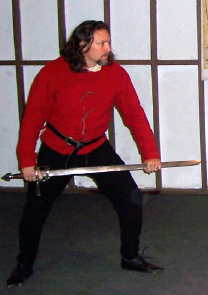
Untitled-10.jpg (72452 bytes)Each session of private lessons allows the student to learn our proven methodology of training and acquire knowledge under ARMA director John Clements’ pioneering curriculum and teaching method. The NTP currently focuses on three main areas: Medieval Long-Sword, Renaissance (cut & thrust) Short Sword, and Rapier. Other weapons and skills follow from these. The goal of each focused course is to advance the student’s comprehension of the real nature of long-bladed combat and actual weapon handling. These are intense focused workshops in the ARMA Study Approach for serious practitioners, both the novice and the experienced, that closely cover much more material than our group Seminars. Each Training Program workshop is aimed at Senior Scholar ranking and then eventual Competency Assessment for Free-Scholar Certification in each weapon. We offer private hands-on sessions of personalized, intense instruction. ARMA is far more than a "web presence" or "local group". Ours is a martial teaching system that offers results in historical fencing skills, not honorary "titles". 

The ARMA is no mere group of costumed reenactors that popped into existence with the recent explosion of the World Wide Web. Ours is not a curriculum derived from 19th century fencing styles or modern theatrical combat theories. The ARMA system reflects almost a decade of use in exploring the subject of Medieval and Renaissance arms and armor associated fighting skills.   From our earliest efforts, our system's focus has been to re-develop genuine ability through serious study of surviving fighting texts. 


The purpose of the ARMA system is to offer a foundation of earnest martial skill through competency in long-sword unarmored fighting (Blossfechten) acquired through a holistic comprehension of specific principles and concepts derived from the works of historical masters. The techniques of this foundation, including unarmed elements, form the basis for study of all later-period weapons and fighting methods.

What makes the ARMA’s knowledge and training program for historical fencing unique? 

The ARMA classes, workshops, and seminars utilize our continually revised system of established drills and exercises –for which we have adopted the old Roman legionnaire’s term from Vegetius, Armatura. 


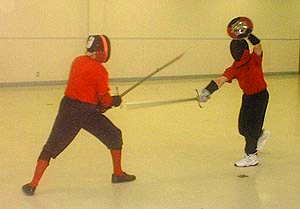
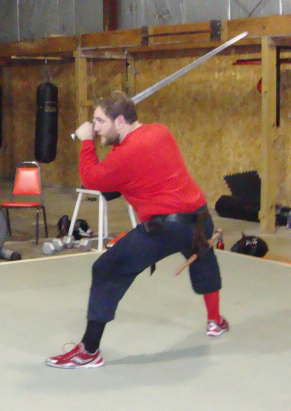
NTP Workshop 1.0 Content –Medieval Long-Sword Foundation: Suited to general enthusiasts seeking a firm grounding in historical skills, but ideal for every practitioner, this introduction covers fundamentals of the Italian and German masters for unarmored long-sword and great-sword. Material covers Tier-1 components including - basic principles, concepts, terminology, stances, guards, cuts, strikes, thrusts, major counters, plus introduction to training under the ARMA Study Approach and the essential practice drills and exercises of our Training Methodology.  This workshop prepares the student for Free Scholar rate certification. 

p0003172.jpg (53847 bytes) p0003160.jpg (41457 bytes)

An extended sample of the fundamentals of our Armatura: drills, basic cutting exercises, and core practice routines of the ARMA System for this workshop are:

  • Background & Context: sword forms, anatomy and parts function, essential Masters of Defence history and historical source literature, overview of major Italian and German longsword teachings of the 14th - 16th centuries.
  • Basic Stances & Guards: primary, secondary, posture, gripping.
  • Footwork & Stepping.
  • Basic Strikes & Blows: Oberhau & Unterhau, Meisterhau,  8-Cut & 16-Cut Exercises, Pressure & Pressing, Winding & Binding.
  • Armatura (conditioning exercises & open-drills):  distance/touch drill, foundational attacks, controlled striking & countering exercises for basic techniques, Floryshe routines.
  • Primary Concepts & Principles:   Timing (tempo),  Distance (range/measure), Technique (cuts, thrusts, slices, blows, grips/seizures),  Perception (judgment/place), the three fighting Ranges, the ways and 3 Times of attack.
  • Defense & Deflections: Versetzen, Absetzen, and Abwenden. 
  • Introduction to Closing & Entering - trapping and disarming actions.
  • Half-Sworidng Fundamentals.
  • Free-Play: Introduction to sparring with wasters and padded-contact weapons (unhelmed & unarmored).
  • Plus: Training tips, advice, and personal evaluation from the instructor.

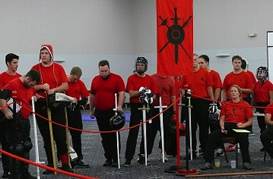
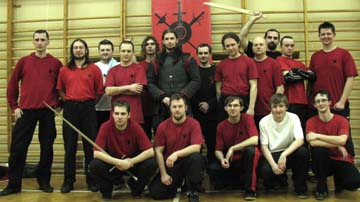
See photos here of these events


NTP Workshop 1.1 Content - Medieval Long-Sword Progression: Building from Workshop 1.0 for returning students, this course focuses on Tier-2 components: proficiency in techniques, comprehension of key concepts, and individual skill development. Intended more for long-term oriented practitioners seeking eventual instructor-level certification from ARMA, it stresses proper energy and intent in actions. This session also prepares the student for Senior Free Scholar testing.  Content includes:

  • Development of strong, fluid, and unpredictabel technique.
  • Comprehension of core principles.
  • Proficiency in the Meisterhau.
  • Advanced drills & practice routines.
  • Half-Swording techniques.
  • Free-hand use.
  • Proficiency in closing & disarming.
  • Key grappling moves.
  • Introduction to facing Long-staffs & Spears.
  • Introduction to facing Shields & Bucklers.
  • Single-Combat Tactics.
  • Fighting Multiple Opponents.
  • Long vs. short sword.
  • Dagger vs. sword.
  • Free-play tactics.

Following this course, the next, Workshop 1.2A, offers material extending from the fundamentals of the ARMA Study Approach to incorporate more of the teaching of the historical manuals. Content continues with: Improving form and style, Progressing in shield work, Multiple opponents, Tactics, Test-cutting with sharps, Sword vs. polearms, Introduction to Armored swordplay and Anti-armor blades (bastard-swords and spadones), unarmed escapes, and dagger vs. long-sword. Workshop 1.3 consists of advanced lessons in preparation for Senior Scholar ranking and eventual Free-Scholar Prize Playing for long-sword.


NTP Workshop 1.2B Content - European Staffs & Polearms:
An introduction to the unique range of Medieval and Renaissance pole-weapons, focusing on the principles and techniques of Medieval and Renaissance shafted weapons, such as the long-staff and short-staff (Langestange and Kurzestang). Following the methods from authentic period sources based on German manuals as well as the quarterstaff of English masters, this workshop introduces the fundamentals of pole-arms. Emphasis is placed on their unarmored use against dissimilar weapons. Includes exploration of spears, bills, halberds, and polaxes. Content includes basic stances, strikes, thrusts, techniques & actions, closing, disarms, trips, trapping & hooking, and basic drills and partnered exercises.  Required prerequisite: 1.0, 2.0, or 3.0.


NTP Workshop 2.0 Single-Sword - Cut & Thrust Foundation:
Prerequisite: Workshop 1.0.
Overview: Introduction to Renaissance military swordplay of the cut-and-thrust/side-sword also known as the shorte-sword, field sword, and arming sword. Learn about these major Renaissance blade forms and often ignored and misunderstood fighting styles. Suited to general enthusiasts seeking a firm grounding in historical skills, but ideal for every practitioner, material here also covers back-swords and the use of bucklers. Discover the origins of this fighting style, its application with daggers and its relationship to the rapier. Prerequisite 1.0 above. Content includes:

  • Renaissance sword forms and anatomy
  • Renaissance masters & manual source foundation
  • Basic stances and footwork/stepping
  • Fundamental, cuts, thrusts, and strikes
  • Essential fighting techniques
  • Attacks and counters
  • Basic defense
  • Second-hand use
  • Closing grips & seizures
  • Facing double-hand swords & pole-arms
  • Core Drills, Routines, and Exercises

NTP Workshop 2.1 Sword & Buckler / Sword & Dagger - Cut & Thrust Progression: Required Prerequisite: Workshop 2.0.  For returning students, this course builds from Workshop 2.0 and focuses more on proficiency in techniques, comprehension of concepts, and individual skill development. Intended more for long-term oriented practitioners seeking eventual instructor-level certification from ARMA, content includes:

  • Tactics and techniques
  • Progression in closing & entering actions
  • Trapping & disarms
  • Buckler fighting
  • Sword & dagger
  • Test-cutting
  • Free-play
  • Sword vs. rapier

NTP Workshop 3.0 Rapier Foundation:
Recommended Prerequisite: Workshop 2.0.
Overview: Introduction to Renaissance civilian swordplay. Includes fundamentals of foyning fence, thrusting attacks, foundational footwork, voids and parries, second-hand use, the ignored much and dismissed close-in techniques (closing & entering, trapping & disarms), proper cuts, single rapier and use of the dagger, plus rapier vs. cut & thrust sword.   Students having no prerequisite will first learn the shared foundational elements of Workshop 1.0 above:

  • Rapier origin and anatomy
  • Rapier source literature foundation
  • Basic stances and footwork/stepping
  • Basic defense
  • Fundamental thrusts and strikes and edge blows
  • Essential fighting techniques
  • Attacks and counters
  • Second-hand use
  • Closing grips & seizures
  • Core Drills, Routines, and Exercises
  • Key training essentials

NTP Workshop 3.1 Rapier Skills:
Recommended Prerequisite: Workshop 3.0. R

  • Rapier & Dagger fundamentals – offense and defense
  • Rapier & Buckler
  • Rapier & Cloak
  • Rapier vs. Swords
  • Grappling in rapier combat
  • Tactics of foyning fence
  • Free-Play Essentials

NTP Workshop 4.0 Renaissance Unarmed Fighting - Core Grappling & Wrestling

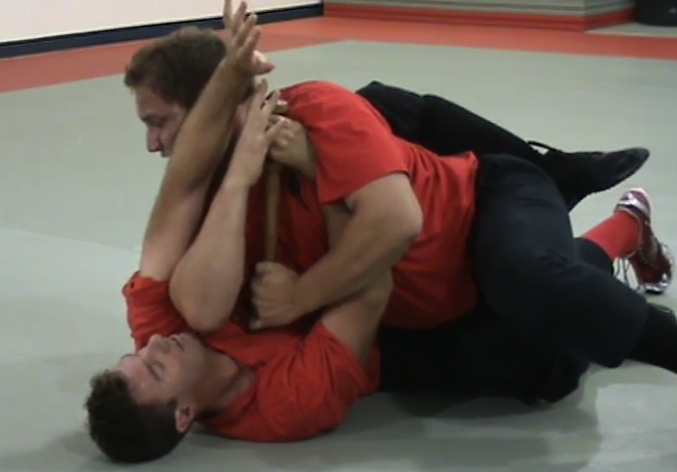
Recommended Prerequisite: Workshop 1.0. The core fundamentals of unarmed combat principles and techniques up to and including closure, take downs, joint locks, submission holds, from 14th - 17th century sources.


NTP Workshop 4.1 Renaissance Unarmed Fighting - Progression

Recommended Prerequisite: Workshop 4.0. Strikes, pugilism, and kicks of close-combat, with unarmed defense against daggers, from 14th - 17th century sources.


NTP Workshop 5.0 Renaissance Dagger Fighting

Prerequisite: Workshop 1.0. Fundamentals of 14th - 16th century European close-combat techniques for fighting with rondel and edged daggers. Program arranged on request.


NTP Workshop 6.0 Armored Combat & Longsword

Prerequisite: Workshop 1.0. Fundamentals of historical European close-combat techniques for fighting in 14th - 15th century full plate harness with swords and with dagger. Program arranged on request.


NTP Competency Assessment Workshop – An examination for Senior Free Scholar ranking certification available to eligible students having successfully completed prerequisite courses. Scheduling by appointment.


NTP  Senior Instructing Workshop:
Recommended Prerequisite: Workshops 1.0 to 4.1. This senior-level course is designed to certify the student in teaching the ARMA methodology of historical fencing up to their current Weapon Proficiency Rating in all study areas.


NTP Historical Series:
Recommended Prerequisite: Workshops 1.0 to 4.1. These special classes cover the teachings of and style as presented in one specific source text or master's work. Explore the latest interpretation and research as presented in a full-day seminar by a senior ARMA instructor. Current course offerings include:

  • The MS. I.33 Sword and Buckler text of c. 1285
  • The Liechtenauer Tradition - Teachings of the German Fechtmeisters
  • The Fighting Teachings of the 15th century Codex Wallerstein
  • The Kunst de Fechten of Fechtmeister Joachim Meyer 1560-1570
  • The Pole-Arm Teachings of Paulus Hector Mair's Compendia c.1540
  • The Grapling and Combat Wrestling of Renaissance Martial Arts
  • Medieval & Renaissance Dagger Fighting

The ARMA NTP workshops provides for a safe, realistic, and practical opportunity for students and enthusiasts to engage in historical fencing activities.  After teaching this subject in public classes on and off for ten years now, full-time historical fencing researcher-instructor John Clements, Director of ARMA, offers these comments: 

“...We have developed in ARMA a proven system through our approach, our methodology, and our martial attitude, that produces quick results.  It enables a student to grasp the core fundamentals of the historical teachings that lead to genuine ability. But its real strength lies in giving the student the tools to teach themselves...”

In its National Training Program, ARMA stresses a “martial” approach to this subject –by this we mean emphasizing that these skills and techniques were intended to be used with force to cause injury –even though we never use them for this.  To be re-constructed properly today it is only logical that they must –must –be performed in earnest, with energy and speed and we must make the effort to practice them in this way.    This doesn’t come at first and has to be developed over time. The degree to which each student achieves it may vary. While other organizations may focus more on the pageantry and role-playing of knightly tournaments or on the “deportment” of proper “technical exchanges” within a conception of gentlemanly duels, ARMA does not.  Although these may be historical approaches, we feel such things are more ritual than martial and that ritual combats of the period were far outweighed by real fighting.  Thus, one of the things we try to inspire in modern students is a realistic appreciation of the martial content of the subject we study.  We therefore place value on the mental or psychological aspects as well as the physical or technical. The ARMA believes understanding of Medieval and Renaissance fencing must involve much more than simply posing and “dancing” with a weapon, or scoring imaginary “points” in a game, and certainly far more than artistically “faking” a fight.  To demonstrate sound fighting skills with documented historical techniques requires not choreography, nor 19th century duelling styles, but martial ability and historical authenticity. 

In ARMA, we have a set curriculum of study and frequently present national seminars and workshops in various cities whenever they are arranged there by local members or other interested parties. We have an established national certification program for testing members seeking ranking recognition within our curriculum. Testing for ranking follows a set standard of required skills and knowledge laid out in Study Sheets. Essentially, each individual Associate Member or Study Group pursues the curriculum for core skills and specific weapons as they can, and as they see fit, from their own personal interest and or any official instruction they have received at certified ARMA events as well as from just the online Member Area's guidance. Scheduling a NTP Workshop in your own area is also possible. For 1-2 students rates are $30 an hour each for a 4-6 hour set. For 3-4 students rates are $20 an hour each for a 4-6 hour set. In addition to this training time, may also included is 1-2 hours of "free-play" (sparring) with senior ARMA students, for a total of 6-8 hours combined training.


To inquire about scheduling an official NTP Workshop email us. Participation per student typically runs $50 - $75 per member.  The rate for an 6 to 8-hour NTP Workshop is approximately $850 for a single course, or $1150 for a 2-day combination event. plus travel & lodging.  We assist in both promotion and registration of attendees once a suitable location is arranged and a date confirmed.  We require a facility with a high ceiling and an area of at least 30x30 square feet.  Let us know which series or program and what dates you are looking for. Both weekends and weekdays are available (weekends are preferable). While non members may attend open Seminars, participation in NTP Workshops is open only to ARMA Members. Students must be registererd as a Member at least 6 months prior to participation.

ARMA additionally offers open group Seminars on basic Medieval & Renaissance fencing skills for non-members worldwide (these open events are outside the NTP certification curriculum). To inquire about scheduling an ARMA Seminar or holding an event please email us. Our seminars are ideal for presentations for schools, churches, youth groups, teen clubs, and middle & high schools history or humantities classes, and college or university courses.


Special Events Ideal for Private Occasions

Youth Camps - This special program explores our Western martial heritage with an emphasis on the spiritual and ethical teachings within the masculine Christian tradition of chivalric values. Focused on core instruction in the Medieval longsword for young teens this course can be presented as a single one-day event or spread over several days. Email us for details.

Corporate-Activity Fun Day - Get your office together for a unique hands-on exercise workshop where the initiative and cunning of the individual warrior spirit is matched with cooperative group tactics for a chance to bash and clash together while learning real skills. Bash and clash with the boss and co-workers while exploring the martial discipline of historical fencing studies.

Home-Schoolers - A unique phys-ed opportunity that allows kids to exercise while learning about history and their heritage as they acquire genuine self-defense skills within a Western Civilization-centered curriculum. Our ARMA Youth Program is an ideal activity for home-schooled kids ages 12 and up.

We are also available with presentations and hands-on lectures for middle & high schools history or humanities classes, youth groups, churches, homeschoolers, teen clubs, college lectures, ROTC courses, and private tutoring for individuals.


Note: ARMA® - The Association for Renaissance Martial Arts and the ARMA logo are federally registered trademarks, copyright © 2001. All rights reserved. No use of the ARMA name or emblem is permitted without authorization. Reproduction of material from this site without written permission of the authors is strictly prohibited. HACA and The Historical Armed Combat Association copyright © 1999 by John Clements. All rights reserved. Contents of this site © 1999-2006 by ARMA.

theARMA@comcast.net