Postby Doug Marnick » Sun Nov 21, 2004 11:38 am
Just some comments from a first year scholar. When I first started to learn this maneuver, I found it to be weak and awkward as well. After studying Meyer (Lindholm), I found out what I was doing wrong. I don't know if this applies to you or anyone else, but hopefully it helps. Note: I am a right handed swordsman.
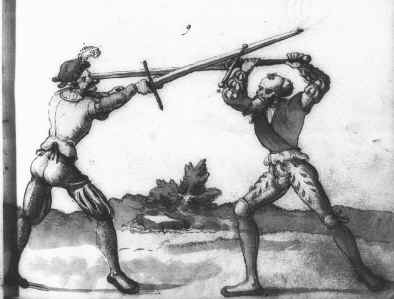
WRONG: From Vom Tag, I used to strike the zwerchhau by turning the short edge to my inside (left)! Then I would swing the blade around in an arc to cut horizontally with the short edge against my opponent's left upper targets. When doing so, the moment of the cut would place me in the following position: Right foot forward, right arm fully extended along the line of the sword on top of the hilt, crossguard in front of my face, the flat of the blade and my right forearm perfectly parallel to the ground.
RIGHT: From Vom Tag, I now turn the short edge to my outside (right)! and continue turning as I step and swing the blade around in an arc to cut horizontally with the short edge against my opponent's left upper targets. When doing so, the moment of the cut would place me in the following position: Right foot forward, (off line of center), arms are up, crossguard over my head, right arm at a 90 degree angle. Now the blade angles down a bit, so as stated in the above post, I can still threaten with the point. Thumbing the ricasso helps me stabilize the blade.
Doing it with the LONG edge from my right to my opponent's left is, IMHO, just a high mittelhau. I find it awkward for my right wrist to keep the point down toward the opponent's torso.
Regardless, I now understand the idea of striking a zwerchhau quickly from both sides and how it is done with speed and power. Again, Jay, I don't know if this explanation applies to your difficulty, and I apologize if it appears condescending. At the least, I hope this post was informative for other inexperienced fencers such as myself.
Doug Marnick
NYC
"The sword was a weapon of grace, nobility, and honor... which was little comfort as you slowly bled to death in a dung-filled moat."