Speed and Force

For Historical European Fighting Arts, Weaponry, & Armor

Moderators: Webmaster, Stacy Clifford

User avatar
Sean_Gallaty
Posts: 42
Joined: Mon May 23, 2005 8:12 am
Location: Memphis, TN

Re: Speed and Force

Postby Sean_Gallaty » Wed Jun 01, 2005 10:10 am

Deja Vu all over again.

This mirrors so many arguments I've had and heard between nonsparring martial arts schools and sparring schools. Why is it always the non-sparring schools that want to posture themselves as saying that sparring is 'doing something wrong' on some levels and that there's some big gain in purity or method by not contact sparring.

In the end, those objections are all theoretical. I've yet to ever see a martial arts practitioner of any sort who didn't spar that was worth a damn on the mat. Some styles spar sooner than later, understandably but still.

I've heard it all when it comes to excuses why people don't spar. In the end, it comes down to - they -can't- spar because without sparring and constant revision, crap creeps into the style and they lack the flexibility or the adaptability to change their style.

Here's thing - even the works of the great masters of ANY style is just a record of their belief about the style at that moment in that place. Every practical martial art grows, changes and adapts. Treating the documentation we have as some static dictum and trying to follow that with dubious literal interpretation might be an interesting historical exercise, but it's not going to develop a practical martial art.

One of the most wonderful martial arts schools I've had the pleasure to attend was Master Han's Taekwondo. The group I studied with was lead by a real bear of a guy who had trained in juijutsu, was a blackbelt in another tae kwon do school for years and was a beat cop for 15 years. In that style, all of the blackbelts would have a weekly session with the grandmaster of the style and they would go over technique repeatedly. That is a living style. I can assure you, that compared to that grandmaster travelling around and observing and incorporating other things into his style, and testing them practically with his own instructors -- all else is bull.

THAT is what the masters did, and that's what made them masters. This is the methodology ARMA appears to be trying to create. Research, interpret, drill, spar, test, revise, document and teach.

It's a noble goal, and hard. Incredibly hard. ARMA seems to have chosen the most difficult path available, and that is to assume nothing and question everything. It would be so much easier to pretend we had valid sources for this info and practice it rote verbatim without sparring to show us how wrong we were - but, ultimately that's not what ARMA seems to be about.

Its' easy to attack ARMA's position, because they admit they don't know. There are so many people claiming they DO know, and really - who is to say they are wrong? There's no authority. In truth, admitting you DON'T know is the only honest and brave position to take.

We really don't know, any of us. This knowledge has been lost and has to be rediscovered with diligence, hard work and honest self appraisal and testing.

Start with yourself.

User avatar
Jako Valis
Posts: 28
Joined: Wed May 04, 2005 5:31 pm
Location: Finland

Re: Speed and Force

Postby Jako Valis » Wed Jun 01, 2005 10:12 am

Mike,

It is control that I am talking about Jako

I know, it is the theme of this thread.
if you don't strike hard and fast you are never doing it at full speed

Again, if I do it fast I may be doing it full-speed, but it has little to do with how "hard" I do it.
...as you would actually do it and attempting to control your sword in the act of actual cutting

What do you mean by this? When I free-fence, I don't usually do it exactly as I would do it if it was for real, because then I wouldn't be stress testing and trying out techniques I'm not yet familiar with. And yes, I'm in this for the art and in the long run, so I wan't to learn new skills and not just hone a set of basic responses. And I don't think there is a proper cut without control.
Controlling your sword when there is not intention or no speed behind it is easy

Control of the weapon gives you intention. Control of the weapon leads to speed. First control, then intention and then build up speed. All three will develop together in time, though.
controlling your sword when you are striking just as you would in a fight is precisly the point of using paddeds and sparring

Controlling your weapon as you would in a fight is the point of the whole art, at least partially. The point of a padded sword seems to be not that but the safety factors, right? You can do slow sparring, but yes, you should aim to use the sword as in a fight also then, just slower.

And if it was all just a simulation of duel, or personal attack or other form of combat, how can there be several hits in one session? Would you really fight the way you spar (in the above-mentioned video clips)?
...fighting it is just tapping, in a fight you strike hard and fast, as hard and fast as you can.

Did you read my comments in the WMA Schools -thread about this? In a fist fight, one hit may not end the fight, in a swordfight, a clean cut to head will end it. No need to bruise the opponent, just give him a full-speed cut but without power. That's control, and also good polite manners, and doable also with a steel blunt.

Yours,
Jako

User avatar
Gene Tausk
Posts: 556
Joined: Thu Sep 19, 2002 7:37 pm
Location: Houston, TX

Re: Speed and Force

Postby Gene Tausk » Wed Jun 01, 2005 10:16 am

Jako:

I believe you are misrepresenting what I have written. I re-read my post and in no way did I ever imply or state that a swordsman should lose control of his weapon.

It is clear, however, that the amount of energy that will be transferred to an opponent when struck with a contact weapon, waster or blunt is different.

When handling a contact weapon, waster or blunt, the degree of force and amount of energy that will be transferred to the person receiving the blow is radically different. A full-power strike with a correctly made contact weapon, like Jeanry's, will certainly sting and hurt and cause a bruise. Such strikes are powerful enough that, as I stated in my post, that IMHO the bare minimum of protection needed to be worn is head protection (including neck protection), safety gloves and genital protectors. Injury can happen, of course, but because contact weapons dissipate the energy upon impact, the threat of serious injury is greatly reduced.

Wasters are made of wood. Blunts are made of steel. A full-power strike on an unprotected human body with these instruments can cause serious injury. The materials used to make these tools do not dissipate their energy upon contact. Hence, the result of receiving a full-power strike with these is different than receiving a full-power strike with a contact weapon.

BTW - if you think getting struck with a contact weapon is no big deal and thus, using contact weapons while sparring produces such a small effect that individuals sparring with such weapons are not concerned with getting struck, then, respectfully, you are very much mistaken. I can assure you that when sparring with contact weapons with advanced ARMA members such as Tim Sheets or Jake Norwood or Stew Feil, getting struck with such a weapon will leave a lasting impression. I know of no ARMA member who willingly will take a blow from these correctly made contact weapons.

Sparring with contact weapons involves a certain degree of control and respect, just as sparring with wasters and blunts.
The issue is always controlling the weapon.

I respectfully suggest you do some sparring with correctly made contact weapons against ARMA trained individuals before consigning such valuable training devices to the dustbin. I know I do not have time to waste doing training that will not help me understand swordsmanship and if I may be so bold as to speak for other ARMA members, neither do they. We would not incorporate sparring with contact weapons into our training program if we did not feel that it was valuable training.


------------------>>>>>>>>>gene tausk
SFS
Director - Houston ARMA Southside Study Group
------------->>>>>>>>>>>>>gene tausk
Free-Scholar
Study Group Leader - Houston ARMA Southside
ARMA Forum Moderator

User avatar
Jako Valis
Posts: 28
Joined: Wed May 04, 2005 5:31 pm
Location: Finland

Re: Speed and Force

Postby Jako Valis » Wed Jun 01, 2005 10:23 am

Sean,

I hope your post was not targeted toward me, because if it was, I must say I'm a bit offended by it.

Firstly, I am not attacking ARMA in any way and I am not questioning the use of padded swords. I don't use them, and I can see why people use them, I just don't agree with their usage and I am trying to point out that they are not absolutely necessary tools. I'm presenting a different approach to yours, not criticizing it.

Neither am I attacking any of the people here, I may be arguing, I may be disagreeing, but at least I'm doing my best to give reasons and examples for my opinions. That's what this forum is for, right?

Lastly, the first person to bring up the idea of NOT doing any sparring or free-play is you, yourself. I'll set it straight, here and now. I do free-play. And I do it with steel blunt swords, with some protective equipment, most important being steel gauntlets, fencing mask, pads and a plastron. And I have not had serious injuries. Bruises? Yes. Minor cuts? Yes. A bleeding lip? Yes. Some pain and aching? Yes. Broken bones? No.

I hope this clarifies some things for you. Thank you for being patient.

Yours,
Jako

User avatar
Jako Valis
Posts: 28
Joined: Wed May 04, 2005 5:31 pm
Location: Finland

Re: Speed and Force

Postby Jako Valis » Wed Jun 01, 2005 10:36 am

Gene,

Yes, I know what a padded sword is, thank you. <img src="/forum/images/icons/smile.gif" alt="" />

Would you kindly now understand, that what I'm trying to say is:

a) controlled blow is a blow made by correct mechanics, with correct blade alignment, correct posture and correct follow-through, with full POTENTIAL of penetration. The things you control are: 1) amount of penetration and pressure in follow through, which give POWER to the cut. 2) speed of the cut, which effects timing, and the amount of IMPACT on contact. 3) Target of the cut, are you cutting on the surface, or are you cutting inside the target.

To make light contact, you can go full-speed, and target the impact on the surface and ease on the pressure, or you can (if slicing) give up the impact and only give light pressure. You have many options.

The speed don't change.

b) If you cut at your opponent, and he crosses blades, you need to be sensitive, you must be able to go from HARD to SOFT.

c) If he doesn't cross swords, you CAN still remember that you are a skilled swordsman, and treat the scenario as if blades had crossed, and go from HARD to SOFT. The potential for a killing blow is there, but you choose not to manifest it.

Not that much of an issue with a padder, but with a steel blunt, yes it is issue. But this is control, and makes it possible to use steel swords in sparring. And behold, you get all the cool stuff you can only do with a steel sword, and the sparring is still safe (equals: acceptable risks).

I hope you now understand my position. And yes, I do perfectly understand yours. And I know padders can leave marks, that's why I mentioned the neck thing, if you read my post.

With utmost respect,
Jako

User avatar
Aaron Pynenberg
Posts: 533
Joined: Tue May 04, 2004 3:47 am
Location: Appleton WI

Re: Speed and Force

Postby Aaron Pynenberg » Wed Jun 01, 2005 10:46 am

-I love it when guys who like to fight try and discuss fighting on the forum, it always gets a little heated, which I think is good sometimes. It shows we are passionate about the subject. I think this discussion could be summed up to semantics mostly. Full speed and power, controlled force, etc, are all relative to the individual.

I think Tim's explination makes the most sense to me, with padded swords you can always add a little more "pepper" as you know that the capabilities of the padded sword design allow for that. If I add that "peeper" to the blunt or the waster there would be some great bodily harm or death for sure. Lets not forget that Musashi used a wooden sword to kill most of his opponents, wodd or not they are still deadly.

Jeff, think if you and I sparred with our blunts like we did with our padded bouts- yikes that would not be pretty- Aaron
"Because I Like It"

User avatar
Jako Valis
Posts: 28
Joined: Wed May 04, 2005 5:31 pm
Location: Finland

Re: Speed and Force

Postby Jako Valis » Wed Jun 01, 2005 10:52 am

Aaron,

And for that pepper you are willing to give away all that using steel gives you over padders?

It's a bit like eating the beef with pepper rather than the whole hamburger without pepper. Or actually more like eating the wrappings with pepper rather than the hamburger without pepper. <img src="/forum/images/icons/smile.gif" alt="" /> (Don't take this too seriously, couldn't resist it.)

Yours,
Jako

User avatar
JeffGentry
Posts: 1089
Joined: Tue Apr 20, 2004 8:35 am
Location: Columbus Ohio

Re: Speed and Force

Postby JeffGentry » Wed Jun 01, 2005 11:05 am

Hey Aaron

Jeff, think if you and I sparred with our blunts like we did with our padded bouts- yikes that would not be pretty- Aaron


exactly my point and i don't think you or i was at full force, speed maybe.

Even the shot David took to his neck when me and him sparred, that would have been very ugly for him, it was controled, right where i wanted it and i did not hit him with full force.

Jeff
Semper Fidelis

Usque ad Finem

Grace, Focus, Fluidity

User avatar
Aaron Pynenberg
Posts: 533
Joined: Tue May 04, 2004 3:47 am
Location: Appleton WI

Re: Speed and Force

Postby Aaron Pynenberg » Wed Jun 01, 2005 11:07 am

No prob. this is a pretty good topic glad to see your lightening up a bit- I think you have some valid points as do we all.

As an aside, after reading some of your posts I wanted to get a feel for where you were coming from so I went to check your personal info and saw nothing. I have never met most of the people on the forum yet but it is nice to get a feel for them when they have filled out the questions on thier personal stuff, would you consider doing the same? Thanks man, Aaron
"Because I Like It"

User avatar
Mike Cartier
Posts: 594
Joined: Mon Sep 23, 2002 12:21 pm
Location: USA Florida

Re: Speed and Force

Postby Mike Cartier » Wed Jun 01, 2005 11:46 am

And for that pepper you are willing to give away all that using steel gives you over padders?


I think this is the real disagreement here in this discussion, we respect all 3 methods of play. Steel, wood and paddeds. each gives something to the training so we do all 3.
Mike Cartier
Meyer Frei Fechter
www.freifechter.com

User avatar
David Craig
Posts: 81
Joined: Wed May 12, 2004 10:19 am
Location: New Jersey, U.S.

Re: Speed and Force

Postby David Craig » Wed Jun 01, 2005 11:57 am

Jako,

I don't think anyone here is arguing not to use steel. What we are arguing is that padded weapons allow you to fight more intensely without worrying as much about the chance of injury. Obviously they don't give you the feel of steel, behave quite differently in the bind, etc. They are just one tool that we happen to use. Other groups use modified, weighted shinai for the same purpose.

But in reading your responses I believe you are ignoring this point about sparring with steel made by Tim Sheetz, which was similar to what I said in my first post:

My actions are more inhibited with a focus on technique and not damaging my training partner.


Do you not also have this mindset when sparring with steel? Are you so confident in your control that you don't have to give a second thought about it? And if you do think about it when sparring, do you not believe that thinking about safety while supposedly fighting an opponent is going to affect your actions?

Another point that I don't think has been raised concerns the danger of thrusts. Even with a padded weapon, a solid thrust can knock the wind out of you, snap your head back, bruise, and is a significant danger to the throat and groin. With steel the danger is far more serious unless you are wearing significant protection -- protection that is going to make it somewhat problematic to simulate blossfechten. Also, certain situations are difficult to control, such as the opponent who literally steps into your thrust as both of you pass forward. Such thrusts can hit with major force even if you are not putting full power into it.

David

User avatar
Matthew_Anderson
Posts: 335
Joined: Wed Sep 24, 2003 5:57 pm
Location: Virginia Beach, VA

Re: Speed and Force

Postby Matthew_Anderson » Wed Jun 01, 2005 12:15 pm

Jako: "in a swordfight, a clean cut to head will end it. No need to bruise the opponent, just give him a full-speed cut but without power. That's control, and also good polite manners, and doable also with a steel blunt".

OK, now I think I see where you're coming from. The focus of our sparring is definately not to develop "good polite manners" or to fence "without power". I don't think that's what Talhoffer or Ringeck or Dei Liberi taught either. <img src="/forum/images/icons/wink.gif" alt="" />

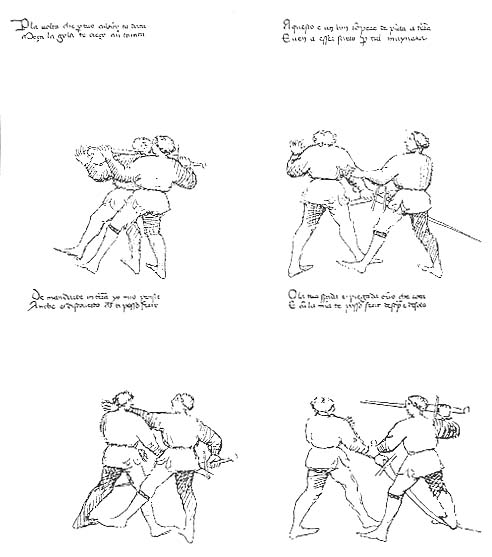
Does this look "polite"? Would it work without "power"?

Image

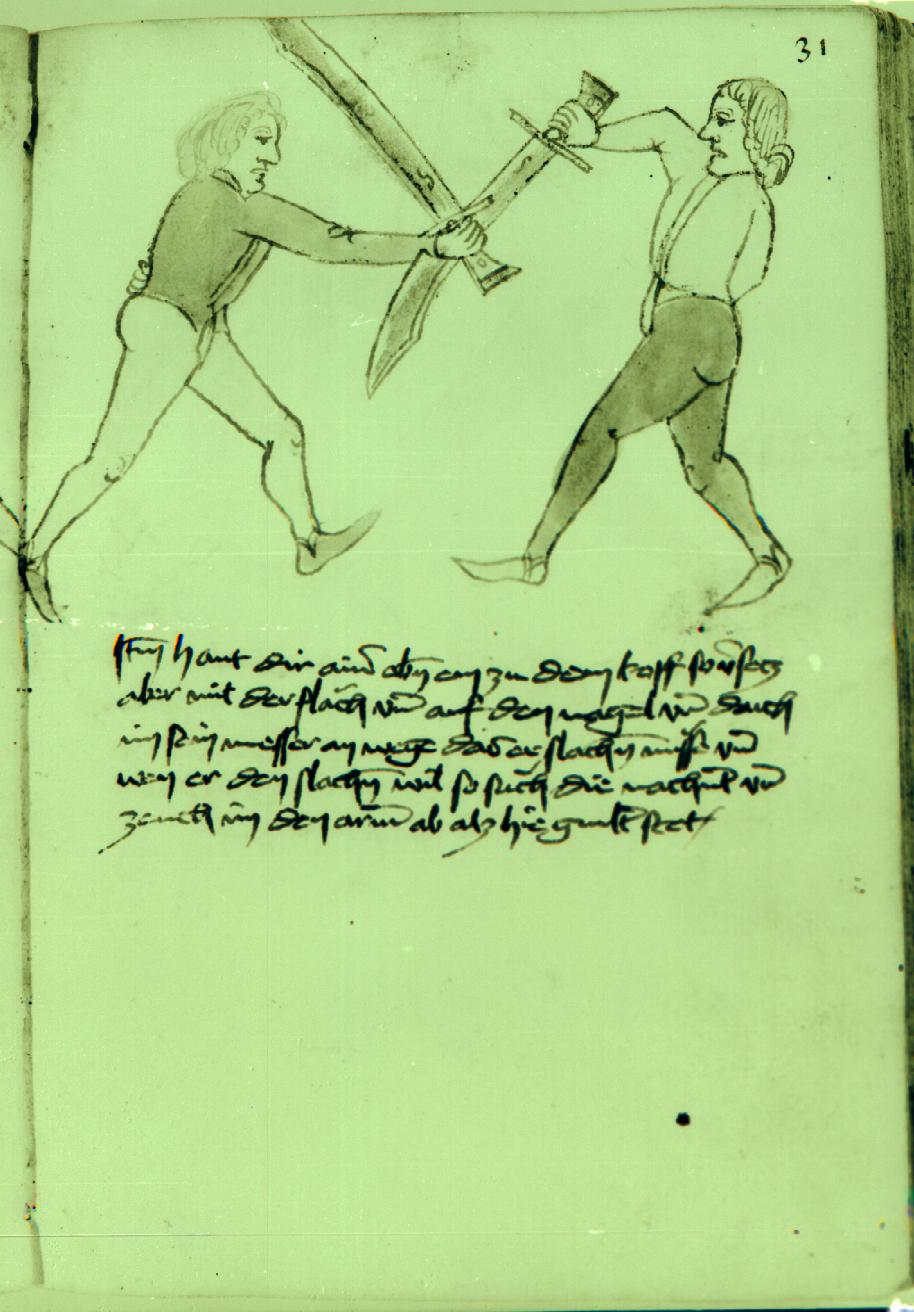
How about this?

Image

But seriously, if you never train without the constraints of "polite manners" how do you know you can?
Matt Anderson
SFS
ARMA Virginia Beach

User avatar
Jako Valis
Posts: 28
Joined: Wed May 04, 2005 5:31 pm
Location: Finland

Re: Speed and Force

Postby Jako Valis » Wed Jun 01, 2005 12:17 pm

David,

Thank you for a thoughtful post.

Yes, when sparring I am concerned of the safety of my partner. But I would have second thoughts on my actions even in a real fight (he may parry my cut, he may step suddenly to where I didn't expect etc., or I might not want to kill him, for example because his friends stand waiting and would kill me if I killed him). I remain in control. If I chose, I could land a devastating blow and crack my partners skull. But I choose not to.

I don't think padded wasters are a good replacement for anything, least for the training time to develop control.

Are you so confident in your control that you don't have to give a second thought about it?

No, I'm not that confident. But care must be taken also in a real fight. Whenever I commit myself to a cut, I should be aware of my opponents possible actions. In that equation, giving a controlled cut if I manage to land it, is not the most difficult thing!

For less trained swordsmen, for beginners and for study groups without experienced teacher, padded wasters increase safety if you absolutely need to spar, because nobody expects you to know how to control the weapon properly to start with. I'd concentrate in building that control instead of sparring. <img src="/forum/images/icons/smile.gif" alt="" />

do you not believe that thinking about safety while supposedly fighting an opponent is going to affect your actions?


Yes, but that's not the point. Free-play is always a training tool, or at best, a simulation. Do you not think using a padded waster is going to affect your actions? It's about compromises. I'm confident enough in my control to make the compromise in somewhere other than the tool. And notice, I don't spar with sharp steel. Yet. <img src="/forum/images/icons/smile.gif" alt="" />

Another point that I don't think has been raised concerns the danger of thrusts.


I also addressed this in one of my posts. Thrusts against someone moving at you: very dangerous. A blunt sword will easily penetrate a fencing mask. A padder can break a neck. Therefore, we must control to the best of our ability, and accept certain level of risk.

By the way, that's where a 3rd party supervisor is useful in sparring, he can spot out thrusts to the face, that were left without contact because of safety issues. That's a compromise again, but I wouldn't go softening my swords so much that I could stab someone in the face with them "full-on", that would be silly.

Yours,
Jako

User avatar
Mike Cartier
Posts: 594
Joined: Mon Sep 23, 2002 12:21 pm
Location: USA Florida

Re: Speed and Force

Postby Mike Cartier » Wed Jun 01, 2005 12:25 pm

Combat is not an orderly gentlemanly affair, combat is chaos.
Sparring is embracing that chaos to learn from it.
Mike Cartier

Meyer Frei Fechter

www.freifechter.com

User avatar
Stacy Clifford
Posts: 1126
Joined: Fri May 14, 2004 11:51 am
Location: Houston, TX
Contact:

Re: Speed and Force

Postby Stacy Clifford » Wed Jun 01, 2005 12:26 pm

Jako,

As is often the case, I think if we were training together in person we would probably find that your position and ours aren't as far apart as they sound in print. You're making sound, civilized and well-reasoned arguments for your point of view and are a welcome addition to the discussion, even if we do see you as devil's advocate sometimes.

Regarding levels of speed, power and control, here's my view on it:

1. Full speed and power - Weapon is propelled at full speed through the entire arc of the cut, with muscles stiffened to add the mass and force of the body to the impact and support penetration.

2. Full speed, reduced power - Weapon is propelled at full speed through the entire arc of the cut, firm grip is maintained for control, but arm muscles remain loose and supple to allow recoil from impact rather than penetration, and the mass of the weapon accounts for the bulk of the momentum transferred. With practice, the power may be reduced from full only in the last ~10% of the arc to improve realistic performance.

3. Reduced speed and power - As with #2 above, but slowed down either throughout the arc or in the last part of it for those who do not yet trust their control at higher speeds.

-------------------

#1 can be used with padded weapons because the weapon itself is designed to dissipate the force of impact and reduce the risk of injury. It helps us learn because the arc of the cut is completed in the least amount of time and forces us to quicken our reflexes and reduce reaction time. A tenth of a second does make a difference and forces you to fight in "reflex time".

#2 can be almost as quick, but never quite. Absolutely necessary for safety with hard weapons, however. Allows enough additional reaction time to practice technique in "thinking time" or "reflex time" as necessary.

#3 is best used for working on flow, counters and tactics in "thinking time".
0==[>>>>>>>>>>>>>>>>>
Stacy Clifford
Free-Scholar
ARMA Houston, TX


Return to “Research and Training Discussion”

Who is online

Users browsing this forum: No registered users and 35 guests


Note: ARMA - The Association for Renaissance Martial Arts and the ARMA logo are federally registered trademarks, copyright 2001. All rights reserved. No use of the ARMA name or emblem is permitted without authorization. Reproduction of material from this site without written permission of the authors is strictly prohibited. HACA and The Historical Armed Combat Association copyright 1999 by John Clements. All rights reserved. Contents of this site 1999 by ARMA.