Common sense in rapier cutting

For Historical European Fighting Arts, Weaponry, & Armor

Moderators: Webmaster, Stacy Clifford

User avatar
Jaron Bernstein
Posts: 1108
Joined: Sun Dec 07, 2003 12:58 am

Re: Common sense in rapier cutting

Postby Jaron Bernstein » Thu Mar 17, 2005 9:41 am

Hi Tom,

I am the farthest thing from a rapier/C&T sword expert. Just trying to muddle through longsword, rondel and ringen at the moment. But I do have suggestion if you have the technological capacity that might clear up some of this:

Get a chunk of beef and cover it with clothing. Take your 2 antique weapons and whatever replicas you care to use. And do some test cutting, film it and post it on line so we can view it.

That would solve several questions:
1. What type of sword/rapier is actually being discussed (maybe this is just all a semantic dispute over blade types).
2. Establish pretty clearly how that sword cuts flesh covered with clothing.

Just my thoughts.

Jaron <img src="/forum/images/icons/grin.gif" alt="" />

User avatar
Francisco Uribe
Posts: 73
Joined: Thu Apr 01, 2004 11:22 am
Location: Lansing, MI
Contact:

Re: Common sense in rapier cutting

Postby Francisco Uribe » Thu Mar 17, 2005 10:45 am

Tom,
There are some very flawed logical assumptions on your part.
The most obvious is this one:

9) Rapier Master Alfieri (1640) is extremely explicit about the effects of a cut: it will "stop at the bone." To me, this also means that it will "make it to the bone."

It will stop at the bone means that it will always stop there.
But that does noes imply that it will always make its way till the bone. Neither says what ammount of flesh it will be able to tear.

And if you consider, most of these "preffered targets" have very little flesh to go trough. Somebody else already pointed it out. In this cases bone can be exposed even with a good punch.

I really doubt that a rapier could cut my flank, reaching my spine being stopped there by the bones. I doubt It could cut trough the proper historical clothing that I would wear (in case that I offer myself for the experiment) <img src="/forum/images/icons/smirk.gif" alt="" />

And, please do not forget that people do not go around naked. It can be quite surprising, to those who have never tried, to attempt to cut trhough clothes.

If you would like to support your idea, it would be good to add some sort of evidence that we could all see.
Personally I do not like the term rapier or espada ropera. in both languages it is a very, very loose definition.
What really defines how a sword should be used, is what it is capable of as a weapon.... and that completely determines the sort of swordplay that will emanate from it.

Since there is not a standar definition of what a a rapier really is, I just see an attemp of walking on a very very blurry line.
Unfortunately, on this subject it seems that most people, just draws the line at their best convenience... without regards to actual evidence, common sense or hands on experience.

Francisco
Francisco Uribe GFS
ARMA-Lansing
ARMA-Chile
Increible facedor de entuertos
furiber@yahoo.com

User avatar
Shawn Cathcart
Posts: 72
Joined: Wed Sep 25, 2002 10:04 pm
Location: Calgary, Alberta, Canada

Re: Common sense in rapier cutting

Postby Shawn Cathcart » Thu Mar 17, 2005 11:19 am

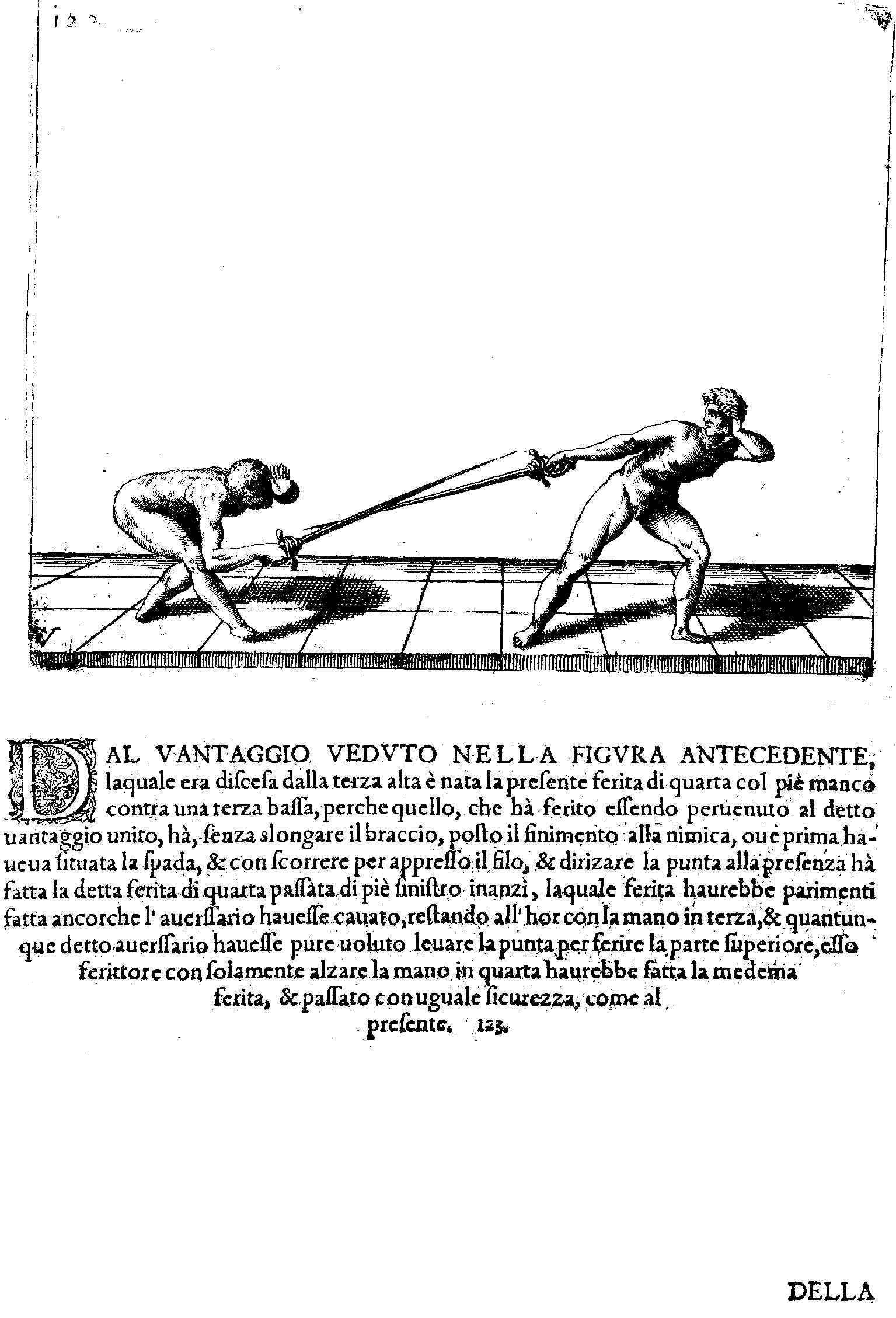
Here is an image from Fabris, taken from the Online manual here at ARMA.

Image
While the ricasso would seem to match the width of that shown in the picture above, I'd argue quite strongly that the blade depicted in the manual tapers steadily and continuously from the ricasso to a very fine tip. This results in giving very little width or mass on the last third of the blade with which you would cut. The blade you show in the photo has a more gradual taper, resulting in more width, and thus more mass in the last third of the blade. This would indeed give it greater cutting ability.

We could argue in circles all day about the textual definition of what a "Rapier" is, and I really don't think it will get us anywhere. However I do not honestly believe that the blade shown in the photo above matches exactly with what is depicted in the manuals you mention. Certainly not Capo Ferro, and in my opinion, not in Fabris either. Its not a large difference admittedly, but even half an inch to an inch of width on the last third of a blade drastically changes its cutting ability. Looking through your site some more I notice in the Illustrated guide to guards you yourself are using an Arms &amp; Armor Gustav Vasa Rapier which would seem to be closer to what is depicted in the manuals, than the image above. Would you say it handles differently, and have you done any test cuts with it?

User avatar
JeanryChandler
Posts: 978
Joined: Sat Dec 28, 2002 1:45 am
Location: New Orleans, aka northern Costa Rica
Contact:

Re: Common sense in rapier cutting

Postby JeanryChandler » Thu Mar 17, 2005 12:30 pm

I very much think this argument has to do with semantics, or more precisely with the lack of commonly agreed upon categories for various types of swords.

Jeanry,

Maybe, or maybe I just used a fancy term for a cut and thrust sword that is a bit longer than the typical.

When I hear sidesword, I think of something certainly a lot shorter than a rapier or what I would call a typical renaissance cut and thrust.

I mean, you can use an early medieval styled blade that has a high taper, and I would call it a cut and thrust weapon. If it tipped for excellent thrusting and is also effctive for cutting, it is a cut and thrust in my book.

Tim


Tim,

I had to deal with the issue of sword classification recently when I wrote the weapons chapter for a new book for Jakes rpg game. The game makes technical differntiations between weapons with different capabilities so categories have to be defined. I found that while some researchers and collectors use the term 'sidesword' co-equally with more general cut-and-thrust types as you do, others put the sidesword in it's own category between the general cut-and-thrust and the rapier, and this is the definition we used. (There is also considerable resistance to the use of this term 'sidesword' at all which is deemed by some to be modern)

In other words, the sidesword is a cut-and-thrust sword which is more specialized for thrusting than cutting, but still retains the ability to cut. In length they range from arming sword length to nearly that of the longest true rapiers (please also note of course that the thrusting-only rapiers varied quite a bit in length as well over the years). Sideswords usually also feature complex hilts, finger rings, thumb rings and or knucklebows, which cut-and-thrust swords do not always. Sideswords do not seem to have been used primarily as military weapons like some other cut-and-thrust swords could be, though they were apparently sometimes issued to town guards.

On the other side of the scale were more cutting oriented cut-and-thrust swords like the schiavona and the pallasch.

I looked at a couple hundred weapons on various auction sites to reach this conclusion. Maybe my research was incorrect (it was only for an RPG after all, but I did spend a lot of time at it), but I submit that some new category needs to be used, as you say. Perhaps your term is better though.

Jeanry
"We can't all be saints"
John Dillinger

steve hick
Posts: 104
Joined: Mon Sep 23, 2002 4:04 pm

Re: Common sense in rapier cutting

Postby steve hick » Fri Mar 18, 2005 4:55 pm

Hi Jeanry,

As Steven Reich offered spadone is simply spada modified with an ending adding the meaning of big, it happens with pasta too (Tortellini/tortelloni). We know Marozzo had seen the prints for his opera, and had in places commented on their accuracy, that he didn't for the spadone means they were accurate enough.

I think this argument is an artiface of our more modern definitions of what a rapier is. Didn't someone do some sort of scatter plot to find if there were really more than a single highly divergent population of extant swords (and even that can skew the results)? But then I have previously cared little about "the weapn/the method" until I became more familiar with Fabris through Tom's work. (I like the Baloneys, but, that's another story).

I really think the answer is to get a slew of punpkins a la Mail Call and have a whack followed by some beers.

Steve

Steve

User avatar
John_Clements
Posts: 1167
Joined: Wed Sep 18, 2002 10:43 pm
Location: Atlanta area

Re: Common sense in rapier cutting

Postby John_Clements » Tue Mar 22, 2005 2:48 pm

Keep in mind with regard to spathology, as Oakeshott wrote and Hank R. has said many times as well as Dr. Anglo pointed out and I have tried to express in my work myself: in the transition from military to civilian oriented fencing during the 16th century there were many different kinds of swords being produced with various attributes and some of them were distinctive or "experimental" --attempts to find what worked (or what worked best for a particular user). Thus, some specimens do not fit into any distinct "class" or at least not that we today can always classify into a definitive type. The problem is that subtle differences in cross-sectional geometry result in considerable differences in handling and capability among blade types that might otherwise seem very close in form. Without question, different swords can be often used in very similar but not always identical manners. Identifying these differences requires inspecting as well as exercising with originals or accurate reproductions.

I describe much of this in my new book on swords of the Renaissance (to at last see publication next year).

JC
Do NOT send me private messages via Forum messenger. I NEVER read them. To contact me please use direct email instead.

User avatar
JeanryChandler
Posts: 978
Joined: Sat Dec 28, 2002 1:45 am
Location: New Orleans, aka northern Costa Rica
Contact:

Re: Common sense in rapier cutting

Postby JeanryChandler » Tue Mar 22, 2005 5:40 pm

John, your point is well taken. This debate is clearly about
typology, which is not to say 'just' semantics, but an important issue when discussing how a sword could be used.

Personally, I think as much as we respect Mr. Oakeshott, clearly we have to expand upon his work and go further with
attempts to expand the typology of swords. As you point out, it's an extremely difficult and daunting task, but it needs
to be done IMO for the benefit of the WMA community and the collectors community as well.

I for one will look forward to seeing this book you are doing!

Jeanry
"We can't all be saints"

John Dillinger

User avatar
JeanryChandler
Posts: 978
Joined: Sat Dec 28, 2002 1:45 am
Location: New Orleans, aka northern Costa Rica
Contact:

Re: Common sense in rapier cutting

Postby JeanryChandler » Tue Mar 22, 2005 11:03 pm

I'd like to clarify one point on what I said. I agree that there are always swords on the cusp between categories, and some, (in this particular era perhaps quite a few), which are unclassifiable. Oakeshott dealt with this problem himself and agknolweged it. But I think there are many more categories we could define which would help bring structure to the debate, even if we cannot fit every sword into them.

Also, regarding the idea that the ancients did not split their weapons up so meticulously, or that this is a modern idea or some kind of useless modern fetish for classification, I disagree. The masters and all competent fencers in the era certainly knew quite well what weapons were suitible for what use, what every nuance was and what every sub -type was. I realise they did not classify the weapons of their day for posterity, but I refer back to my analogy about the bread knife, the butter knife, the putty knife, the modeling knife, the sheetrock knife, the carving knife etc. etc.

If arming themselves for a streetfight, an armored tournament fight, a judicial combat, or a duel, or to defend the city gates, I believe the masters knew exactly what weapons to bring along, and I don't think they used cutting swords, CUT and thrust, cut and THRUST, and thrusting only interchangably.
(Then again, I have to admit, I didn't live back then!)

Similarly, if we are going to understand their art, we have to also have a solid grasp of the nuances between even superficially similar weapons. I think Oakeshottes typology has helped a great deal in understanding the longsword and the knightly arming and cut-and-thrust swords (if you will) I think it will help us more if this can be taken yet further.


Jeanry
"We can't all be saints"

John Dillinger

User avatar
John_Clements
Posts: 1167
Joined: Wed Sep 18, 2002 10:43 pm
Location: Atlanta area

Re: Common sense in rapier cutting

Postby John_Clements » Wed Mar 23, 2005 3:49 pm

In bouts of fighting practice or weapon sparring it is a frequent phenomena to have a cut to some part of the body be determined too light or insufficient to have produced a lethal or incapacitating wound, even though it was made with a heavy cutting blade wielded in two hands and striking from the full arms. This is certainly a reasonable rule to follow when this kind of thing occurs. Ironically however, among some historical fencing enthusiasts the same kind of inadequate edge strike when made from the elbow or wrist with a light and narrow rapier blade is suddenly somehow deemed “debilitating.” Go figure.
Do NOT send me private messages via Forum messenger. I NEVER read them. To contact me please use direct email instead.

User avatar
Arthur D Colver
Posts: 12
Joined: Thu Apr 29, 2004 5:10 pm
Location: Ogden UT,

Re: Common sense in rapier cutting

Postby Arthur D Colver » Thu Mar 24, 2005 7:04 pm

A couple of comments on the above arguement (not that it'll help much).
First, rapier slash vs. sword slash.
It seems to me that fighting with a rapier is similar to modern knife fighting in that while slashes are certainly part of it (and you will take the opportunity to do so should the opponent present a target for it) you are primarily trying to stick the guy. Knives are certainly capable of slashing, and slash wounds are painful and have potential to be debilitating thru blood loss, severed tendons etc. We also have a good deal of knowledge about wounds recieved in modern knife fights. A knife can cut and slash, as does a sword - both will make you bleed. However, one can take a cut from a knife and still continue fighting, admitedly in some diminished capacity. Sword wounds, however, are generally several orders of magnitude greater that those from a knife and are more likely to leave you unable to continue the fight. I would rank a "heavy" knife wound (slash) equal to a "light" sword wound i.e. both would comonly allow the person to continue fighting. I would rank rapier slashes and cuts in the same general neighborhood as wounds from a "fighting" knife.

Which brings me to my second point - which is what we mean by "debilitating". From a warrior's perspective, debilitating means a bit more than it does from a scholar's perspective. When I cut my opponents arm, I want more than blood (and subsequent stitches), I want him to not be able to use the arm - preferably it should be lying on the ground twitching. That is the likely result of a solid sword cut (limb is useless or nearly so) and an unlikely or "lucky" result from a knife (or rapier) cut. Same goes for head, leg or any other parts of the body. A 1/2 inch deep slash to soft tissue is a nasty cut - one requiring a trip to the emergency room for stitches - I believe many rapiers could well deliver such a cut, much like a modern fighting knife. A scholar may well beleive this to be a debilitating cut - could even argue the point with some success. But, in a life or death struggle with adrenaline pumping, such a cut could be fought with and even go unnoticed. Anyone who has engaged in even mock combat could attest to this. People continue fighting effectively with broken limbs, serious cuts and even gunshot wounds, as I'm sure we all know.
In ARMA, if the blow was such that it was not likely to cause the loss of the limb (or use of the limb) we count it as "light" and continue fighting. With real weapons these wounds would be more than just scratches, most would require medical attention - yet we count them only as harasssing, because we know we could fight on with little diminished capacity. I beleive many rapier could deliver such "light" wounds that in a duel would be of great consequence, but on the battle field would likely be of little remark. (<british accent> It's just a flesh wound!)
In short, I believe the above argument is lost in the gulf of the diference between a slash from a knife/rapier and a slash from a cutting sword and where we draw the line on what constitutes "debilitating".

User avatar
John_Clements
Posts: 1167
Joined: Wed Sep 18, 2002 10:43 pm
Location: Atlanta area

Re: Common sense in rapier cutting

Postby John_Clements » Fri Mar 25, 2005 11:48 am

You are right about fighters abilities to withstand injury and keep fighting, Art. That is certainly clear from the hsitorical (and modern evidence).

Obviously, a cut must penetrate deeply enough to mechanically incapacitate the target’s limb (i.e., sever muscles, tendons, ligaments). But even then, a mechanical incapacitation is no sure means of preventing continued resistance and effective hostility from an opponent.

So. I’ll try some of this one more time to help edify this issue, then there is little more to add.

If we were to consider a thin and narrow edged-cutting tool such as a common kitchen knife (which certainly can make serious slicing or slashing lacerations), it would seem reasonable that if it were just made several feet longer such a blade could still have a quite sharp edge. However, a kitchen knife does not have to make forceful impacts at high velocity, encounter other blades or resist their attacks. If such a knife were extended to the length of a rapier its design becomes unwieldy as its own structure is revealed to be insufficient. It lacks the mass, width, and stiffness for delivering strong cutting blows, let alone parrying them, and can easily be snapped or bent. Hence, such thin bladed have to be made thicker in cross-section, which, while being stiff, inherently reduces edge capacity and thus their cutting capability as well. A “sharpened” edge can certainly be put on a blade of such geometry, but again, it will produce only shallow cuts and will quickly dull.

Any rapier test-cutting experiment must be performed with a historically accurate blade of proper cross-section and not with flexible whippy modern simulators. The test must also be performed against targets of appropriate cloth as well as raw meat. Even in using cut-and-thrust style side-swords we have been able to do slicing draw cuts (following the edge striking instructions found in the source texts) that only produced a depth of a quarter inch on raw meat—hardly enough to stop dead in his tracks a man truly bent on doing harm. (I recall one test-cutting on pumpkins with a very nice sharp A&amp;A rapier. The result seemed impressive as it sheared right through the entire thing… impressive that is until I then immediately reproduced the exact same result cutting with a blunt sport epee ---pumpkins aren’t very hard to cut through). As I wrote earlier, calling these cuts “formidable” or these weapons “particularly sharp” is misleading and inaccurate.

Is it any wonder then that the rapier masters instructed to avoid cutting in favor of thrusts and do not indicate that rapier cuts are intended as killing blows, or that historical accounts of rapier fights consistently relate only minor edge wounds? Regardless of how some enthusiasts today play in their mock duels, is it best to ignore the nonsense seen in stunt fencing performances where rapiers slash through belts and ropes. There is a reason after all why Shakespeare referred to these weapons as “cat-scratchers.” The argument that rapiers make formidable cuts is asserted by those who have very little experience handling actual historical specimens or conducting serious test-cutting with different types of edged weapons or who have deeply researched sword wounds.

I am reminded of one famed 16th century rapier duel where a Frenchman had his cheek cut off by a German slashing at him, so that in response the Frenchman immediately angrily ran him through killing him on the spot. In another Italian streetfight of the era two fellows in an alley slashed repeatedly violently at one another but “did more damage to their tailor’s bills than to each other”, while in a similar fight a fellow charged with assault testified at his trial that with his rapier he merely cut at his opponent because “he did not intend to kill him.” At other times men lost fingers or had their hands severely mangled from rapier edge blows but continued on fighting hard. There are many, many other accounts just like these I’ll be featuring in one of my future books.

The oft-repeated mantra that “the rapier manuals teach to cut” also fails to differentiate between degrees of edge blow (let alone degrees of edged blade and of edge sharpness) and do not quantify the injury produced. It is not possible to cite documentable examples of rapiers producing decisive cutting wounds in combat nor is there substantial evidence to contradict the criticism of rapiers as being such poor cutting weapons made by reputable swordsmen from the era. If rapiers really cut well why would they have ever continued to developed or use wider cutting blades? Think about it.

JC
Do NOT send me private messages via Forum messenger. I NEVER read them. To contact me please use direct email instead.

david welch
Posts: 453
Joined: Wed Dec 18, 2002 5:04 am
Location: Knoxville TN

Re: Common sense in rapier cutting

Postby david welch » Sun Apr 09, 2006 1:22 pm

I thought this was a better place than starting a new thread.

We recently went to the Frazier Historical Arms Museum in Louisville KY (that I should write a review of... ).

One of the things we talked to the curators about was the cavalry swords from the English civil war.

You have some member of the nobility that in "civilian" dress carried a very ornate rapier to show his station in life. But when doing his military duties he carries a military sword. So he takes his military sword to his armourer and tells him to dress it up with a "rapier" hilt.

So now you have people in military dress carrying a "rapier" in their scabbard. Add to that earlier classification of swords by hilts, and you now have the "cutting rapier" argument, when really all it is is a cavalry sword with a rapier hilt, not a true rapier.

It is easy to get from there, to people today confusing what would have been the military use of the cavalry sword, with modern sports fencing... mistakenly believing they are doing the same swordsmanship as the soldiers were doing.
"A sword never kills anybody; it is a tool in the killer's hand." Lucius Annaeus Seneca 4BC-65AD.

Bill Tsafa
Posts: 118
Joined: Sun Nov 13, 2005 9:11 pm
Location: NYC
Contact:

Re: Common sense in rapier cutting

Postby Bill Tsafa » Tue Apr 11, 2006 7:12 am

I was wondering how the Pappenheimer Rapier would be used with reference to cutting or thrusting. As far as I can tell, this was a rapier adopted for military use durring the 30 years war 1618-1648. It weighs about 3 lbs which is the about the same weight as my lightest longsword. I have seen some longswords quoted at 2.5 lbs.

Here is a picture: http://www.by-the-sword.com/acatalog/images/1-013.jpg

I have found that rapiers that are blade heavy are more efficiently used by keeping the point on target (fixed) and moving the hilt around to parry. I think this method could only work in one on one duel situation. I think in a battle situation things tend to get a bit more crude.

How do you gentlement think this sword would be used on a battlefield?


Return to “Research and Training Discussion”

Who is online

Users browsing this forum: No registered users and 18 guests


Note: ARMA - The Association for Renaissance Martial Arts and the ARMA logo are federally registered trademarks, copyright 2001. All rights reserved. No use of the ARMA name or emblem is permitted without authorization. Reproduction of material from this site without written permission of the authors is strictly prohibited. HACA and The Historical Armed Combat Association copyright 1999 by John Clements. All rights reserved. Contents of this site 1999 by ARMA.