JeffGentry wrote:Jay
By set up I mean to put your opponent in a compromising or dangerous position usually by trickery or deceit, to bring into active operation or use, if a technique is not set up properly it can not come into active operation or use and it will not put you opponent in a compromising or dangerous position, he will not put himself in that position willingly because he is trying to do the same thing to you.
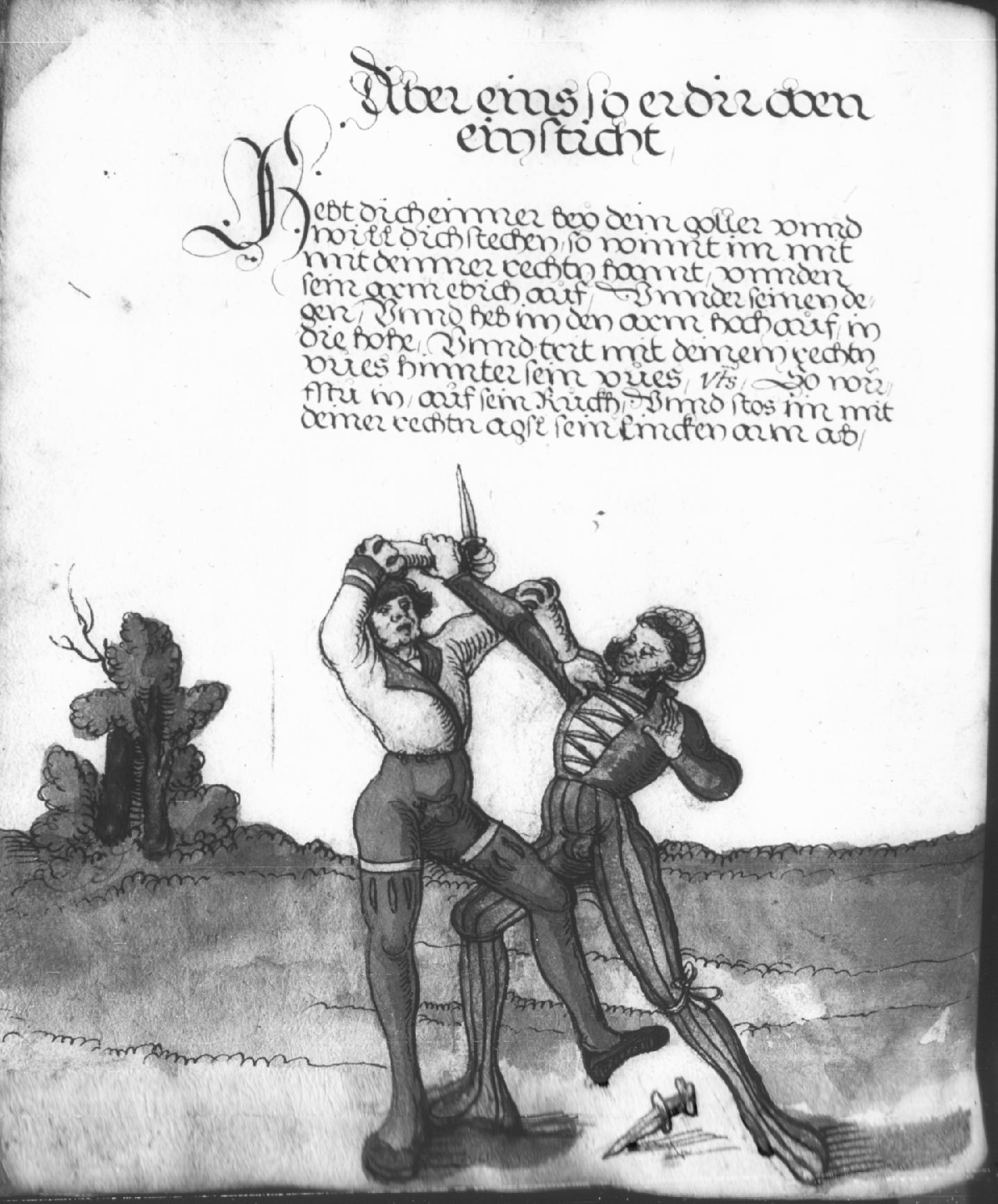
As an example the technique in question the elbow smash.
He grab's your collar with the off hand(his left) in order to control your movement= his setup to stab you
You grab his left hand with your left pull him forward to off balance and turn him and compromise his ability to stab you and defend himself with his left hand= your setup to the elbow smash
If you do not off balance and turn him then the elbow smash will either fail or not be as effective allowing him to counter, that is a setup.
I see people who don't do the small thing's in preparation(setup) to doing a technique all the time and wonder why it doesn't work right or at all.
Another example, when someone put's a body lock on you the first thing to do is get your hip's out and down so it is more difficult for the opponent to lift you, then you use a technique to escape or throw the opponent or whatever you can, dropping the hip's down and out is a set up to many technique's to counter a body lock in unarmed combat.
Jeff
We may be talking about different, unrelated conditions. I am referring to actual combat while your comments appear more pertinent to the context of the duel.
In actual combat, you generally do not have the time to “set up” someone. Rather, they set themselves up by the manner in which they commit themselves to a particular movement or attack. Your task in combat is to adapt your response to the enemy’s movement and to exploit the weakness inherent in that movement. Thus, in a real fight, if he grabs you and his arm is bent, there is no point in trying to straighten his arm so you can use the elbow smash. If he is strong, you may not be able to do that, the technique will fail, and if he is armed you will be stabbed. In any event, during the moments you waste trying to straighten his arm, he will feed his knife to your navel. Instead, your response must be one that is effective against a grab where the elbow is bent. One such response would be “wiping away,” which is good against any collar grab.
This consideration leads to a simple principle: if the arm is bent, attack the bent arm. If the arm is straight, attack the straight arm. This means that if the arm is bent, don’t bother to straighten it. If the arm is straight, don’t bother to bend it. (Although like any principle, there are exceptions which are noted in some of the manuals.)
The same is true of throwing in combat. In judo, Kano was known to say that the judoka should use his opponent’s momentum against him. Such momentum, however, usually only manifests itself in a committed attack, and does not usually occur by itself in randori or dueling. However, the committed attack is the hallmark of the street attack. So, you do not do off balancing as a set up per se on the street because your opponent has already off balanced himself by his movement against you. You adapt to it, exploit it, redirect that movement to the extent necessary, and throw him with the technique that is most effective under the circumstances. The choice of throw will depend on how he attacks, whether he extends an arm, which of his feet is forward, how big he is, and how you are standing at the time he attacks.
In a duel, such as freeplay, however, your opponent is unlikely to make a fully committed movement. Typically, he will be cautious, knowing that you are a danger to him, and he will not want to expose himself to an attack. Therefore, you must set him up by feints, kuzushi (off balancing) and so forth so that you can mount an effective attack.
In fairness, I would add, that do the extent that you are working in a clinch on the street, set ups are useful.
So, generally speaking, there is nothing wrong with “setting up.” But you must keep in mind that combat and dueling present very different dynamics and what is necessary in one sphere may not be necessary in another.