Is This Portuguese Influence Armor Style?

For Historical European Fighting Arts, Weaponry, & Armor

Moderators: Webmaster, Stacy Clifford

Sripol Asanasavest
Posts: 133
Joined: Fri Oct 05, 2007 9:31 am

Is This Portuguese Influence Armor Style?

Postby Sripol Asanasavest » Tue Nov 13, 2007 9:56 am

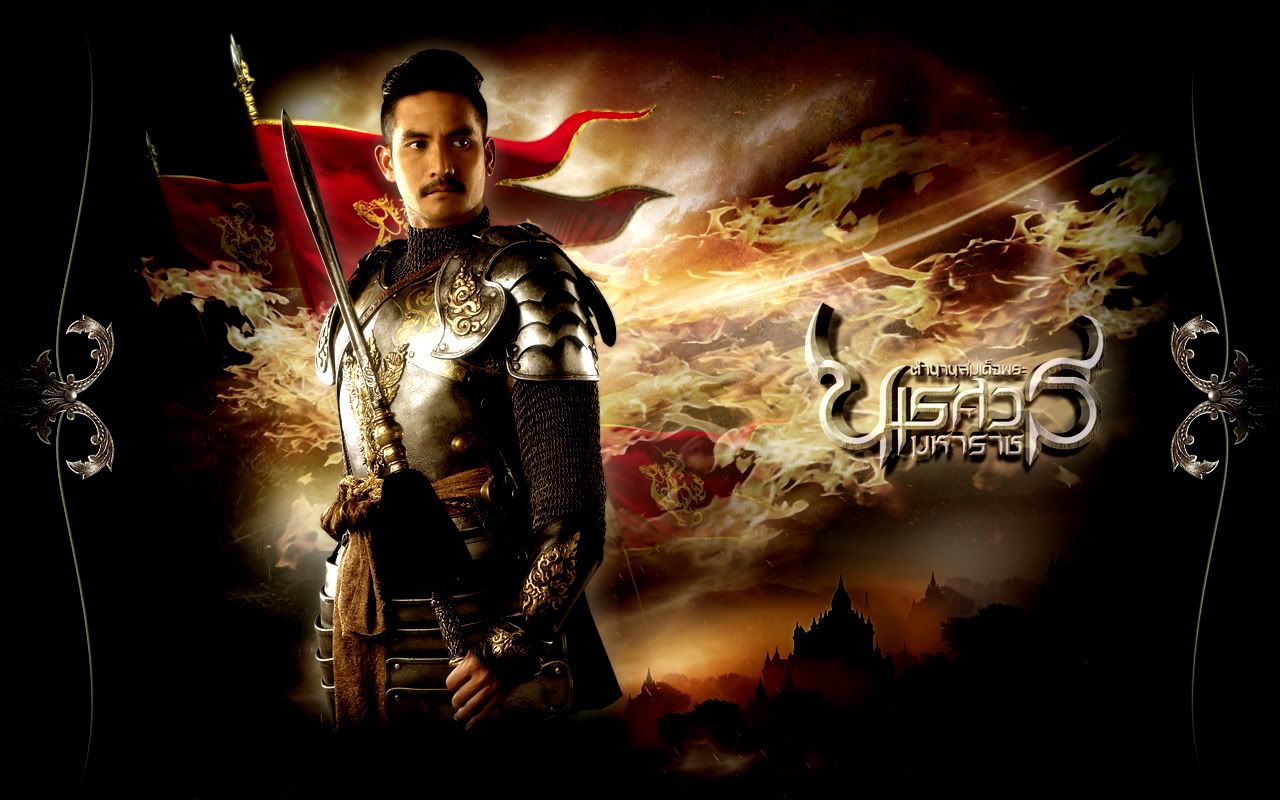
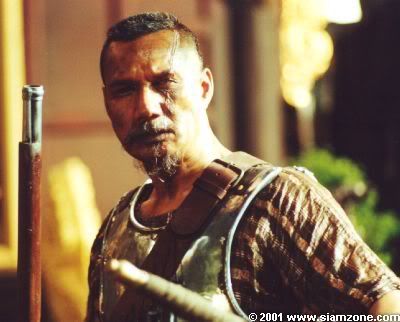
I realized this is a little off topic, but I found these pictures and wanted a little more info from someone who is familiar with European armors. If you look at the picture, the armor she is wearing does seem like it might have been influenced by the Portuguese. Do you think so? I know at the time period, which I don't know the exact date, I do know the Portuguese were present in Ayutthaya, Siam, and they could have influenced the way Ayutthayian made their armors and the way they use firearms. Anyway, look at the pictures closely and tell me what you think?
Image
Another one:
Image
And another one:
Image

Thank you all very much for your time!

User avatar
Brandon Paul Heslop
Posts: 134
Joined: Sun Mar 04, 2007 12:56 am
Location: West Valley City, Utah
Contact:

Postby Brandon Paul Heslop » Thu Nov 15, 2007 5:37 am

Well, there's nothing specifically "Portugese" about the armour examples you have provided. Were similart styles of armour prevelant in Portgual? Yes. However, they were prevalent across Western Europe.

http://www.beautifuliron.com/images/DiagramArmour4.jpg

http://en.wikipedia.org/wiki/Spaulders

http://en.wikipedia.org/wiki/Faulds_(plate_armour)

...So, in answer to your question, they are European-influenced.

-B.
Thys beeth ye lettr yt stondÿ in hys sygte \
To teche . or to play . or ellys for to fygte...

"This [is] the letter (way,) [for] standing in his (the opponent's) sight \
[either] to teach, or to play, or else for fight..."

-Man yt Wol.

User avatar
Benjamin Smith
Posts: 184
Joined: Thu Jun 09, 2005 12:44 pm

Postby Benjamin Smith » Thu Nov 15, 2007 1:22 pm

If what you are asking is "Is the form of plate armor shown here, derived from, based off of, or inspired by European Armor?" the answer is probably yes because Japanese plate armor with single piece breastplates didn't appear until after their contact with Europeans, however, I don't think that this should be over-emphasized, it would probably have been the next logical stage in their development of armor had they not had contact with Europe, but that's just speculation of course.
Respectfully,

Ben Smith

LafayetteCCurtis
Posts: 421
Joined: Sat Nov 04, 2006 7:00 pm

Postby LafayetteCCurtis » Fri Nov 16, 2007 2:15 am

The second image looks convincingly like an example of Thai armor that had been heavily influenced by European presence in the area--from the look of the cuirass, it might have been bought outright from European traders, many of whom were knoen to have carried arms and armor as important items of trade. But I can't help thinking that the other two armors look more like fantasy armors than something that Siamese generals would have worn at that time. The shapes are too European for them to be European-influenced local armor, but the decoration look too local for them to be off-the-shelf European armor. It might just be possible, however, that they were given to local Siamese craftsmen to decorate after they had been bought from European traders.

LafayetteCCurtis
Posts: 421
Joined: Sat Nov 04, 2006 7:00 pm

Postby LafayetteCCurtis » Fri Nov 16, 2007 2:33 am

Benjamin Smith wrote:because Japanese plate armor with single piece breastplates didn't appear until after their contact with Europeans,


Mmm...the examples posted are Siamese, not Japanese. However, I certainly agree with you that:

however, I don't think that this should be over-emphasized, it would probably have been the next logical stage in their development of armor had they not had contact with Europe, but that's just speculation of course.


I also think the Japanese would have reached that stage anyway without European interference. The European contact, though, probably played an important part in showing the Japanese that such ideas could work, therefore speeding the Japanese development up on that path.

Sripol Asanasavest
Posts: 133
Joined: Fri Oct 05, 2007 9:31 am

Postby Sripol Asanasavest » Fri Nov 16, 2007 4:36 am

The pictures are from historical movies not fantasy if anyone is wondering.

LafayetteCCurtis
Posts: 421
Joined: Sat Nov 04, 2006 7:00 pm

Postby LafayetteCCurtis » Fri Nov 16, 2007 6:08 am

It's easy to name historical movies that display many, many examples of inaccurate or even pure fantasy armors--Gladiator, for example, or Braveheart, or A Knight's Tale. So, even though the armors you've posted come from the props of a historical movie, you should not automatically assume that they historically existed. They do seem better constructed than most of the stuff out there, though.

BTW, are they from Suriyothai?

Sripol Asanasavest
Posts: 133
Joined: Fri Oct 05, 2007 9:31 am

Postby Sripol Asanasavest » Fri Nov 16, 2007 10:55 am

I know what you mean abuot it being fantasy because the Siamese tend to go overboard when it comes to decorating the palaces, temples, clothings, and armors with design and art. That is pretty common actually. It is said in the Ayutthaya palaces, before it was burned down by the Burmese, you could see gold on every wall, hence it seems like a fantasy stuff, but I assure that's how Siamese architecture and culture was like. From the research I've done, these two movies are pretty accurate in term of clothings and reconstructing the scene of the time period. They pour a lot of money into the research and reconstructing ancient cities; they try to be exact right down the minute details.

LafayetteCCurtis
Posts: 421
Joined: Sat Nov 04, 2006 7:00 pm

Postby LafayetteCCurtis » Fri Nov 30, 2007 5:50 am

By "fantasy design" I wasn't pointing to the gold decorations. I'm quite aware of some rather over-the-top gilded decorations that are still historical nevertheless, in both Western and Eastern forms of armor. My doubts were rather about the shape of the pauldrons; I'm not sure that I've ever seen main shoulder plates shaped like those in the first and third pictures (though I might be wrong) while the third picture has shoulder lames with medieval-style scalloped edges that don't really look as if they match the otherwise Renaissance feel of the armor.

Perhaps you could try asking this question in the myArmoury forum ( http://www.myarmoury.com/talk/ ), which has a more hoplological focus than the martial-art-centered ARMA forum.

Sripol Asanasavest
Posts: 133
Joined: Fri Oct 05, 2007 9:31 am

Postby Sripol Asanasavest » Mon Dec 03, 2007 11:21 am

The time period is only 400 hundred years ago, so that would be around the 1600's.


Return to “Research and Training Discussion”

Who is online

Users browsing this forum: No registered users and 8 guests


Note: ARMA - The Association for Renaissance Martial Arts and the ARMA logo are federally registered trademarks, copyright 2001. All rights reserved. No use of the ARMA name or emblem is permitted without authorization. Reproduction of material from this site without written permission of the authors is strictly prohibited. HACA and The Historical Armed Combat Association copyright 1999 by John Clements. All rights reserved. Contents of this site 1999 by ARMA.