Question on vom tag

For Historical European Fighting Arts, Weaponry, & Armor

Moderators: Webmaster, Stacy Clifford

william_cain_iii
Posts: 110
Joined: Sun May 09, 2010 1:51 pm
Location: goldsboro, north carolina

Postby william_cain_iii » Sun Sep 26, 2010 7:09 pm

I tried doing some sparring with the LVT during my group's most recent fence fight.

It was interesting. It did reduce the strain on my arms, but not appreciably more than moving into a lower guard. I gained just as much benefit by standing them off in langen-ort and then dropping into Pflug.

I still prefer the extra cutting power that comes from the higher portions, but I can see how LVT does work as an interim guard, but not with the cross any lower than the top of the shoulder.

As for the resting posture, I did find it less disruptive to rest the cross on the outside of my shoulder instead of the blade -on- my shoulder and the cross poking my armpit.

Just observations. I'll still use higher guards myself, but I can see how a faster or longer-armed fighter might find LVT more useful in their instance.
"The hardest enemy to face is he whose presence you have grown accustomed to."

User avatar
Stacy Clifford
Posts: 1126
Joined: Fri May 14, 2004 11:51 am
Location: Houston, TX
Contact:

Postby Stacy Clifford » Mon Sep 27, 2010 12:06 am

Something that hasn't been mentioned yet is that LVT has certain vulnerabilities that Vom Tag above the shoulder does not. First, if your cross is lower and in front of you, your arms are that much farther forward and inviting as a target before you begin to move. Second, by placing the blade directly against your body, you're putting it in a position where it can actually be pinned against you, not only rendering it useless but allowing you to get cut in the process (possibly by both his blade and yours). It might take a fast, aggressive fighter to do so, but in a fight for your life or his, just what are you expecting? We've all had to throw a late counter at a blow that came faster and harder than we were expecting before, and I would rather not do it from a weaker, more vulnerable position.

Based on all the physics and physiology we know, if your sword moves through a position similar to LVT in the process of bobbing and weaving like a boxer, that's one thing because it's dynamic, transitory and unpredictable, and you can get away with it as part of a larger pattern of movement. If you leave it sitting there while you make up your mind what to do next though, you're inviting trouble on defense and weakening your offense. Loose and mobile is the most sensible way to interpret those images that look like LVT when you put it in the context of FIGHTING with all its lethal energy and ferocity.

So basically, if your blade is touching your body, you're just fühlen yourself. :wink:
0==[>>>>>>>>>>>>>>>>>
Stacy Clifford
Free-Scholar
ARMA Houston, TX

User avatar
Sal Bertucci
Posts: 591
Joined: Fri May 02, 2008 8:04 pm
Location: Denver area, CO

Postby Sal Bertucci » Mon Sep 27, 2010 7:48 am

:shock: Bad joke, good pun Stacy!

User avatar
Doug Marnick
Posts: 63
Joined: Sun Apr 04, 2004 7:06 pm
Location: Staten Island, NY

Postby Doug Marnick » Mon Sep 27, 2010 6:45 pm

Stacy Clifford wrote:Based on all the physics and physiology we know, if your sword moves through a position similar to LVT in the process of bobbing and weaving like a boxer, that's one thing because it's dynamic, transitory and unpredictable, and you can get away with it as part of a larger pattern of movement. If you leave it sitting there while you make up your mind what to do next though, you're inviting trouble on defense and weakening your offense. Loose and mobile is the most sensible way to interpret those images that look like LVT when you put it in the context of FIGHTING with all its lethal energy and ferocity.


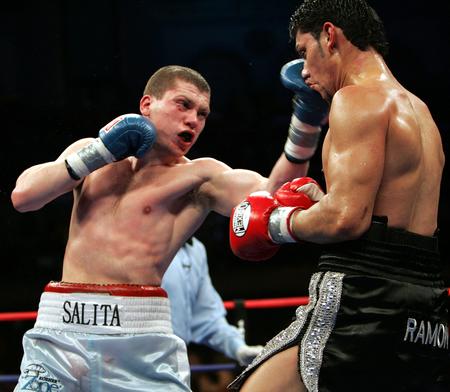
Exactly. It's like someone centuries from now looking at this picture and thinking when you throw a punch, you should rest your other hand on your jaw.

Image

It's a fight, not a photo shoot.
Doug Marnick
NYC

"The sword was a weapon of grace, nobility, and honor... which was little comfort as you slowly bled to death in a dung-filled moat."

User avatar
Randall Pleasant
Posts: 872
Joined: Mon Sep 23, 2002 3:35 pm
Location: Flower Mound, Texas, USA

Postby Randall Pleasant » Mon Sep 27, 2010 8:16 pm

Or that you should hold them low!
Ran Pleasant

User avatar
Greg Coffman
Posts: 156
Joined: Sat Dec 09, 2006 5:33 pm
Location: Abilene

Postby Greg Coffman » Wed Sep 29, 2010 9:27 pm

Randall Pleasant wrote:Or that you should hold them low!


Yes. That's why schielhau beats pflug.
Greg Coffman
Scholar-Adept
ARMA Lubbock, TX

User avatar
Greg Coffman
Posts: 156
Joined: Sat Dec 09, 2006 5:33 pm
Location: Abilene

Postby Greg Coffman » Sat Oct 02, 2010 7:51 am

Keeping the guard low and resting the blade on the shoulder turns it into a wrist cut if you go for a Zornhau or Oberhau. It drastically reduces your range of strike, your options, and your ability to generate power.
How can you defend by counter cutting to the left side without cutting your own head? you only can make a vertical or right to low left snapping cut... or you need to go first to the Vom Tag and then countercut...

How can you defend against a zornhau, the most powerful cut, by cutting from the LVT? you loose reach which makes you try to displace a zornhau with your weak against a stronger part of the incoming blade and you cannot make a strong cut by snapping, so displacing becomes almost impossible... you will not be able to displace it... nor reach with a cut to your opponent by snapping from LVT...


I respectfully disagree with the above objections to the low vom tag position. Independant of whether or not the blade is "resting" or touching the shoulder, that position can indeed yeild strong and effective cuts, to the left and right, that can displace and enter binds with strength.

When you make a cut from here, the first action is to bring the weapon forward towards krom. This is a very strong movement that engages lots of muscles similar to a right punch or a bench press for your right side. As the weapon clears your head, you torque the sword into whatever cut you like with a strong snapping motion.

You can even cut a left zwerchau like this. A zwerchau isn't made at head level, it is made above the head in order to protect the head. Therefore, when cutting a left zwerchau from the low vom tag position you bring the weapon forward and up as you torque it into a cut. This is still a very quick cut with strong body mechanics.

As to whether or not the sword actually is to touch the shoulder, the texts are not clear and the illustrations are not clear. As been already said, if you are in costant motion then you are not resting at all in any guard. If the sword bumps your shoulder as you are in motion and transition through this low vom tag position then that is a non-issue. However, irregardless of whether or not the blade is supposed to or permitted to touch the shoulder ot not, the illustrations do seem to be clear to me that the general position of the sword, low over the shoulder with the crossguard at or below the shoulder, is a viable position and can be included in the range of vom tag positions.

This has always been the transitory position I use when making an oberhau from right pflug. I quickly snap the sword up, "cocking" it, and then send it forward for a quick cut. I don't stand there with it in a guard. But it is a natural position to pass through.

Laslty, for a posta stabile, when I assume a low vom tag position, I prefer to hold the blade more horizontal than at an upright or 45 degree angle and at a diagonal instead of with the blade online . That's basically my version or zornhut.
Greg Coffman

Scholar-Adept

ARMA Lubbock, TX

User avatar
Jorge Cortines
Posts: 25
Joined: Mon Feb 09, 2009 8:45 pm
Location: Mexico

Postby Jorge Cortines » Sat Oct 02, 2010 10:25 am

Greg Coffman wrote:
Keeping the guard low and resting the blade on the shoulder turns it into a wrist cut if you go for a Zornhau or Oberhau. It drastically reduces your range of strike, your options, and your ability to generate power.
How can you defend by counter cutting to the left side without cutting your own head? you only can make a vertical or right to low left snapping cut... or you need to go first to the Vom Tag and then countercut...

How can you defend against a zornhau, the most powerful cut, by cutting from the LVT? you loose reach which makes you try to displace a zornhau with your weak against a stronger part of the incoming blade and you cannot make a strong cut by snapping, so displacing becomes almost impossible... you will not be able to displace it... nor reach with a cut to your opponent by snapping from LVT...


I respectfully disagree with the above objections to the low vom tag position. Independant of whether or not the blade is "resting" or touching the shoulder, that position can indeed yeild strong and effective cuts, to the left and right, that can displace and enter binds with strength.

When you make a cut from here, the first action is to bring the weapon forward towards krom. This is a very strong movement that engages lots of muscles similar to a right punch or a bench press for your right side. As the weapon clears your head, you torque the sword into whatever cut you like with a strong snapping motion.

You can even cut a left zwerchau like this. A zwerchau isn't made at head level, it is made above the head in order to protect the head. Therefore, when cutting a left zwerchau from the low vom tag position you bring the weapon forward and up as you torque it into a cut. This is still a very quick cut with strong body mechanics.

As to whether or not the sword actually is to touch the shoulder, the texts are not clear and the illustrations are not clear. As been already said, if you are in costant motion then you are not resting at all in any guard. If the sword bumps your shoulder as you are in motion and transition through this low vom tag position then that is a non-issue. However, irregardless of whether or not the blade is supposed to or permitted to touch the shoulder ot not, the illustrations do seem to be clear to me that the general position of the sword, low over the shoulder with the crossguard at or below the shoulder, is a viable position and can be included in the range of vom tag positions.

This has always been the transitory position I use when making an oberhau from right pflug. I quickly snap the sword up, "cocking" it, and then send it forward for a quick cut. I don't stand there with it in a guard. But it is a natural position to pass through.

Laslty, for a posta stabile, when I assume a low vom tag position, I prefer to hold the blade more horizontal than at an upright or 45 degree angle and at a diagonal instead of with the blade online . That's basically my version or zornhut.


Greg,

IMO, LVT stands for lazy vom tag (not low vom tag),LVT a vom tag that is resting on your shoulder, with the cross below the armpit... this guard doesn't make sense, for a number of reasons:
1. Resting the sword at the shoulder is not constant movement
2. Resting the sword at the shoulder does not guard your head, neck, shoulder
3. Resting the sword at the shoulder restricts your movement and power generation
4. Cannot be in constant movement when the edge of the sword is touching my body

The low VT is what we would call vom tag at the shoulder, not resting on the shoulder, from this position I agree you can deliver anything to either sides, but it is not resting on the shoulder, is in movement covering all the upper opening, not static, thus constant movement...

Snapping has it's uses, but as far as I'm aware Masters of Defense tell us to cut not to snap when delivering a zornhau, and when counter cutting, a snapping movement will not stop a zornhau... going to kron is intercepting a cut not counter cutting, and most of the times is a two time event not a single time action, and as I understand the Masters advice us to do couter cutting in single time action...

Taking Doug's analogy to boxing, we never see a boxer resting his hands on his shoulders, you see them moving them covering, covering, his head and ready to deliver punchs...

Not resting the guard in the shoulder is stabile, and I can be covering all the upper opening in constant motion, not holding an specific angle or static position just as boxers do...

If you see real violence, when you see police in riots, running with their shields and sticks after people you don't see them holding a guard, resting on their shoulders trying to snap hoolingans... :)


Regards,

Jorge
ARMA Scholar Adept

User avatar
Jorge Cortines
Posts: 25
Joined: Mon Feb 09, 2009 8:45 pm
Location: Mexico

Postby Jorge Cortines » Mon Oct 04, 2010 9:54 am

"“Constant motion holds the beginning, middle and the end
of all fencing according to this art and teaching…” - Master Liechtenauer

There are two good articles on the ARMA wegpage that can help us understand on the subject being discussed:
- The first, "Why are you standing still'", there is a good explanation of why not to hold a stance, and even why interpreting Vom Tag as a guard not resting on the shoulder could be a better interpretation than the one where resting it on the shoulder...
-The second is the Volta, Key, and Scale... everything is about movement...

When I think of the images, after reading both articles, I can only start to imagine how and why there are different images of Vom Tag, and they never seem exactly from Master to Master, is it because the images are of a vom tag in motion? I have to say that I concur with Ray and Doug, the most probable conclussion IMO is that these images are snapshots of guards in motion in relation to what the fighters want to achieve, examples used by the Masters to teach the Art...

Jonathan Hill
Posts: 111
Joined: Fri Sep 25, 2009 3:01 pm

Postby Jonathan Hill » Mon Oct 04, 2010 5:17 pm

I’ve mostly been holding my tongue because it seems to me that the belief on resting the blade is more philosophical than mechanical. Many people use ‘Woman’s Guard’ (Italian) as a resting the blade position, and it has not shown any weaknesses. Everything that has been raised is mostly philosophical in the treatment of the guard on the shoulder or off the shoulder. You must move the blade from that position to attack or defend so does it matter if it touched or not prior to the beginning of that action? I’ve yet to hear much mechanical about why it is poor to do, and would love to hear some. I do this out of curiosity as to find a weakness, the pictures are ambiguous and prove neither argument, so perhaps it is a ‘lazy’ argument and thus ‘do I care if others think me lazy.’

Maybe this is just definitions that differ, I study Fiore and guards differ and so do strikes it seems. High VT is not used, it exposes your arms during the strike and someone studying Fiore will like nothing better than to step to the side and hit you with an ascending strike aimed at your forearms while you bring your blade down. Also VT ‘at the shoulder’ is not used either for the weakness Stacy brought up, it exposes your left arm, the equivalent position has the blade strait up with the left arm tucked closer to the body (post 2, third row of pictures, right side,) ironically Woman’s guard passes through this position first when you do a fendente.

The idea of constant motion is fine, I’ll never debate it, but there is a parallel concept of ‘move for a reason not for the sake of moving’ if you have no reason to move, why are you? If you have a guard that has the advantage or have set up a defensive guard and they have not taken any advantage over you, why move from that guard except to attack, and if you aren’t ready to attack, why are you? We can debate why you haven’t attacked but that is a different conversation. In the spirit of the article “Why are you standing still” the idea of lack of footwork in current fighters is clearly brought out in the article. He later addresses the concept of moving with purpose and not making extraneous movement. There is a balance here and at times I will refer to a fight in different stages, one stage is ‘jockeying for position’ another is “active blade work.” While jockeying for position you keep more tactical use of your guards and try to gain a mental or physical advantage over your opponent, resting the blade can easily be part of this tactic, even here I have estimated it will probably goad many of you into attacking as you have such disdain for the action. Active blade work is where you guys are clearly addressing with points like showing a boxer mid swing, and bringing up a policeman in the midst of a fray. Active blade work is actively moving the blade, thus only a fool would stop it while the other guys is in distance or still twitching, and in my opinion has nothing to do with this discussion.

Greg used the word ‘snapping motion’ which I would probably call a ‘levering motion’ and I’m assuming you are also calling it a ‘wrist cut.’ I’ll agree this can be very powerful; it also may be weaker than a full arm swing like you get from cutting from HVT, but it is safer if you are fighting someone fond of low guards. In any action you should be planning a counter action that works, I never understand why people must always say, but X is bad to use against Y thus X is bad, when X may still be great against Z. Why defend a HVT with a LVT when Alber would have been a better option. Inside guard is poor against cut 6 as well…

The arguments that you can’t make X attack from Y position, this is also just silly, you can’t make an ascending attack from HVT, does that make it weak? Every guard has a finite amount of strikes and motions that are able to be done from that position. This is a given and the reason why we have more than one guard, if you want to make an ascending strike you make it from a low guard, if you want to make a descending strike, do it from a high guard. If you want to make a descending strike from a low guard you will have to switch to a high guard to do so.

If my opponent is able to pin a blade against my shoulder because it was resting. 1. he was able to do so even if it was not resting, 2. He was able to kill me in one strike and chose poorly.

Alex Bourdas
Posts: 20
Joined: Sat Sep 04, 2010 10:11 am

Postby Alex Bourdas » Tue Oct 05, 2010 4:59 am

Well, I've been off the forum for a bit, and coming back, I see the argument has really started to get lively. Anyway, here are some counter arguments.
Doug Marnick wrote:Exactly. It's like someone centuries from now looking at this picture and thinking when you throw a punch, you should rest your other hand on your jaw.

If someone centuries from now where to look at that and say that when you throw a punch, you should rest your other hand on your jaw, they would be entirely correct. Putting your hand to your face defends your face as you punch. Pro boxers do it for a reason, so anyone who is not a pro boxer should probably mimic this.

I do like the boxing metaphor, and it does cover a lot of the fluidity of combat, but with all due respect, it's flawed. When you read a boxing manual, and they describe guards, they tell you the exact positions to hold, they don't just say move your hands around wherever.
Say for example you are boxing in a Philly Shell guard. There are specific places you will be told to place your hands, your left being held to your right side of your abs, your right on your right cheek. Your hands will circle around these spots, but they will never move too far away from them, because if they do, the guard is no longer useful.
With vom tag, we are told and shown by the masters to either hold the hands next to our shoulder, or to hold them above our head. The hands will circle around these positions, but again, they will not move far away from them.

Jorge Cortines wrote:Resting the sword at the shoulder does not guard your head, neck, shoulder

No, holding the sword at the shoulder doesn't by itself guard anything at all. However this is not an issue. The masters tell us to respond to strikes with strikes of our own. And even when they do talk about parrying, or absetzen, they don't mention using vom tag to do it (at least as far as I'm aware). Ringeck for example describes the use of pflug and what from his description could either be ochs or kron to parry, and that's it.

Jorge Cortines wrote:Resting the sword at the shoulder restricts your movement and power generation

Really? I've never any noticed any problems, movement or power related, from having the sword at the shoulder, resting or not. I fail to see what resting the sword, i.e. the state of the sword before the start of the action, has to do with the power of the strike, i.e. the state of the sword at the end of the action, something which Jonathan rightly pointed out.

For what it's worth, here's how I do a zornhau, which can be thought as having two parts. Part one involves punching the sword straight out from its position at the shoulder, turning with the hips and shoulders, just like a right cross. This generates a lot of speed and puts a lot of body weight into the strike. Part two is to do a push/pull motion with the hands, which you might call a snapping strike.
Why is this weak? It carries all the force of a right cross, which no one would call weak, plus the added speed of a snap at the end. And seeing as force = mass x acceleration, the more acceleration we can get, the more force we will hit with. A lot of people will say this is a wrist cut, and they will say that wrist cuts might be fast, but they lack power. From a physics standpoint, this doesn't make sense.

I do a zornhau that way both from a vom tag at the shoulder, and vom tag next to the head. There's little difference in power either way, and if anything, I find that the at the shoulder variant produces more power because it's easier to do the first part (the punch out) from there than it is at the by the head variant.

Might it be worth talking about exactly how we do a zornhau, before criticising a type of zornhau as weak?

Roger Norling
Posts: 140
Joined: Fri Nov 13, 2009 5:57 am
Location: Gothenburg, Sweden

Postby Roger Norling » Tue Oct 05, 2010 6:29 am

The way I see it both variants have their advantages and disadvantages, although I don't see force or vulnerability being very different in degree rather than a difference of characteristics and contexts within those two aspects. I use both depending on the situation.

But, the discussion seems a bit odd to me. Both upper and lower Vom Tag were used, although illustrations appear to show HVT more commonly. I'm not so sure of manuscripts that do not contain illustrations though.

If Low Vom tag rested on the shoulder, with the edge or the flat is unclear, but some illustrations can certainly be interpreted like that, especially Von Danzig. Also Ringeck's advise is ambiguous:

"Vom tag Do schick dich also / mit
stand mit linckem fuß vor
vnd halt din schwert an diner rechten achseln
Oder halt es mit vßgerechten armen uber din haup"

Can you cut and countercut fast and well with the flat or edge resting on the shoulder? Well of course. A zwerchhau a schielhau and a krumphau works quite nicely in both directions if you do it right, as mentioned earlier.

Also, the leverage with a push and pull motion works quite well from Low Vom Tag and for me is quicker and stronger than from HVT since the push and pull to me appears to be harder to do from HVT. As a result HVT feels slower and thus safer from a distance, but not at closer range or in nach, at least not with countercutting with anything else but Scheitelhau or a krumphau. BUT it is a personal preference and way of applicating techniques. I am sure it works well for others, even at closer range.

Also, why should supreme force always be desirable? The whole point of most meisterhaus is to manipulate force and for instance a well timed schielhau is designed to counter cuts like the brutal force of a zornhau from HVT.

Anyhow, here is a small collection of variations of Vom Tag and possibly sometimes Zornhut. All variations basically fill the same function. To act as a starting point for all oberhaus and as one of several ending points for all short edge unterhaus, which is basically what Leger means; a place to rest temporarily. How long temporarily is it the question...

http://www.hroarr.com/temp/leger/

It would be interesting to study if the use of Low Vom Tag or High Vom Tag changed over time. It appears to me that Low Vom Tag may have become less common in 16th century fechtschulen, which could have several reasons.
Quarterstaff instructor
Gothenburg Free Fencers Guild
http://www.gffg.se

Member of MFFG
http://www.freifechter.com

Member of HEMAC
http://www.hemac.org

HROARR
http://www.hroarr.com

User avatar
Greg Coffman
Posts: 156
Joined: Sat Dec 09, 2006 5:33 pm
Location: Abilene

Postby Greg Coffman » Wed Oct 06, 2010 11:09 am

Jonathan Hill wrote:If my opponent is able to pin a blade against my shoulder because it was resting. 1. he was able to do so even if it was not resting, 2. He was able to kill me in one strike and chose poorly.

Absolutely.

Alex Bourdas wrote:With vom tag, we are told and shown by the masters to either hold the hands next to our shoulder, or to hold them above our head. The hands will circle around these positions, but again, they will not move far away from them.

I think that's a good description of being in a guard. You are in vom tag the whole time, but you are not still.

Alex Bourdas wrote:
Jorge Cortines wrote:Resting the sword at the shoulder does not guard your head, neck, shoulder

No, holding the sword at the shoulder doesn't by itself guard anything at all. However this is not an issue. The masters tell us to respond to strikes with strikes of our own.

Right.

Alex Bourdas wrote:
Jorge Cortines wrote:Resting the sword at the shoulder restricts your movement and power generation

Really? I've never any noticed any problems, movement or power related, from having the sword at the shoulder, resting or not. I fail to see what resting the sword, i.e. the state of the sword before the start of the action, has to do with the power of the strike, i.e. the state of the sword at the end of the action, something which Jonathan rightly pointed out.

I agree. The argument that low vom tag restricts movement is a bit silly to me. And the idea that because the sword is touching the shoulder then the strike is weaker or something also doesn't make sense either.

Alex Bourdas wrote:For what it's worth, here's how I do a zornhau, which can be thought as having two parts. Part one involves punching the sword straight out from its position at the shoulder, turning with the hips and shoulders, just like a right cross. This generates a lot of speed and puts a lot of body weight into the strike. Part two is to do a push/pull motion with the hands, which you might call a snapping strike.
Why is this weak? It carries all the force of a right cross, which no one would call weak, plus the added speed of a snap at the end.

This is what I was trying to describe earlier. Thank you. This is not weak and it is not a "wrist cut," though it does involve a snapping motion as the sword snaps through long point. This has long been known as a way to give your cut an extra "pop" just like the "crack" of a whip.

Roger Norling wrote:The way I see it both variants have their advantages and disadvantages, although I don't see force or vulnerability being very different in degree rather than a difference of characteristics and contexts within those two aspects. I use both depending on the situation.

But, the discussion seems a bit odd to me. Both upper and lower Vom Tag were used, although illustrations appear to show HVT more commonly. I'm not so sure of manuscripts that do not contain illustrations though.

Can you cut and countercut fast and well with the flat or edge resting on the shoulder? Well of course. A zwerchhau a schielhau and a krumphau works quite nicely in both directions if you do it right, as mentioned earlier.

Also, why should supreme force always be desirable? The whole point of most meisterhaus is to manipulate force and for instance a well timed schielhau is designed to counter cuts like the brutal force of a zornhau from HVT.


All great points. LVT can do pretty much all the things HVT can and just as well. But that's not the point. All guards have their advantages and disadvantages. That doesn't make some better and some worse. They are just different. And they are all martially sound.

Jorge,
I call LVT "Low Vom Tag" instead of "lazy" because I have no desire to put a negative spin on it. I don't think it's lazy, and I'm not going to call von Danzig or Mair lazy just because they show fighters in that position. That the sword can sometimes be held low, with the cross below the shoulder, is clearly illustrated. What is not clear is whether the blade is touching the shoulder or not. But why does that matter anyways? If you are constantly moving, according to John's interpretation of "constant movement," then you are not resting in any position irregardless of whether or not the blade is touching your shoulder.

But that is not really what I hear you arguing against. I hear the argument against LVT as that it is not a viable position at any time, that you can't make good displacing cuts from there, and that you can't cut to the left side. I strongly disagree with all of that.
Greg Coffman

Scholar-Adept

ARMA Lubbock, TX

User avatar
RayMcCullough
Posts: 160
Joined: Tue Sep 26, 2006 9:05 am
Location: Robertsdale, AL

Postby RayMcCullough » Wed Oct 06, 2010 5:09 pm

Greg Coffman wrote: What is not clear is whether the blade is touching the shoulder or not. But why does that matter anyways? If you are constantly moving, according to John's interpretation of "constant movement," then you are not resting in any position irregardless of whether or not the blade is touching your shoulder.

But that is not really what I hear you arguing against. I hear the argument against LVT as that it is not a viable position at any time, that you can't make good displacing cuts from there, and that you can't cut to the left side. I strongly disagree with all of that.


The question is whether it is resting on the shoulder. Not that it may touch the shoulder while moving. Which would be a non issue. Low vom tag is a viable position that is passed through? sure. But it is not a position where the blade is put resting on the shoulder or in the armpit and left there, inactive(resting) during combat. What I just discribed is "lazy vomtag" and not a gaurd at all.

The original question was ....
"I was wondering if any of you could tell me which manuscripts show vom tag performed by holding the sword to the side of the head?
I ask because the manuscripts I work from have either a vom tag resting on the shoulder or higher above the head, and I would appreciate it if someone could point me in the direction of a manuscript including the beside the head variant."

There are no examples of vom tag with the sword being rested on the shoulder.
"The Lord is my strenght and my shield, my heart trusteth in Him and I am helped..." Psalms 28:7

"All fencing is done with the aid of God." Doebringer 1389 A.D.

User avatar
Jorge Cortines
Posts: 25
Joined: Mon Feb 09, 2009 8:45 pm
Location: Mexico

Postby Jorge Cortines » Wed Oct 06, 2010 9:52 pm

Scholars,
I'm in trip and waiting to board, so I'll try to be direct in addressing this interesting thread. It is probably good to start on a new thread about movement so not to deviate to much from the vom tag. And before anything I would like for the sake of effective communication to standarize terms:
-LVT = Lazy Vom Tag, a vom tag that is resting on the shoulder/collar bone, the cross is at the arm pit or below, the hands are almost at waist level... the description Ran and Ray gave.
-HVT = HighVom Tag, Vom tag above the head
-SVT = Shoulder Vom Tag, could we use this term? to refer to the vom tag that is at shoulder height, can be somewhat higher or lower and is NOT resting anywhere on your body...

Hi Greg,
You are refering to the shoulder vom tag SVT, that is not resting in the collar bone or shoulder, it is moving, cuts on the 8 lines of attack can be made from this guard, and can deliver powerful strikes... we are in the same page, just confusing the terms... we agree!!! :D

Jonathan,
The master advice constant motion, resting is not constant motion...
-Philosophy? cuts are transitions from guard to guard, they being in guard and end in guard, so from where you start is important to cutting just as well as where you finish... would you agree on this? starting from the LVT makes weak cuts compared to starting from a VT that is not resting on the shoulder... would you end a cut in guard that puts/stops your sharp sword on your collar bone? about the physics, a LVT shortens the leverage , it most probable has just a wrist and elbow leverage (2 arms) where a VT not resting has three points of leverage wrist-elbow-shoulder... the calculus is similar as calculating power generated in a trebuchet, you shorten an arm and the power developed by the mechanism changes... why would I shorten my reach, and decrease the power I can develop to displace or to try to negate my blade being displaced? why would I go to a position that doesnt guard, it is rigid, and I cannot cut through the 8 lines of attack without cutting my head off? Why should I negate the Master that say CONSTANT movement, not sometimes, but constant...
-"than to step to the side and hit you with an ascending strike aimed at your forearms while you bring your blade down" curios the Masters say the opposite, the masters say you have more reach hitting above than if you hit from below... even Fiore... The only time I have seen that happen is when fighters are in LVT, they are in a fixed position, not in constant movement, their hands are already low near the ascending sword, just as JC points in the article. I have not seen somebody hit in the hands with an unterhau when they come from a vom tag in constant movement...
-"it exposes your left arm" only if you are in LVT, LVT does not let you be in constant movement you are stationary or fixed with the hands in front at waist level so you can torque by pushing the sword fowards nad pulling the pommel to snap, however being in SVT or HVT in constant motion doesn't expose arms.
-"the equivalent position has the blade strait up ". Disagree, the image you refer to is corona, or kron in german, the equivalent is posta di donna... but just not resting on the shoulder and in constant movement... (see the waage article)
-"there is a parallel concept of ‘move for a reason not for the sake of moving’ if you have no reason to move, why are you?" Could you site the source where the Masters say to stay fixed? your example is of fixed, stationary posing not of a dynamic Art, as JC points in both articles... the reason not to be resting your sword on your shoulder while doing a vom tag, you can be covering your opening, it is ready for transtion to guard other openings, it is ready to deliver powerful cuts with reach. Constant movement to not give your opponent a fixed opening. You can be in constant movement without doing wide and ungainly actions, but not giving a fixed target to the enemy...
-" ‘wrist cut.’ I’ll agree this can be very powerful; it also may be weaker than a full arm swing" Agreed! :D
-"I never understand why people must always say, but X is bad to use against Y thus X is bad". Yeap this is one of those special situations, however I have given you reasons from what the masters suggest and from my own experience, I have yet to see an explanation that does not contradict CONSTANT movement with the LVT...
-"you can’t make an ascending attack from HVT" Disagree I can cut through the 8 lines from HVT, but I cannot cut through the 8 lines from LVT (my head and shoulder stand in the way for left cuts...)
-"If my opponent is able to pin a blade against my shoulder because it was resting. 1. he was able to do so even if it was not resting, 2. He was able to kill me in one strike and chose poorly." Don't quite follow you here (english is not my native language)... sooo? what is the point?

Hi Alex,
-"holding the sword at the shoulder doesn't by itself guard anything at all" but having VT cover that opening does... if your are in constant movement, it does close that opening... staying fixed with a sword on your collar bone does leave openings open... would you agree?
-"The masters tell us to respond to strikes with strikes of our own" Absolutly!!! Yes!!! Agreed!!!!
-"the state of the sword before the start of the action, has to do with the power of the strike, i.e. the state of the sword at the end of the action, something which Jonathan rightly pointed out." see my response to Jonathan... in short if we agree cuts are transtions from one guard to another guard, where it starts and where it ends does matter...
-"And seeing as force = mass x acceleration, the more acceleration we can get, the more force we will hit with. A lot of people will say this is a wrist cut, and they will say that wrist cuts might be fast, but they lack power. From a physics standpoint, this doesn't make sense." a snapping motion as you discribed if hit will cut however.... however this snapping movement does not have enough power to displace a full arm zorn or it can be with some ease displaced with a full arm-body zorn... agian the reach from a snapping cut is shorter that a full arm-body cut... Concerning F=ma, general equation for linear force, you seem to acellerate because you draw a smaller circle (only with wrist at best with wrist and elbow) not necesarly true angular acceleration, but even if you achieve more speed the amount of MASS is severly reduced, so yea you can have an acelleration but decrease dramatically mass (behind your cut) so your final F is smaller... the biomechanics are pretty hard to calculate with at least 3 angular velocities (wrist, forearm,arm) angular velocity and mass of the hips, feet turning, plus stepping either straight or traversing, plus the reduced reach and that leading to where are you binding your opponents blade with what part of your sword is binding your opponents blade... pretty complex, and not going that way, me like sword!!! :D What I can say is someone striking from LVT cannot put enough energy to displace or not being displaced by a zorn coming froma a HVT or SVT, additionally the reduced reach from a cut coming from a LVT against a cut from SVT puts a weaker part of the sword coming from a cut from LVT against a stronger part of the opponents sword coming from a cut from SVT, thus making it easy to either displace the weaker zorn sword or that the weaker zron from the LVT does not displace a stronget SVT... Our study group has done it...
-"I do a zornhau that way both from a vom tag at the shoulder, and vom tag next to the head. There's little difference in power either way, and if anything, I find that the at the shoulder variant produces more power because it's easier to do the first part (the punch out) from there than it is at the by the head variant."- Ok... but doing it from the LVT is weak... and has less reach, so I can throw a full arm stronger cut at a greater distance from a SVT or HVT, the snapping cut from the LVT will be displaced and I can hit his arms and he will be a couple of inches shorter...

Hi Roger!!!
Started boarding sorry for being brief.
-"Can you cut and countercut fast and well with the flat or edge resting on the shoulder? Well of course. A zwerchhau a schielhau and a krumphau works quite nicely in both directions if you do it right, as mentioned earlier." Disagree, I explain why not, just try to cut a left zwerch from a sword resting in the shoulder... I know you will have to go first before you start cutting to a SVT or kron or HVT and then cut... why make things harder for cutting, counter cutting by resting the sword on your shoulder? is the sword that heavy that you need to rest it on the shoulder? Explain me how resting on the shoulder you are in constant movement cover yourself not giving a clear opening, and being ready to defend your life just as the masters suggests? I haven't see a source that contradicts constant movement, do you?
-"Also, why should supreme force always be desirable? The whole point of most meisterhaus is to manipulate force and for instance a well timed schielhau is designed to counter cuts like the brutal force of a zornhau from HVT." Disagree, imagine a "supreme force" :D zornhau from a SVT (has more reach) coming down to you, are you going to displace how? if you don't displace it, your dead... really? a shietlhau? I haven't seen anywhere a Master saying you can displace by counter cutting with a shietlhau a zorn (specifically a zorn with a shietl)... can you provide us with the source... In my experience and as far as I have read neither I have found that written in a source nor it works in freeplay... interesting, please share us the source...

Thanks for the links!!!!

wow!!! interesting the discussion!!! trhanks for the replys!!!

Best regards,
Jorge


Return to “Research and Training Discussion”

Who is online

Users browsing this forum: No registered users and 32 guests


Note: ARMA - The Association for Renaissance Martial Arts and the ARMA logo are federally registered trademarks, copyright 2001. All rights reserved. No use of the ARMA name or emblem is permitted without authorization. Reproduction of material from this site without written permission of the authors is strictly prohibited. HACA and The Historical Armed Combat Association copyright 1999 by John Clements. All rights reserved. Contents of this site 1999 by ARMA.