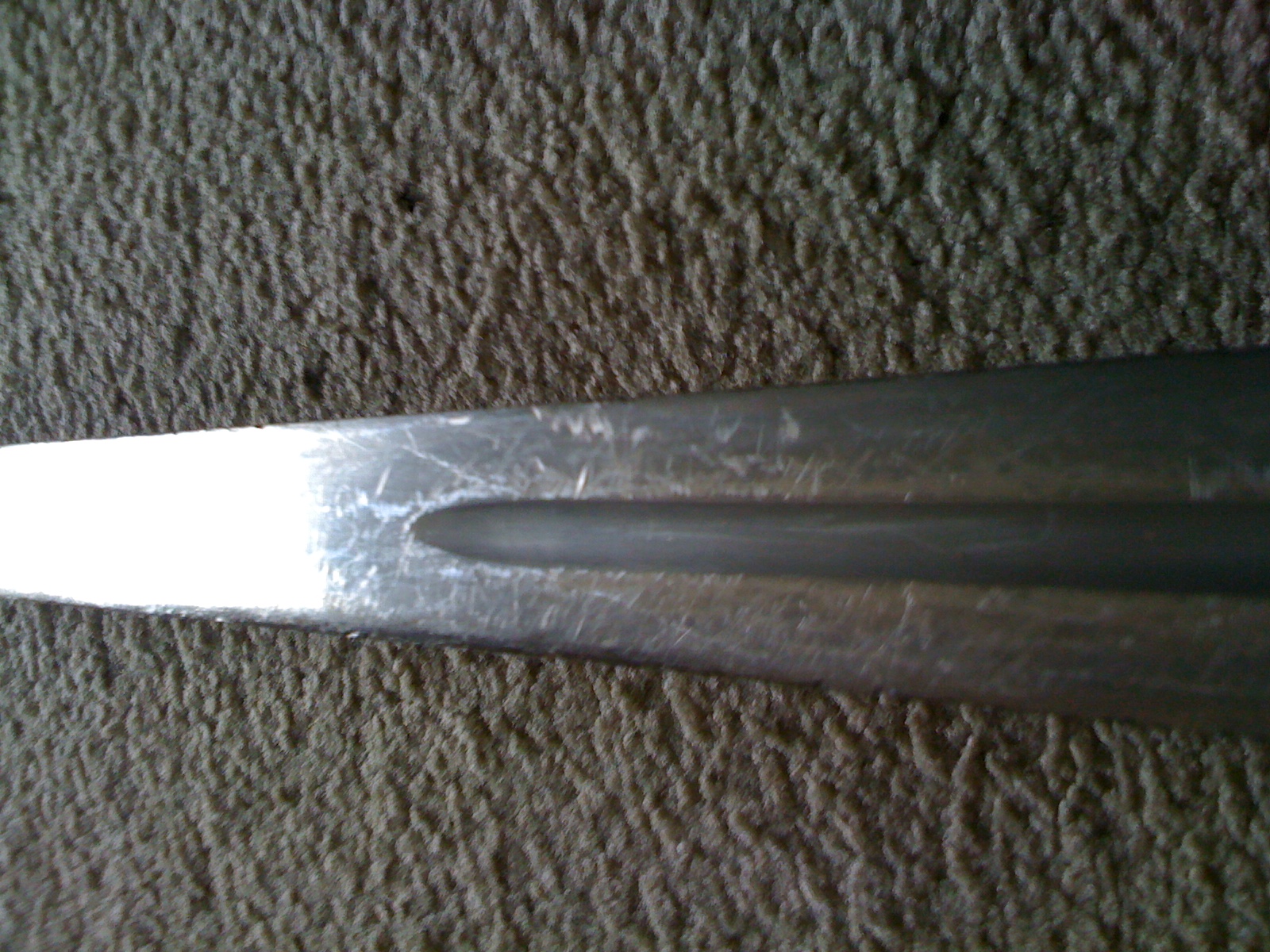
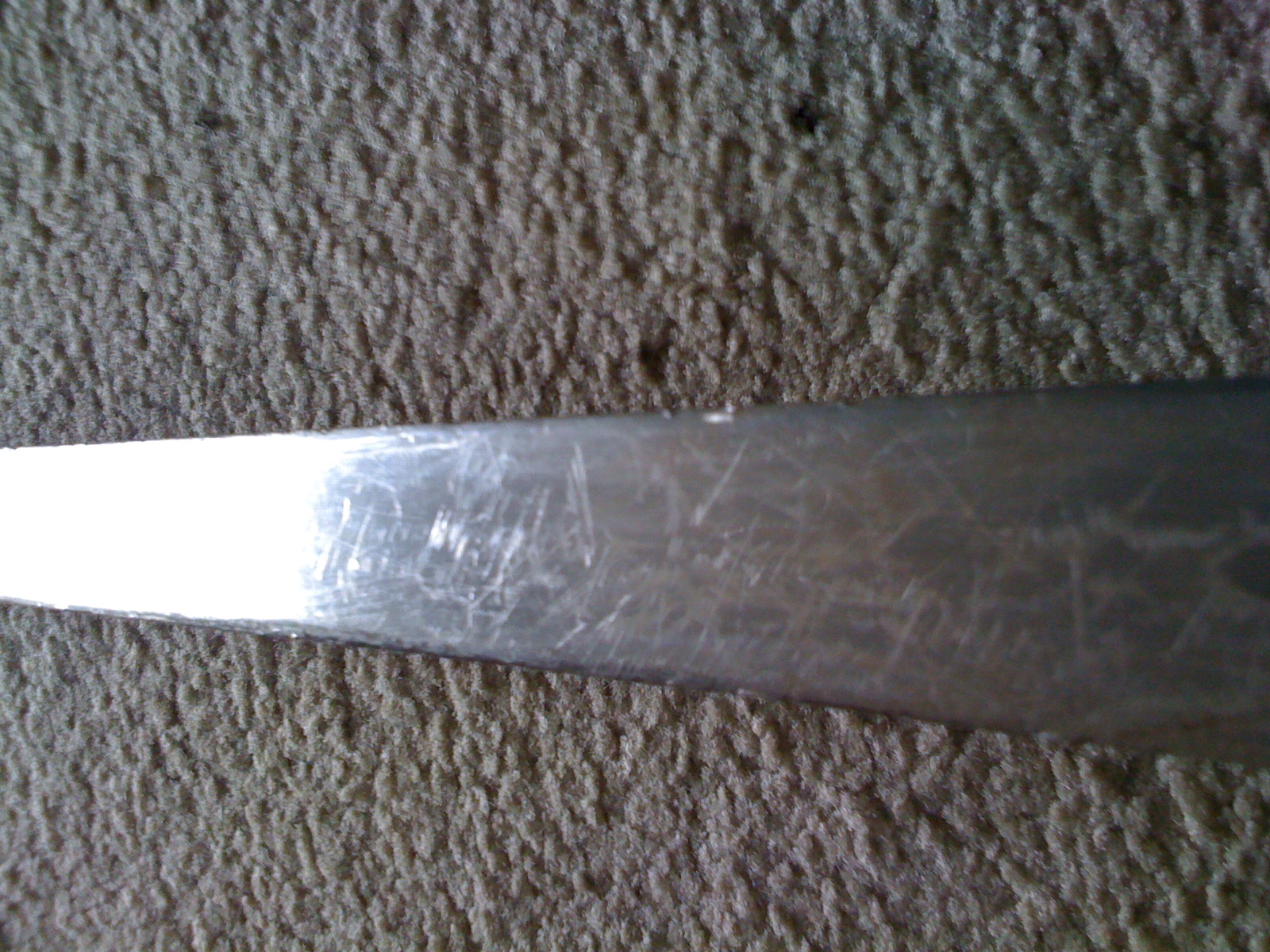
Sword use wear marks - Blade damage from combat

For Historical European Fighting Arts, Weaponry, & Armor

Moderators: Webmaster, Stacy Clifford

Alberto Foglia
Posts: 4
Joined: Thu May 05, 2011 1:31 am
Location: Newcastle

Sword use wear marks - Blade damage from combat

Postby Alberto Foglia » Tue May 10, 2011 11:02 am

Hey guys,

I'm doing my Archaeology masters at Newcastle University in the UK and this semester I'm taking a class where we look at the use traces on bronze age artefacts.

For my project in this class I'm looking at use wear traces on bronze swords. My professor mentioned that in the past it was quite likely that people parried with the flats of their swords (Which is how I eventually found this website!), as blocking with the edge does significant damage to the sword. This is especially the case with bronze weaponry, and we have some quite good examples of swords here with significant blade damage.

A lot of research and experimentation has already been done on damage to sword edges. Nothing has been done on traces left on the flat of a sword from parrying an opponents blade - yet on a bronze sword these should be quite visible.

I want to look into this. I've noticed a variety of what look like cut marks on the flat of two of my four swords. These are perpendicular or at a diagonal to the blade, as one would expect from parrying an incoming blade. They are too deep and wide to be polishing or sharpening marks.

This is where you guys could hopefully help me! I was wondering what kind of damage your swords get from parrying, and where on the sword. I know the steel you use is significantly harder and more brittle than prehistoric bronze, but I'm assuming if you bang two bits of metal hard enough, there is bound to be some traces. And of course, Renaissance techniques are probably much different to prehistoric techniques - but I think the need to keep the blade intact is universal.

If you could provide some written testimony, it would be great. If you can provide close up pictures, it would be even better! I'll of course reference this site and anyone who helps out in my paper.

Thanks for any help! My assignment is due in on the 20th, so any help quick would be nice :) As a bonus, when I get home I'll provide you guys some pictures of what people 3,000 years ago were using for combat.

Regards,

Alberto

Jonathan Hill
Posts: 111
Joined: Fri Sep 25, 2009 3:01 pm

Postby Jonathan Hill » Tue May 10, 2011 11:50 am

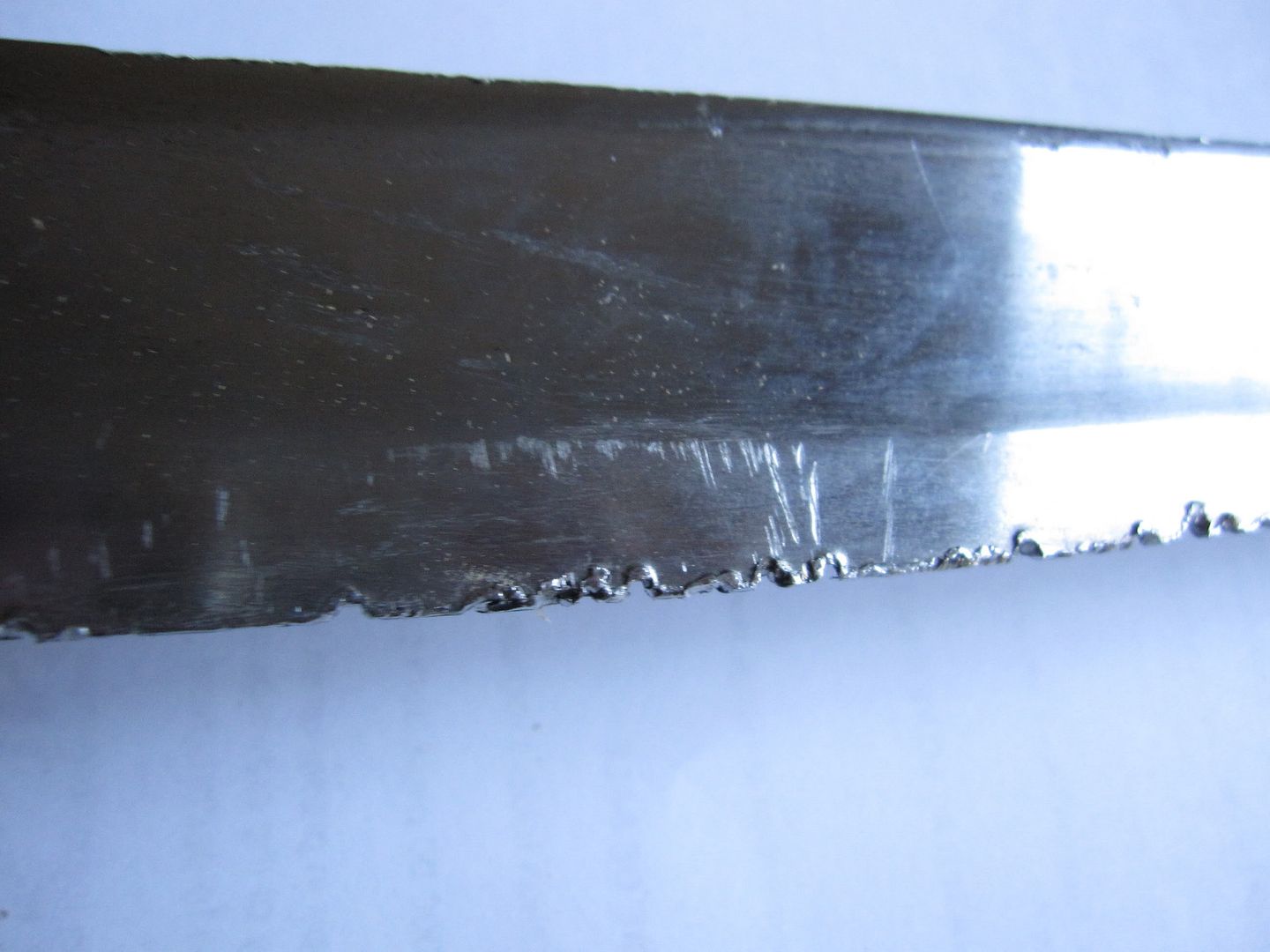
Here’s a Sabre I use that gets regular abuse, I’ll try to get a close up of the blade later for you. Zoom in for a better look, but to describe; most of the ‘saw toothing’ is at the end near the point or at the base near the grip. This is due to me parrying blows and someone else parrying my blows. For this weapon all parry’s happen on the edge of the blade, on the lower half of the weapon. Parrying on the flat with this type of blade will not allow me to strike back with any decent attacks, or just get my blade knocked aside.

Now systems of using the blade are very different, and some swords especially Viking swords are easily held in a position that receiving a cut on the flat may be preferable. I trust one of the other guys here will describe ‘cutting into a cut’ but I I’m unsure how applicable that would be to a bronze era blade. A Bronze era weapon would most likely have been used with a shield, and most attacks would be received on the shield and it would be rare to parry with your sword. But also remember a sword in the hands of a warrior is a tool, not a piece of jewelry to be protected, the nobles who didn’t have to fight can use them that way. Thus if I need to receive an incoming strike on the flat or the edge of the blade I’ll do it, I don't care about damage. I will not risk my own life to protect a piece of metal that I can replace by picking up some poor dead guys sword, or buying a new one after I get back from the battle.

Now can you get pictures of the blades you are referring to, if you show us those we can give you a lot better idea of what may have made the ‘marks’ on your blades.
Last edited by Jonathan Hill on Tue May 10, 2011 12:35 pm, edited 2 times in total.

User avatar
Nicholas Moore
Posts: 21
Joined: Sun May 09, 2010 10:06 pm
Location: South West Washington State

Postby Nicholas Moore » Tue May 10, 2011 12:18 pm

Yes MARE (single arming sword) is different from what would have been used earlier (the weapon is longer, made from steel and has a guard). The techniques would be closer to Roman techniques than those of later Europe. The early Roman iron weapons would have been only marginally stronger in tensile strength than bronze, which limited size to about the same as bronze but were significantly cheaper to produce. The Romans also emphasized thrusting rather than cutting with swords, in order to take advantage metalurgical strength and avoid its weakness (at least in my opinion). From the simularity of Greek and Roman tactics and weapons I would expect very similar martial techniques. Those tactics generally involved a phalanx of linked shields and stabbing around them (hence no guards to catch on shield edges) rather than using blades to block. But I know very little of Greek and Roman single combat besides it famously and definately existied. You might try researching gladiator combat as a reference. But I would imagine that you would have to block with the blade in any type of single combat where an opponent could come from any direction (as opposed to battlefield combat in a phalanx where your covered on both sides). So I would expect to see significant wear on the points and upper edges. Block marks would have been there, but I think they must be more rare because of the swords metallurgy and battlefield use. I sorry I can't give you any pictures of block marks but plenty of people here can. Hopefully that helps, good luck on your paper.

Alberto Foglia
Posts: 4
Joined: Thu May 05, 2011 1:31 am
Location: Newcastle

Postby Alberto Foglia » Tue May 10, 2011 12:45 pm

Hey Jonathan, thanks for the quick reply.

As a note, there is a big discussion about how bronze age swords were used. While it's now been fairly well proven by comparing experimental combat marks with marks on surviving blades that they were used for combat, some people think they may have only been used in ceremonial combat. There is even a whole camp which things they weren't used at all, and were just status items.

Early bronze swords were quite short, but during the late bronze age/early iron age they became quite long. Most people assume this came about from the taming of the horse and it's use in combat. These swords are the predecessor to the celtic longswords, and especially the longer late ones were most defintley slashing weapons. These three are all Late bronze age/early iron age.

Anyways, pictures.

Here is 441_8, a late bronze age sword which was broken when found but riveted together by an antiquarian at some point in the 19th century:
http://www.abfoglia.com/441_8_01.jpg

It has clear v-shaped notches, which have been shown to have been probably made by parrying or being parried by another blade. Similar to the notches on your sabre, I think:
http://www.abfoglia.com/441_8_04.jpg

What interests me are these two blades though:

1886.23 is a very beautiful blade, it's actually a bronze sword from the very early iron age. It's in very good condition:
http://www.abfoglia.com/188623_03.jpg

It has these marks towards the upper middle half of the sword though, which look like cut marks. The cut near the bottom right casting bubble even goes through the stepped groove until the edge of the blade. These are what I want information on:
http://www.abfoglia.com/188623_02.jpg

1929.67 (http://www.abfoglia.com/192967_01.jpg) has similar marks, although these look almost like something has been scraped across it:
http://www.abfoglia.com/192967_07.jpg

And it defintley has seen combat, as these telling u-shaped notches tell us. Probably hit something round, like a shield rim, a spear haft or bone. It even has traces of attempted repair. You can see how the owner tried to hammer out the dents quite poorly:
http://www.abfoglia.com/192967_06.jpg

User avatar
John Farthing
Posts: 179
Joined: Fri Aug 12, 2005 4:09 pm
Location: ARMA Middle Tennessee
Contact:

Postby John Farthing » Tue May 10, 2011 12:51 pm

Mr. Foglia,

One of the leading researchers into Bronze Age Swords and their use is Dr. Barry Molloy at the University College Dublin (UCD School of Archaeology). Dr. Molloy is the editor of 'The Cutting Edge: Studies in Ancient and Medieval Combat' (Tempus publishing, 2007). This volume is a collection of papers which will, no doubt, be of great assistance in your research.

You may also wish to peruse Dr. Molloy's website http://www.combat-archaeology.org Here you will find more information on the book above, as well as, an additional collection of papers by researchers in this field.

I hope this helps,
-John Farthing, Free Scholar
ARMA Deputy Director

User avatar
Stacy Clifford
Posts: 1126
Joined: Fri May 14, 2004 11:51 am
Location: Houston, TX
Contact:

Postby Stacy Clifford » Tue May 10, 2011 2:13 pm

The parry marks on my longsword mostly look like scrape marks and abrasions, but keep in mind that this is from parrying blunt swords, not sharp ones. I would expect sharp ones to leave more well-defined marks, not too unlike the ones in your photos, but the edge would still very likely skitter along the flat at certain angles rather than biting in, so consider that a mark which looks like a file was taken to the metal could actually be a mark from an acute angled parry or countercut. Even with ancient swords and different fighting styles, certain things are nearly universal in sword combat - most blows will be defended on the stronger lower portion of the blade close to the hand, and defense is achieved not only by sticking your sword in the way, but by actively striking aside one blow with another. Expect a lot of abrasion from metal sliding across metal as edge encounters flat at various angles and momentum changes direction to slide along the still-moving surface of the other blade. It's a dynamic encounter between two moving objects which continue to move after colliding as fighters react to each other, not a cold stop of one moving object against another as so often seen in the movies.
0==[>>>>>>>>>>>>>>>>>
Stacy Clifford
Free-Scholar
ARMA Houston, TX

Andrew F Ulrich
Posts: 86
Joined: Wed Feb 25, 2009 11:34 pm
Location: St. Louis, MO

Postby Andrew F Ulrich » Tue May 10, 2011 10:06 pm

I can't vouch for Jonathan Hill or Nicholas Moore, but I can say that both John Farthing and Stacy Clifford are both very experienced and well-studied in our subject. They are both respected members of ARMA, so I would just like to say you can trust what they say about this. I mean no disrespect to you, Jonathan and Nicholas. :)

Here is a link to a few pictures I've just taken of my two longswords:
https://picasaweb.google.com/AndrewFUlr ... vo7uWM3QE#

It is a usual practice for me and my fellows to file/sand out any gouges from our practice swords, and since we defend with the flat of the blade, a good-sized gouge is a very rare occurence for us. Since we do simultaneously deflect and strike in the same motion, sometimes we do get small nicks in our blade-again, these are usually sanded so that they don't catch on our partner's skin and/or encourage rust.

I would like to say that the mechanics of the human body are consistent throughout history, and likewise, fighting with an elongated blade in the most practical manner does require some common fundamental principles. Experience with various weapons has shown that blocking a strike with the edge is a bad idea in any situation.

Would you agree with that statement, Stacy and John?


Andrew Ulrich
Longsword Adept
ARMA St. Louis

Alberto Foglia
Posts: 4
Joined: Thu May 05, 2011 1:31 am
Location: Newcastle

Postby Alberto Foglia » Wed May 11, 2011 4:23 am

Hey everyone, thanks for all the input so far. It's much appreciated! Do I have permission to quote the replies in this thread, and use any pictures for comparison in my assignment?

Mr. Farthing
, I certainly will read Dr. Molloy's book, thank you. It's on our reading list for the class, and we've been referenced to his volume (specifically the O'Flaherty article on Bronze Age 'halberds') on our lecture on use wear traces on blades.

Nicholas: No one is sure what sort of combat these blades were used for. Still, you may be correct that they used them for thrusting a lot - 3 of the 5 blades I've looked at have broken points. On one of them the broken point has even been hammered down and resharpened. Definitely something to consider, thanks!

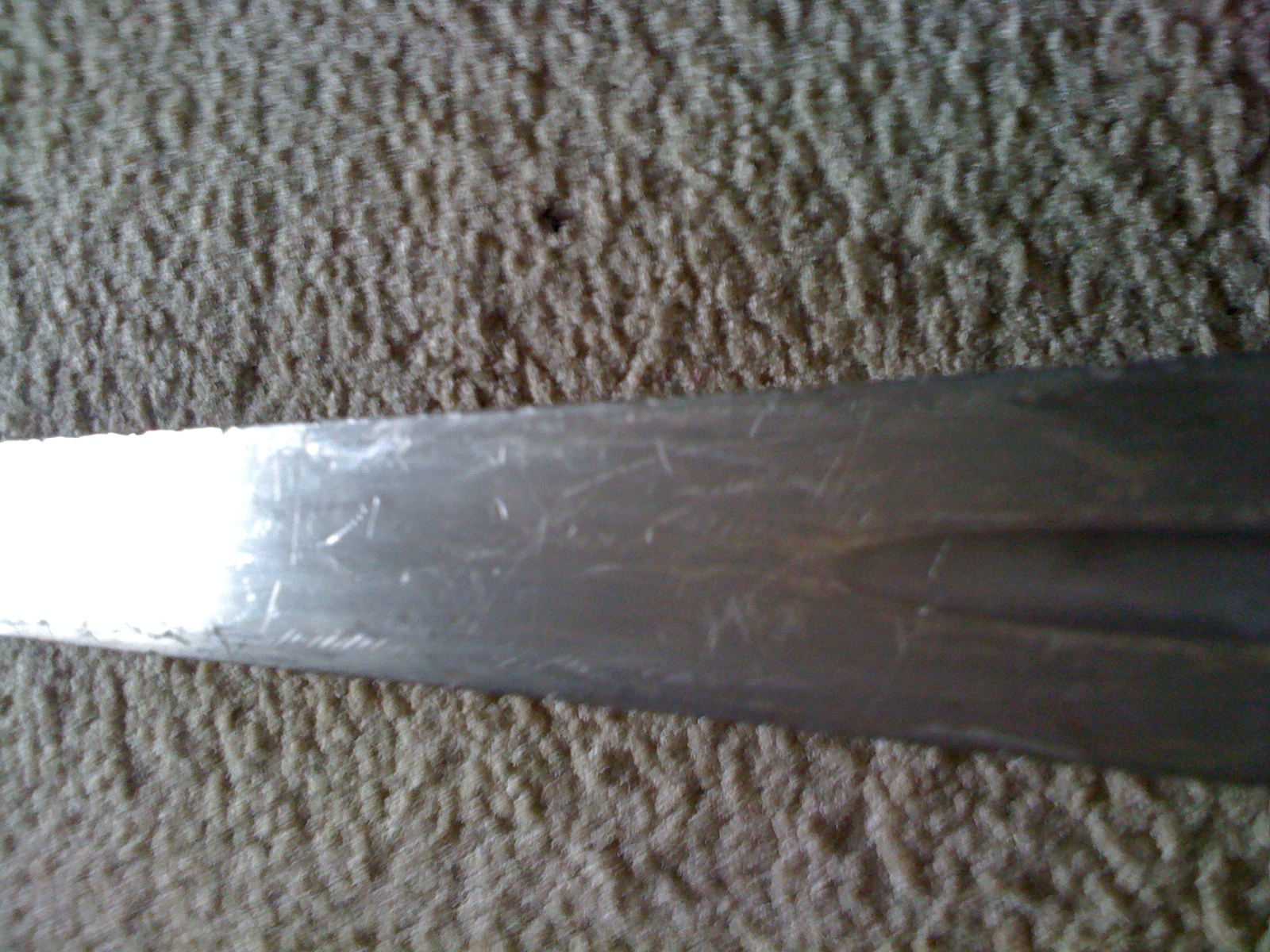
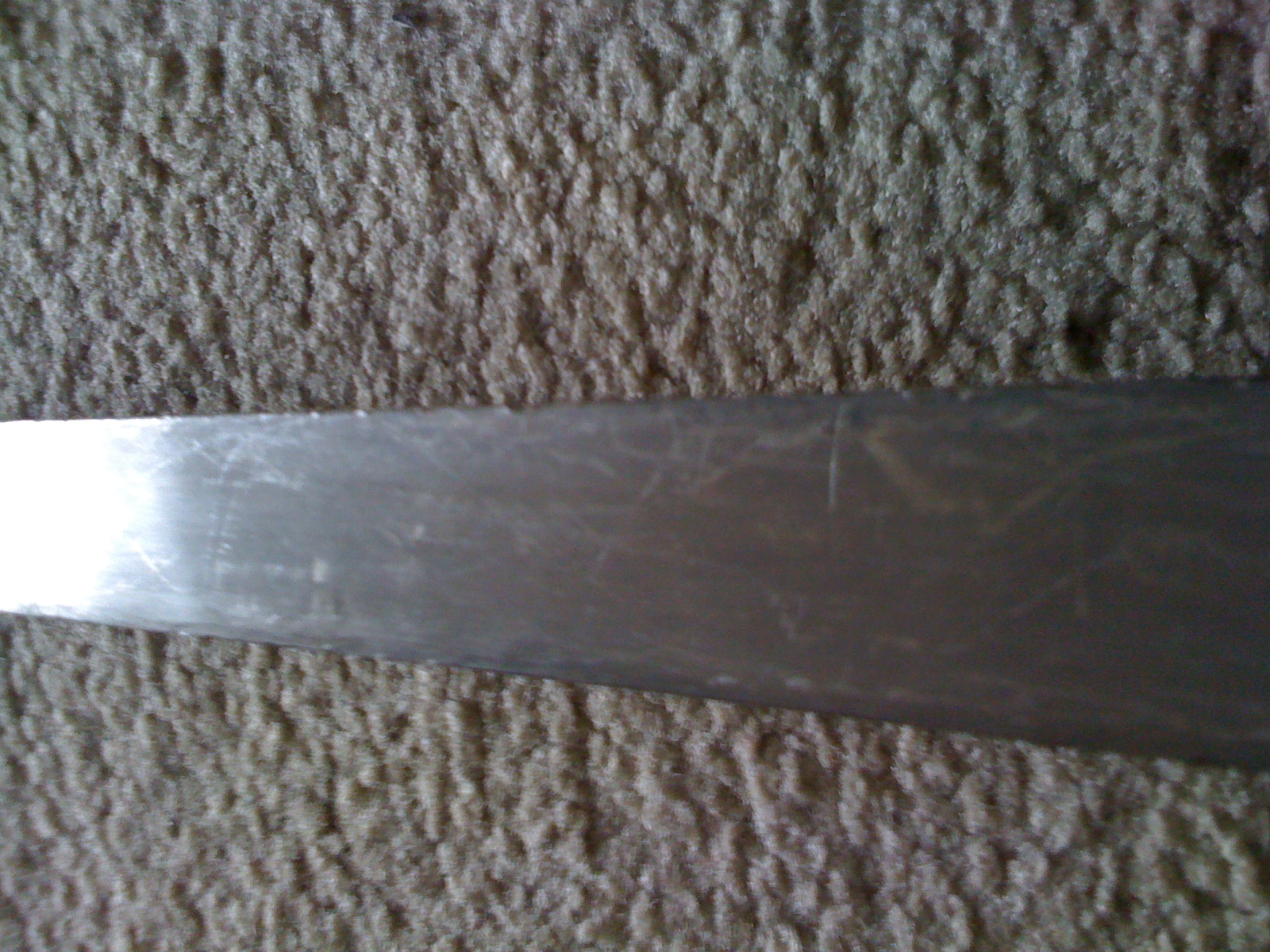
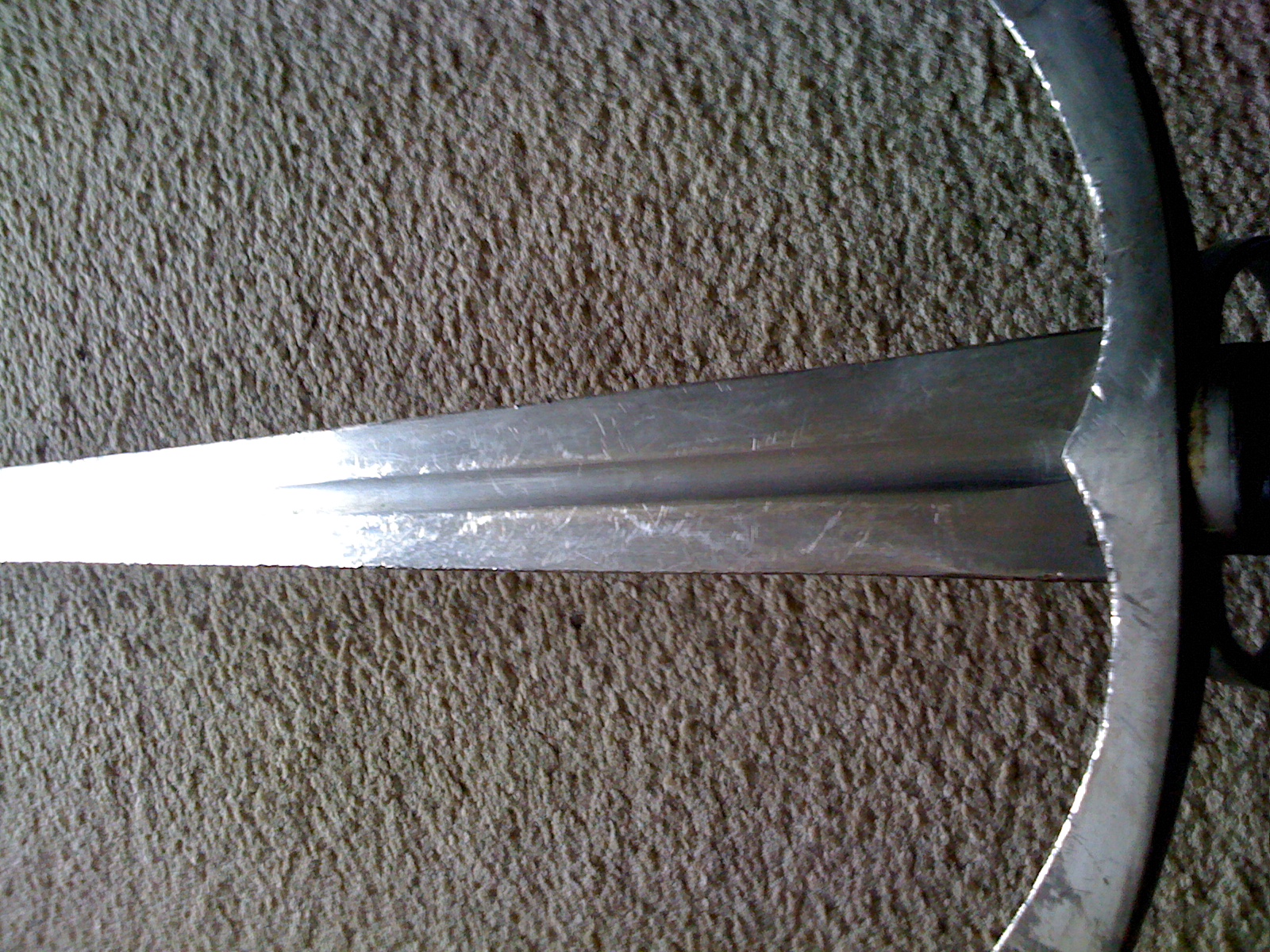
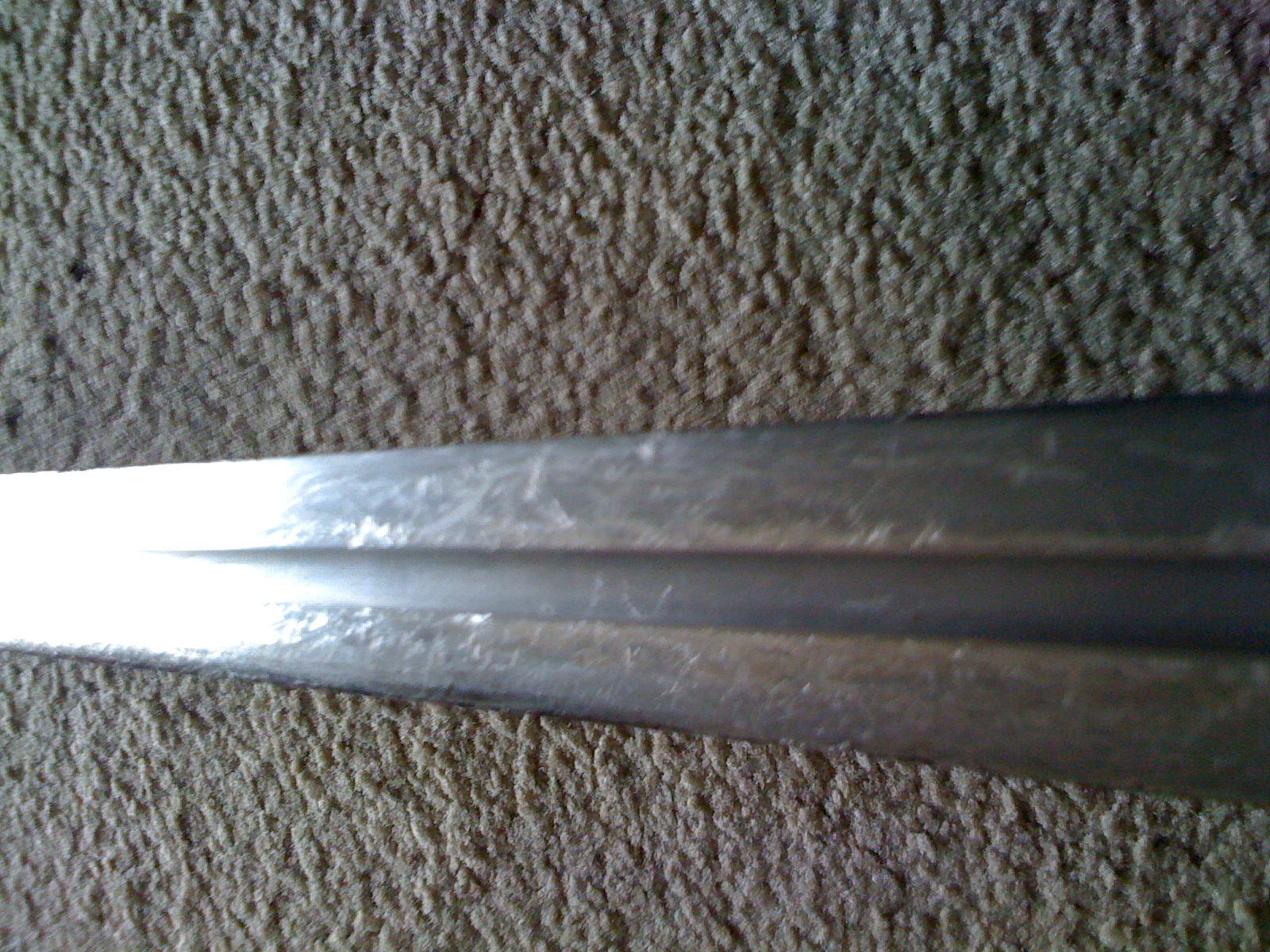
Stacy: Thanks, this is some very good information. Do you have any pictures of these 'filing' and metal sliding against metal marks? Are they anything like http://www.abfoglia.com/192967_07.jpg?

Andrew: Wow, thanks for the images! I think those will be very useful. It's good to see all the marks that can happen by defending with the flat of the blade. Could I be cheeky and ask for a close up on two of the pictures? On the second picture in the album there are some well defined marks where the blade is reflecting the orange lights. Could I get a close up of those? Could I also get a close up and of this part of your lichtenauer?: http://www.abfoglia.com/sword_Scratches_004_moredetail.jpg

Close up's of the different types of cuts, scrapes, notches and gouges on flats would be extremely useful for comparison purposes. There is a large library of nicks and gouges on blade edges in the bronze age weaponry literature, but nothing that I know of of combat damage on the flat of the blade. So far, for a bronze age blade to be considered combat damaged it has to have nicks along the blade edge: But if someone only used a sword a few times in anger and parried with his flat, there may not be any nicks on his sword edge. A sword like that may be considered to never have been used in combat. 1886.23 for example has no nicks on the blade edge, although it has a lot of scrapes and cuts on its flat. If we can identify traces of the damage left on the flat of a sword from combat, it may help us distinguish with more accuracy whether a sword was used in anger, or was just an expensive bronze age wallhanger. And also give us some evidence of fighting styles.

Jonathan Hill
Posts: 111
Joined: Fri Sep 25, 2009 3:01 pm

Postby Jonathan Hill » Wed May 11, 2011 10:41 am

Here’s a close ups of my Sabre, This end is the cutting end, or near the tip of the blade. The nicks in the blade you should be well familiar with, they were created by someone parrying my attack with an edge on edge stop by putting their blade in the way of my incoming blade. The scrapes on the blade were made by ‘counter cuts,’ when I cut at someone and they cut at me at the same time, done correctly only one person gets hit. Mine is a curved blade so in doing so I generally take more advantage of the curve in the blade rather than the flat of the blade. For a strait blade I take end up having more drag on the flat than you see on this blade.
Last edited by Jonathan Hill on Wed May 11, 2011 11:01 am, edited 1 time in total.

User avatar
Stacy Clifford
Posts: 1126
Joined: Fri May 14, 2004 11:51 am
Location: Houston, TX
Contact:

Postby Stacy Clifford » Wed May 11, 2011 10:51 am

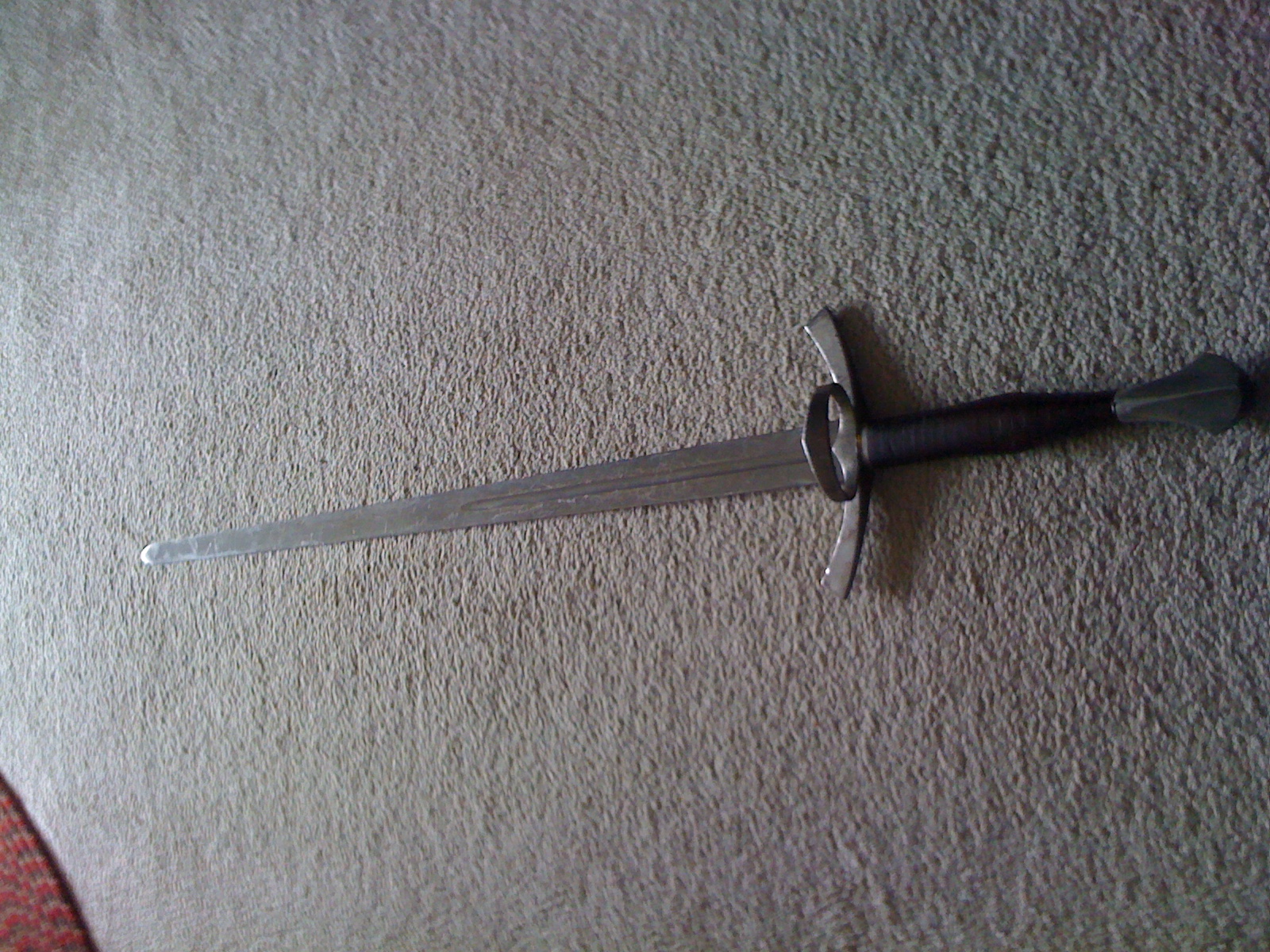
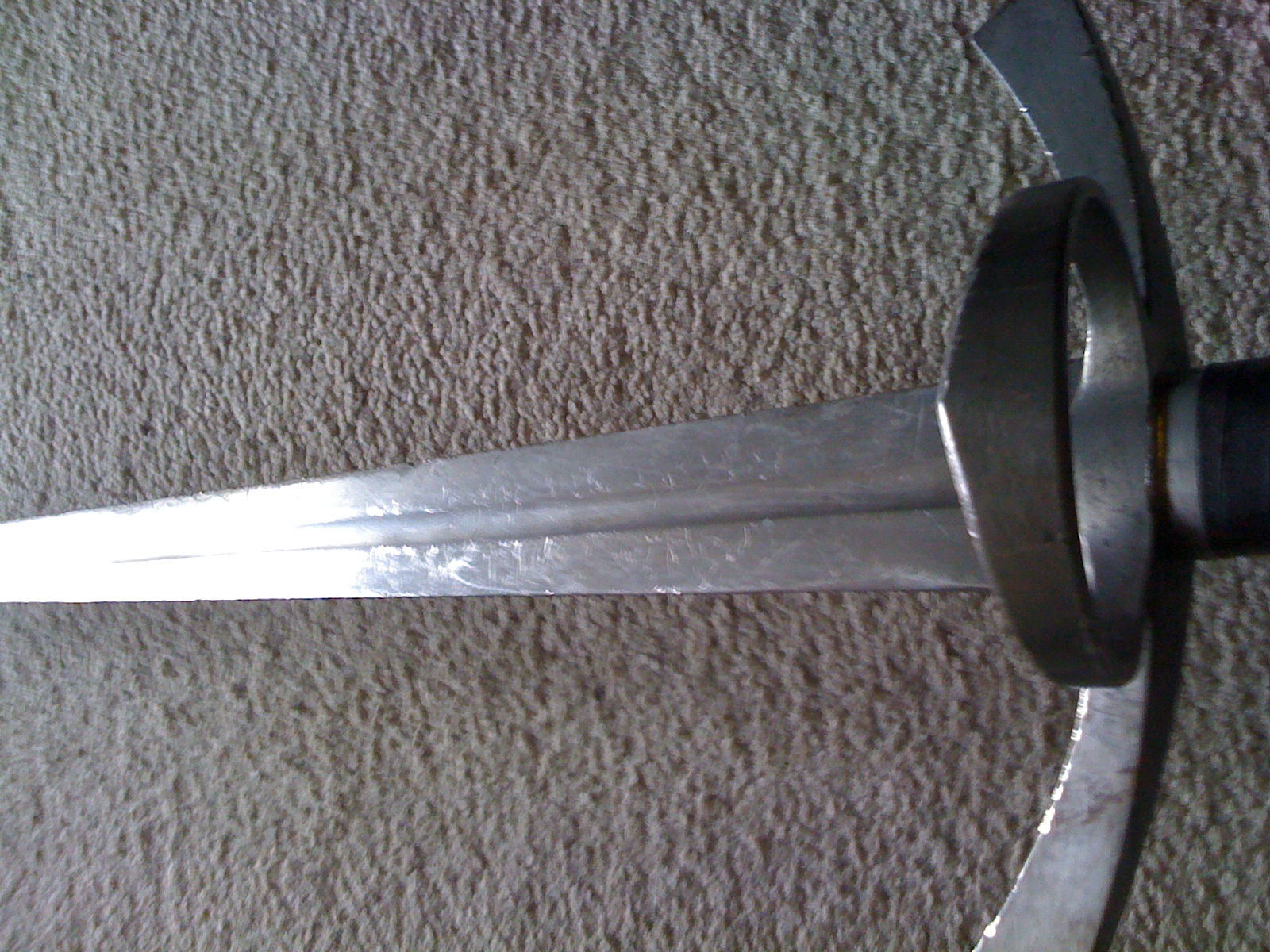
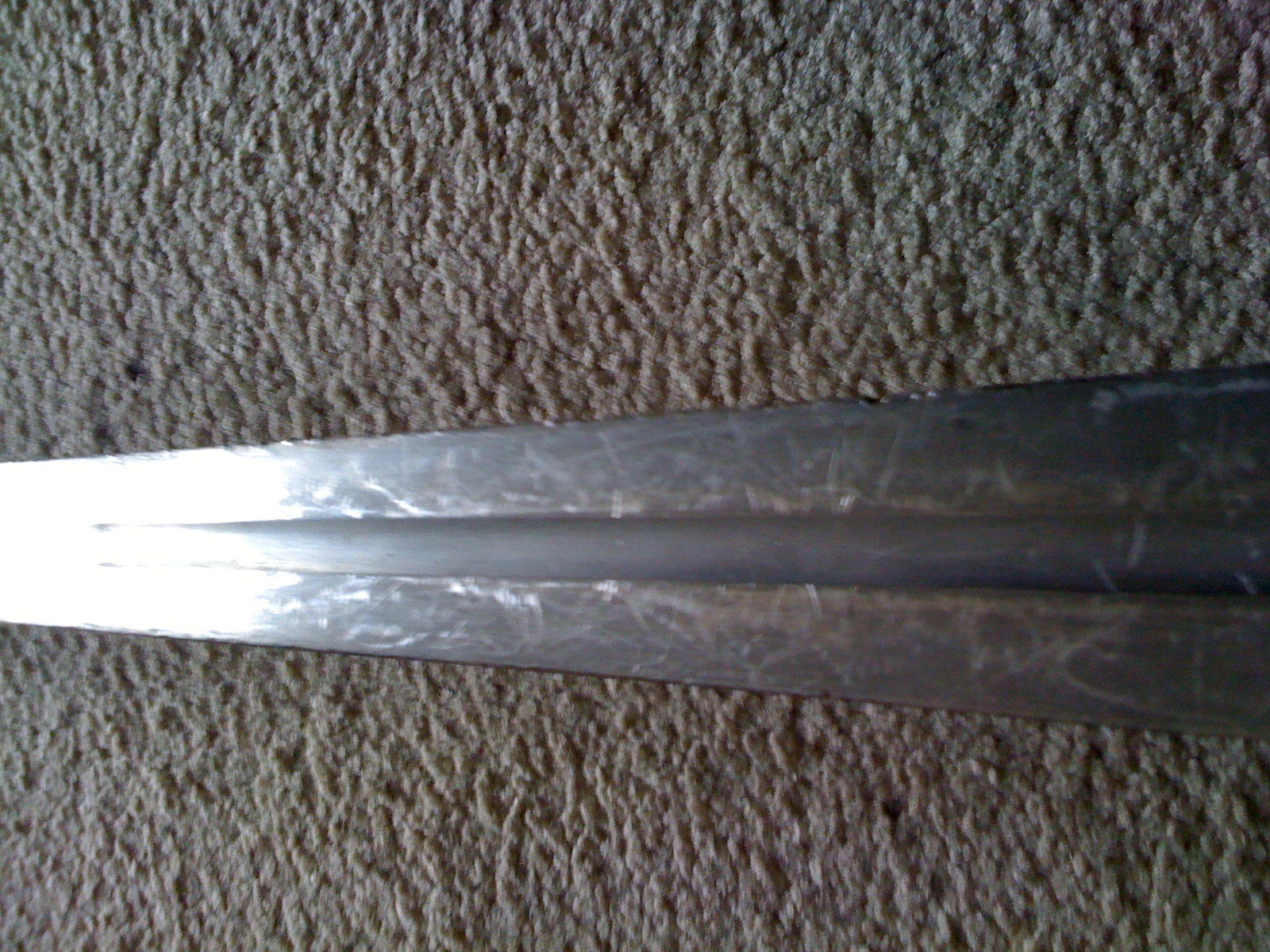
OK, these are not the clearest pictures in the world, taken with a cell phone camera, but they should give you an idea what I'm talking about. You'll see a few nicks on the edges just because this blade is old and heavily used, and if you use anything long enough then stuff happens no matter how good your technique normally is. I took pictures of both sides of the blade. You have my permission to quote me and use the pictures I post on this thread if they are helpful.

And yes, Andrew, I completely agree with that statement.

http://www.thearma.org/images/flat-dama ... amage1.jpg
http://www.thearma.org/images/flat-dama ... amage2.jpg
http://www.thearma.org/images/flat-dama ... amage3.jpg
http://www.thearma.org/images/flat-dama ... amage4.jpg
http://www.thearma.org/images/flat-dama ... amage5.jpg
http://www.thearma.org/images/flat-dama ... amage6.jpg
http://www.thearma.org/images/flat-dama ... amage7.jpg
http://www.thearma.org/images/flat-dama ... amage8.jpg
http://www.thearma.org/images/flat-dama ... amage9.jpg

Again, keep in mind that this is damage from parrying blunt steel blades, not sharp ones, and I would expect softer bronze to maybe show a little more trauma. You can see that almost all the damage is just shallow scrapes and scratches. The deeper scrapes in the image you asked about might be reasonably interpreted as combat damage, but it's hard to say for sure without knowing more about bronze. The best way to find out would be to get some bronze replica swords and try it out.
0==[>>>>>>>>>>>>>>>>>

Stacy Clifford
Free-Scholar
ARMA Houston, TX

Alberto Foglia
Posts: 4
Joined: Thu May 05, 2011 1:31 am
Location: Newcastle

Postby Alberto Foglia » Sat May 14, 2011 10:34 am

Thanks guys, it's all useful stuff. Writing my essay now!


Return to “Research and Training Discussion”

Who is online

Users browsing this forum: No registered users and 5 guests


Note: ARMA - The Association for Renaissance Martial Arts and the ARMA logo are federally registered trademarks, copyright 2001. All rights reserved. No use of the ARMA name or emblem is permitted without authorization. Reproduction of material from this site without written permission of the authors is strictly prohibited. HACA and The Historical Armed Combat Association copyright 1999 by John Clements. All rights reserved. Contents of this site 1999 by ARMA.