Mongol and European comparitive tactics?

For Historical European Fighting Arts, Weaponry, & Armor

Moderators: Webmaster, Stacy Clifford

User avatar
Filip Pobran
Posts: 64
Joined: Thu Jan 12, 2006 5:36 pm
Location: Croatia

Re: Mongol and European comparitive tactics?

Postby Filip Pobran » Sun Jan 15, 2006 4:11 am

i think that castles were no problem, because of that in china, where also were castles

User avatar
James Hudec
Posts: 59
Joined: Fri Jan 14, 2005 9:29 pm
Location: Alberta, Canada

Re: Mongol and European comparitive tactics?

Postby James Hudec » Sun Jan 15, 2006 1:29 pm

I could be wrong, but I don't think Chinese fortifications of the time were really comparable to European castles.

Well to compare individual merits is a rather endless and inconclusive discussion.
I wouldn't say so. I find it interesting to make these comparisons, at the least.

Mongolia is the horse capital of the world. Whether dismounting in battle or not, Cavalry is always at an advantage against infantry.
Are you quite certain that's always true? In mountainous terrain, for example?

Mongol armies could not only field a 100% cavalry army but afford multiple horses per soldier, compounding this advantage. While the horses themselves were relatively small they're quite hardy, able to live on very little food and perform well in just about any envirornment they came across the the exception of dense jungle.
On the other hand, this put a significant strain on their logistics, as they had to be able to provide the requisite fodder for all of these animals, and as far as I know, the only places that would have been able to support them would have been in the most densely populated and heavily defended areas of Europe.

From Mamluke to Cataphract, mounted archers have always been the elite of an army, the mongols didn't just train as cavalry archers, the lived that way (not to say this isn't true of several other highly successful nomad civilizations.
I'm not really certain what you're defining "successful" as, beyond raiding, as it seems to me that groups such as the Turks, or maybe the Magyars, only became really successful after they became more settled and less nomadic, historical examples seeming to show that the city-dwellers always prevail over the nomads sooner or later.

Due to great size of the mongol empire their armies had exposure to an immense diversity of fighting styles and military technologies.
As did their European counterparts, I'm sure.

Religious diversity - No state religion and a policy respecting and learning from all religions translates to significant diplomatic advantages.
Increases more friction between different religious groups and their adherents.

Clearly Mongol armies hold a significant advantage over a European army on the scale of entire campaigns in the 13th century!
I should think though, that the European armies would have had an edge in terms of attrition, which, it seems, eventually proved to be the case.

When talking of such things I think it's extremely important to avoid turning this into an ethnic/cultural superiority discussion. If Mongol armies seem martially superior (in the 13th century!) it certainly does not mean this is true in other time periods or that Mongolians are inherently superior to Europeans. The defining factor in this situation is GEOGRAPHY! Nothing more. Speaking of things in terms of eastern vs western inevitably leads to people defending the cultures they identify with which is rather irrelavent to the discussion.
You seem to be contradicting most of your previous statements here.
"I know nothing."

Logan Weed
Posts: 69
Joined: Wed Nov 30, 2005 1:47 pm
Location: Columbus, OH

Re: Mongol and European comparitive tactics?

Postby Logan Weed » Sun Jan 15, 2006 6:22 pm

If you think they're contradictory then you misunderstand my point...or I've made a mistake. But let's not talk about that right <img src="/forum/images/icons/wink.gif" alt="" />

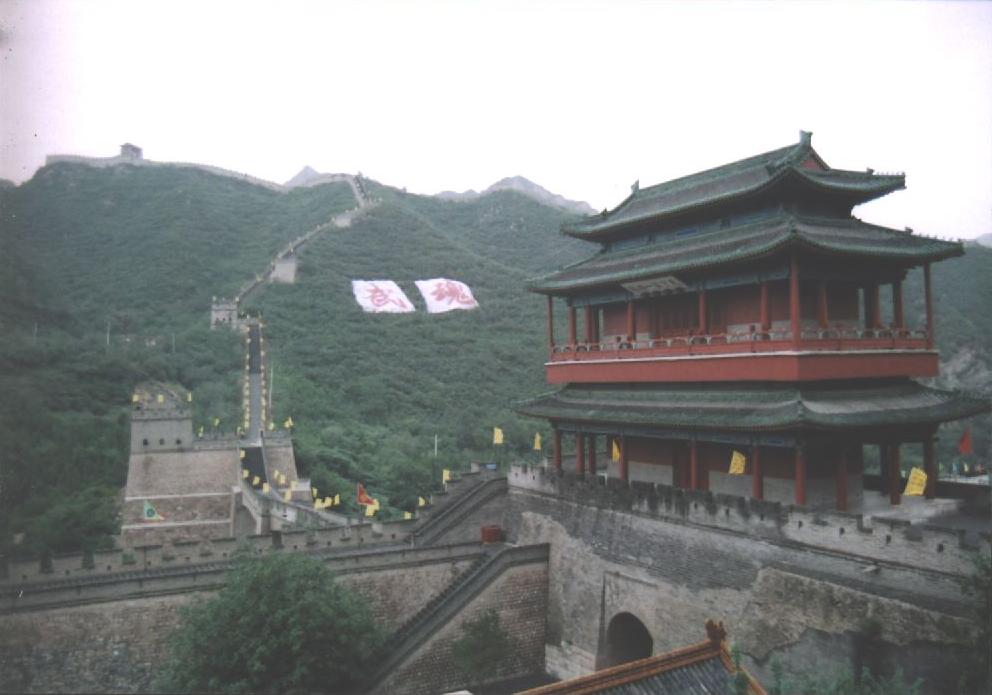
I'd say Chinese fortifications were pretty comparable to their European counterparts. They consisted of tall, thick stone walls topped by battlements and supported by towers and gatehouses. A few stylistic differences but essentially the same function. A few examples:

http://www.lomo-expedition.de/out01661.jpg
http://www.travelblog.org/Photos/51025.html

Keep in mind the Mongols held a large portion of the middle east as well.

Are you quite certain that's always true? In mountainous terrain, for example?


Or at sea...I concede there are certain regions in which horses would not be useful. Luckily people generally don't leave there either. My point was that even if you're just going to dismount to engage in infantry tactics the horses still give you an edge in mobility. Mongol access to horses gave them an advantage and that access was due to geography.

On the other hand, this put a significant strain on their logistics, as they had to be able to provide the requisite fodder for all of these animals, and as far as I know, the only places that would have been able to support them would have been in the most densely populated and heavily defended areas of Europe.


Then how did they achieve such success in the deserts? How did any primarily cavalry army? I don't see any evidance of this being a logistical problem, only an advantage due to increase mobility between supply points.

I'm not really certain what you're defining "successful" as, beyond raiding, as it seems to me that groups such as the Turks, or maybe the Magyars, only became really successful after they became more settled and less nomadic, historical examples seeming to show that the city-dwellers always prevail over the nomads sooner or later.


Or perhaps that successful nomads eventaully become city dwellers. In any case I'm more concerned with the cavalry archers of city dwellers, which the Mongols largely were by that point. On the other hand, isn't any conquering army by definition nomadic?

As did their European counterparts, I'm sure.


Not to the same extent. This area is significantly larger and more diverse in addition to being held by one empire as opposed to a collection of competing countries.

Increases more friction between different religious groups and their adherents.


This doesn't seem to have been the case.

I should think though, that the European armies would have had an edge in terms of attrition, which, it seems, eventually proved to be the case.


Why?

User avatar
James Hudec
Posts: 59
Joined: Fri Jan 14, 2005 9:29 pm
Location: Alberta, Canada

Re: Mongol and European comparitive tactics?

Postby James Hudec » Sun Jan 15, 2006 8:37 pm

If you think they're contradictory then you misunderstand my point...or I've made a mistake. But let's not talk about that right
Fair enough

I'd say Chinese fortifications were pretty comparable to their European counterparts. They consisted of tall, thick stone walls topped by battlements and supported by towers and gatehouses. A few stylistic differences but essentially the same function. A few examples:

http://www.lomo-expedition.de/out01661.jpg
http://www.travelblog.org/Photos/51025.html

Keep in mind the Mongols held a large portion of the middle east as well.
Well, the second one failed to load, and the first is, the Great Wall? Not an especially successful fortification, if I recall correctly. I hope that doesn’t sound glib, but I can’t think of many castles (in Europe, I mean) that were actually taken by the Mongols, in fact, they seemed to have quite a bit of trouble with the Hungarian ones.

Or at sea...I concede there are certain regions in which horses would not be useful. Luckily people generally don't leave there either. My point was that even if you're just going to dismount to engage in infantry tactics the horses still give you an edge in mobility. Mongol access to horses gave them an advantage and that access was due to geography.
Well, I can’t back this up with documentation, yet, but I’ve heard that medieval Europe had considerably fewer access routes from one region to another, and many of which could probably be turned into choke-points against invaders.

Again, there’s also the issue of castles.

Then how did they achieve such success in the deserts? How did any primarily cavalry army? I don't see any evidance of this being a logistical problem, only an advantage due to increase mobility between supply points.
I think your own reference to supply points probably answers your question regarding deserts.

Or perhaps that successful nomads eventaully become city dwellers.
In which case they would no longer be nomads, I’m thinking.

In any case I'm more concerned with the cavalry archers of city dwellers, which the Mongols largely were by that point.
Maybe, but you did define them as nomads previously.

On the other hand, isn't any conquering army by definition nomadic?
Not necessarily, I should think.

Not to the same extent. This area is significantly larger and more diverse in addition to being held by one empire as opposed to a collection of competing countries.
Conceded. However, geographic area doesn’t necessarily indicate the variety of means of waging war to be encountered.

I know it’s sounds like a cop-out, I’m sorry, but I need to find out exactly how diverse the Chinese, Turks, Mongols, etc were in their approach to organized warfare. <img src="/forum/images/icons/confused.gif" alt="" />

(more reaserch for me tonight)

This doesn't seem to have been the case.
It depends, doesn’t it? The Mongol empire at the time no doubt was religiously diverse, but what of their military? Wouldn’t they be composed primarily of Mongols, and possess shared religious beliefs (for the most part)?

Unfortunately, I don’t have any specific information on this one way or the other. <img src="/forum/images/icons/frown.gif" alt="" />

Why?
Because, it seems that logistics played the greatest part in their decision to pull back. For one example, their losses couldn’t be replaced, far away from home as they were. For another, they would have to find enough fodder to maintain all of their mounts (possibly 150,000-400,000, assuming every one of Batu’s riders had two to three horses).
"I know nothing."

User avatar
JeanryChandler
Posts: 978
Joined: Sat Dec 28, 2002 1:45 am
Location: New Orleans, aka northern Costa Rica
Contact:

Re: Mongol and European comparitive tactics?

Postby JeanryChandler » Sun Jan 15, 2006 9:56 pm

There have been many other threads on the mongols vs. the Europeans in here, you might want to review the forum history. Just a couple of points though which stand out...

Cavalry is always at an advantage against infantry.


I'm sorry, but that is laughable. Cavalry is not inherently superior to infantry. If that were the case the Romans certainly wouldn't have had the success they had using predominantly infantry armies.

You might also want to consider the Swiss Reislauffer, among many others. From the battle of Morgarten in 1315 until the early 16th century, the Swiss never lost a major battle and in fact continually defeated the finest heavy cavalry in Europe, including the Austrian Knights of the Hapsburg Empire and the highly modernized and effective armies of Charles the Bold. The German Landsknechts, founded by Emperor Maximillian I in imitation of the Swiss, had similar success, and it's worth noting, on all kinds of terrain.

Many major victories were won against heavy cavalry in Europe starting in the early 14th century, notably in Switzerland (Morgarten 1315), Flanders (Courtrai /golden spurs 1302), and Scotland (Stirling Bridge 1297). By the Renaissance the cavalry had become just another component of a combined arms force.

Getting back to the Mongols.. The two major victories in 1241 between the Mongols and the Poles, and the Mongols vs the Hungarians respectively, demonstrated a basic organizational superiority by the Mongols, but also numerous comparative weaknesses on the tactical level, primarily against European heavy crossbows on the one hand, and armor, swords &amp; lances in close combat particularly at Sajo bridge against the mixed force of predominantly Hungarians on the other.

It's also almost never reported that on their way from victory 1 in Poland to victory 2 in Hungary the Mongols were actually sharply repulsed by the Bohemian army under Wenceslas at some place called Ao-le-mu and had to retreat from Bohemia (todays Czech republic). If this Bohemian army had been at Leignitz as intended things might have gone differently.

The Mongols did take some fortified towns during their adventures in Europe, (notably Hermanstadt) but they generally had a hard time dealing with heavy fortifications, which they tended to either bypass or capture by long starvation seiges or intimidation ... and they never dealt with any first class European defenses.

Another wee point, there are some pretty impressive castles in China but I do agree personally they are not quite on the same level as some of those in Europe, though the case is certainly arguable. Here is just one example, a 12th century (?) castle built by Hospitaler Knights in Syria during the Crusades, the Krak Des Chevaliers...

Image

Finally it's also worth noting that the Mongols were eventually completely smashed by the Egyptian Mamelukes and driven out of the Middle East, their vaunted superiority can be somewhat exagerated.

Basically they were a first rate cavalry army who had excellent command and control systems in place and good battlefield intelligence, while most of their enemies had neither. IMHO it's really that simple, all the theories of them being supermen is as ridiculous as the idea that Alexander the Great was a god.

Jr
"We can't all be saints"
John Dillinger

User avatar
Filip Pobran
Posts: 64
Joined: Thu Jan 12, 2006 5:36 pm
Location: Croatia

Re: Mongol and European comparitive tactics?

Postby Filip Pobran » Mon Jan 16, 2006 4:27 am

about the greatest and the longest the "wallest" <img src="/forum/images/icons/smile.gif" alt="" /> ... they simply went around it. that fact makes me laugh. they built that huge wall... and mongols simply went around it. astonishing strategy <img src="/forum/images/icons/smile.gif" alt="" />


no one can say that infantry is inferior to cavalry, or archers, or something like that. you must consider the USE (or usage. i am killer of english language <img src="/forum/images/icons/smirk.gif" alt="" /> ) of units.

strategy, dear watson, strategy! - said holmes smiling...

User avatar
SzabolcsWaldmann
Posts: 179
Joined: Tue Jan 04, 2005 8:28 am
Location: Hungary
Contact:

Re: Mongol and European comparitive tactics?

Postby SzabolcsWaldmann » Mon Jan 16, 2006 5:06 am

James,

I believe Henry the fith with his 900 man strong knightly army on foot defeated the many times bigger french army on horseback in the 100 years war, no? It's simply a matter of tactics and the correct use of terrain and time before battle <img src="/forum/images/icons/wink.gif" alt="" />

One also has to understand, that no footsoldier unit can withstand the full force of a knightly horse charge. But, since the world changed and battles got lesser honour and much more tactics, this became a fewer ocassion.

As for the Mongols, as always, bad timing and the landslords inner fighting had most fault in the fall of the european empires against the mongolian tide. If the had rallied, with all mans strength at the entrances of europe, we would have had a better chance. Or, with a paid army. But back then, most european armys were feudal ones, and that is of course controlled by those awful lords, who sometimes only seem to care about their own good.
IF the Teuton Kinightly Order would still have been in Erdély, and not cast away by the hungarian king András the 2nd, they would have fought ferociously as well, I believe. Of course, hungary had a good reason driving them away, after they got a writing from the pope, that the lands they inhabited in Hunary are in the name of god not hungary any more, but vatican... <img src="/forum/images/icons/wink.gif" alt="" />
Good for us, that the Khan died, so the all went home as fast as they came...

Szab
Order of the Sword Hungary

User avatar
TimSheetz
Posts: 412
Joined: Fri Sep 20, 2002 4:55 pm
Location: Madrid, Spain

Re: Mongol and European comparitive tactics?

Postby TimSheetz » Mon Jan 16, 2006 5:45 am

Cavalry has it place on the battlefield, but it cannot hold ground nor take ground from determined infantry.

Disciplined and determined infantry is not beatable by cavalry. Now if the infantry breaks and runs, well then the cavalry has a fun day of it.

No horse will charge into a wall of spears.

The advatage of cavalry is in its combined arms roles. It gives you the benefits of maneuver (and maybe shock if it is heavy cav). So you use you arrows to get the infantry to disperse (to mitigate the missile casualties) and then you quickly have your cavalry charge them... and maybe as the infantry regroups tightly you call off the cav and hit them with concentrated missiles... if the infantry doesn't regroup fast enough you have dispersed infantry getting picked apart by cavalry. Whoever has the best discplined drill and Command and Control systems will be more likely to dominate. In the fog and chaos of battle, having action drilled into your soldiers gives direction and focus to the mind of the troops... and just this, I am sure, has saved many a victor on the battlefield.

Tim
Tim Sheetz
ARMA SFS

User avatar
Filip Pobran
Posts: 64
Joined: Thu Jan 12, 2006 5:36 pm
Location: Croatia

Re: Mongol and European comparitive tactics?

Postby Filip Pobran » Mon Jan 16, 2006 6:29 am

that was plus for mongol wariors. they charged on horses sending a nice bunch of arrows, and than, when they were close enugh, they pulled out swords on dispersed army. simple as that.

but, sure, there was great problem in mountains, and, possible, on hills

User avatar
JeanryChandler
Posts: 978
Joined: Sat Dec 28, 2002 1:45 am
Location: New Orleans, aka northern Costa Rica
Contact:

Re: Mongol and European comparitive tactics?

Postby JeanryChandler » Mon Jan 16, 2006 11:14 am

One also has to understand, that no footsoldier unit can withstand the full force of a knightly horse charge. .


Again, I'm forced to respectfully disagree. The Swiss Rieslauffer did so many times (for example the battles of Grandson, Morat / Murat, and Nancy against Charles the Bold of Burgundy.) as did the Landsknechts and many other Renaissance infantry armies It depends on the weapons both sides are equipped with.

If the infantry have sufficient numbers of pikes and are well trained and disciplined, they can and quite routinely did resist heavy cavalry charges.

Jr
"We can't all be saints"

John Dillinger

User avatar
JeanryChandler
Posts: 978
Joined: Sat Dec 28, 2002 1:45 am
Location: New Orleans, aka northern Costa Rica
Contact:

Re: Mongol and European comparitive tactics?

Postby JeanryChandler » Mon Jan 16, 2006 11:22 am

Tim, you quote modern military theory accurately, but as I pointed out in my other post, in Historical times kit and levels of training made a big difference. Infantry with pikes (especially) and effective missile weapons (heavy crossbows, longbows, and / or arquebusses) could hold off heavy cavalry, infantry without had much tougher time. Conversely, cavalry lacking in stirrups, fighting saddles, and heavy armor could not engage in shock attacks as you point out. Until around the battle of Adrianople (378 AD) when the Goths effectively adopted Sarmatian Cataphract tactics (and kit), Cavalry had been pretty much restricted to a screening role.

Of course as you are no doubt well aware all this changed again and again as military equipmment changed the battlefield... the arrival of the more effective flintlock muskets and pistols, then rifles, then carbines, then machine guns all changed and then eventually eliminated horse cavalry, now somewhat unconvincingly replaced by helicopter and mechanized units ...

Jr
"We can't all be saints"

John Dillinger

User avatar
TimSheetz
Posts: 412
Joined: Fri Sep 20, 2002 4:55 pm
Location: Madrid, Spain

Re: Mongol and European comparitive tactics?

Postby TimSheetz » Mon Jan 16, 2006 1:39 pm

Hi Jeanry,

Not just modern theory. Like you said the kit and quality of trainig varied, which is why I used the word "determined" with the word infantry (I was implying determined AND disciplined Infantry). If they don't have shields or armor or decent weapons of some sort, I wouldn't call them infantry! ;-)

Tim
Tim Sheetz

ARMA SFS

User avatar
TimSheetz
Posts: 412
Joined: Fri Sep 20, 2002 4:55 pm
Location: Madrid, Spain

Re: Mongol and European comparitive tactics?

Postby TimSheetz » Mon Jan 16, 2006 1:48 pm

Hi Filip,

I don't think it was "as simple as that". I don't think it is a simple charge, shoot, and stab. War just isn't that simple.

I think that more likely the biggest advantages the mongols had was speed, so they could show up 'firstest with the mostest" and catch the enemy unprepared. Speed turned into operational surprise, if not tactical surprise. Catching folks too fast to mass adequate troops to provide enough resistance. This is a basic principle, but it isn't "simple".

Tim
Tim Sheetz

ARMA SFS

User avatar
JeanryChandler
Posts: 978
Joined: Sat Dec 28, 2002 1:45 am
Location: New Orleans, aka northern Costa Rica
Contact:

Re: Mongol and European comparitive tactics?

Postby JeanryChandler » Mon Jan 16, 2006 5:58 pm

Hi Tim,

Not to nit -pick but just in the interest of clarity, especially for those following the conversation not as well rounded in military history and tactics as yourself...

As to infantry quality, understood, but there is such a thing as a difference between for example heavy infantry (which you seem to be describing), as well as medium and light infantry, there is also heavy and light cavalry. A given nation in a given era may or may not have had the equipment neccessary to field a given type of force.

And to resist heavy cavlary in open terrain, absent large numbers of muskets or cannon, medium or heavy infantry definately does seem to need pikes specifically. Light infantry is unable to do so as far as I know. For example Roman legions would probably be considered highly discipliend heavy infantry by most standards but they failed to resist Gothic heavy cavlary at Adrianople. Thats just one example of many.

As for the advantages of the Mongols, it's an interesting subject. As best I can determine their greatest single advantage seemed to be command and control, situational awareness / and battlefield intelligence. This is the gist of what some of the classical 20th century military scholars like Hans Delbruk seemed to belive. The RAND Corporation also did a fascinating if somewhat sinister series of essays on this in the late 90's, coining the concepts they call "Netwar" and "Cyberwar", (which also deals with propaganda).

I quote from the RAND piece "Cyberwar is coming"

"...our vision is inspired by the Mongols of the 13th century. Their 'hordes' were almost always outnumbered by their opponents. Yet the conquered, and held for over a century, the largest continental Empire ever seen. The key to Mongol success was absolute dominance of battlefield information. They struck when and where they deemed appropriate; and their Arrow Riders kept field commanders, often separated by hundreds of miles, in constant communication."

You can read a bit more about that here:

http://www.rand.org/pubs/monograph_reports/MR880/MR880.ch2.pdf

The mongols also used fear inspired by their reputation and made the most of it through the use of tricks and special tactics ranging from the use of fire crackers, the making of improvised smoke screens by dragging smoking branches behind horses. There is even a very sinister legend of the use of some kind of poison or biological agent at the Battle of Leignitz in the form of some kind 'head' standard which seemed to make Knights and their mounts sick...

Jeanry
"We can't all be saints"

John Dillinger

Logan Weed
Posts: 69
Joined: Wed Nov 30, 2005 1:47 pm
Location: Columbus, OH

Re: Mongol and European comparitive tactics?

Postby Logan Weed » Mon Jan 16, 2006 11:59 pm

I was refering to the advantage of mounted infantry over strictly foot infantry, I apologize for not making that more clear.


Return to “Research and Training Discussion”

Who is online

Users browsing this forum: No registered users and 12 guests


Note: ARMA - The Association for Renaissance Martial Arts and the ARMA logo are federally registered trademarks, copyright 2001. All rights reserved. No use of the ARMA name or emblem is permitted without authorization. Reproduction of material from this site without written permission of the authors is strictly prohibited. HACA and The Historical Armed Combat Association copyright 1999 by John Clements. All rights reserved. Contents of this site 1999 by ARMA.