Pike Combat

For Historical European Fighting Arts, Weaponry, & Armor

Moderators: Webmaster, Stacy Clifford

User avatar
Philip Sibbering
Posts: 20
Joined: Thu Jun 11, 2009 5:46 am
Location: UK
Contact:

Pike Combat

Postby Philip Sibbering » Sun Aug 08, 2010 10:08 am

I'm looking for information about using a pike combat as part of a formation.

I want to go beyond the pike postures, and find out how the pike was actually used. Specifically what happens when two pike formation clash?

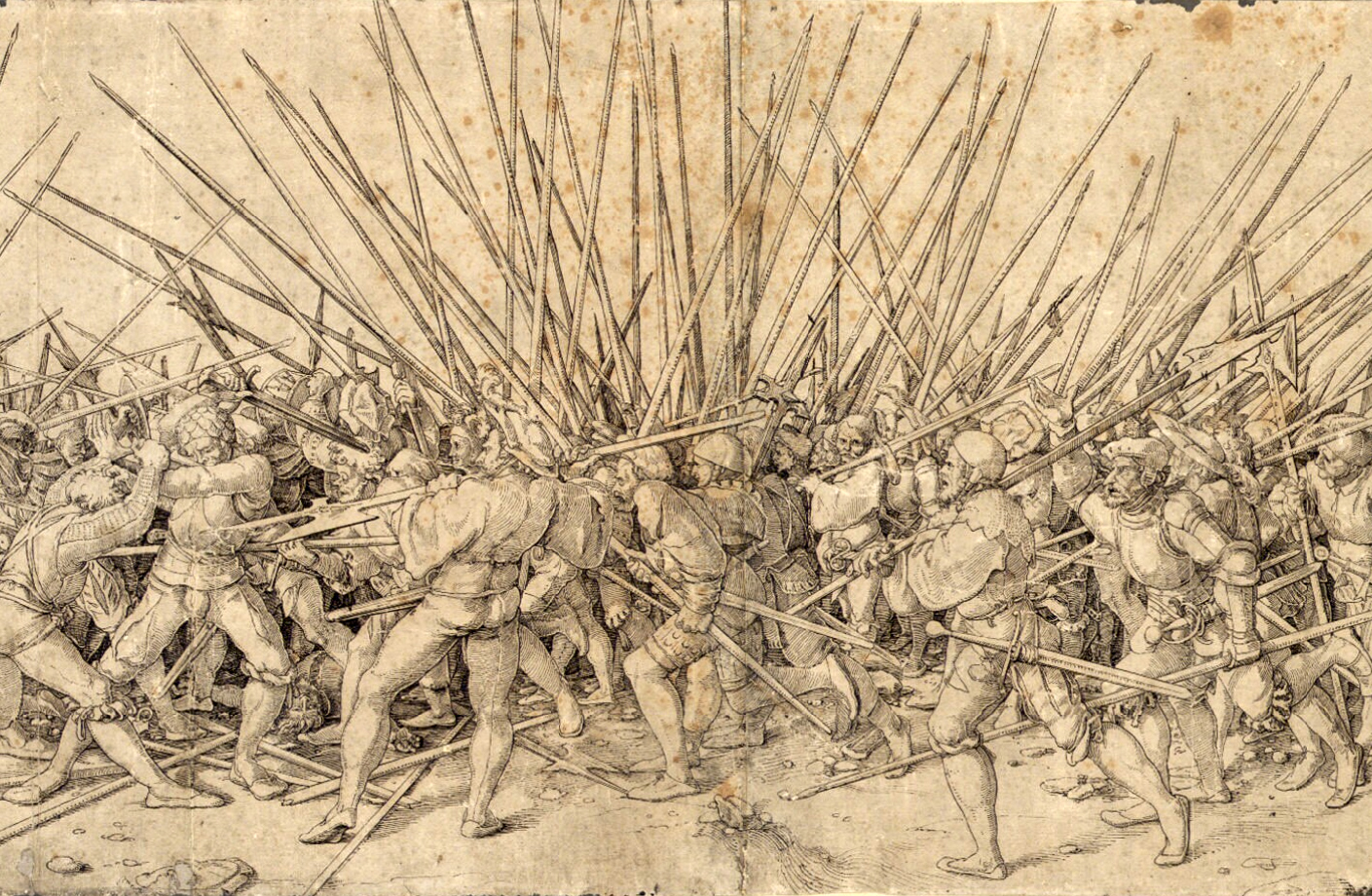
In notice in a lot imagines depicting clashing pike formations that a lot of the pike a sticking up in the air, like this one;

Image

It looks a little odd as I would imagine all the pike to be level and embedded into the opposing formation. Do pike formations cancel each other out? Does the way they defend themselves result in pike being pushed up?

How does a pikeman actually defend himself from a incoming pike?

I checked the ARMA essays but there doesn't seem to be anything on pikes. Are there any online articles or books you could recommended?

Philip

User avatar
Sal Bertucci
Posts: 591
Joined: Fri May 02, 2008 8:04 pm
Location: Denver area, CO

Postby Sal Bertucci » Sun Aug 08, 2010 10:55 am

PH Mair has a section on pike techniques.

nathan featherstone
Posts: 96
Joined: Fri May 01, 2009 2:37 pm

Postby nathan featherstone » Tue Aug 10, 2010 1:04 pm

im very interested in this two. a good place to start would be contacting the sealed knot they are an english civil war group who do a huge amount of pike stuff and would be a good starting point. there are manuals out there on it but none of them i know. as for how to defend as far as i know its more like a scrum who can push hardest wins but then again im not fully sure.
i looked at phms stuff before a good part of it would not work in group combat some would but not all.

User avatar
Greg Coffman
Posts: 156
Joined: Sat Dec 09, 2006 5:33 pm
Location: Abilene

Postby Greg Coffman » Tue Aug 10, 2010 4:23 pm

There really isn't a lot out there on this. The fechtbuks out there which include the pike, like PH Mair or J Meyer, deal with fighting with the pike in general. So just like with all the other weapons in the fechtbuks, they are not specific to group of battle fighting. Instead, you learn how to fight with the weapon, all the techniques possible and how to use the weapon in general, and then you apply that ability based upon the circumstance you find yourself in. I believe that the coverage of pike combat in the fechtbuks is intended to be fully applicable to battlefield tactics. There just wasn't a circumstance where the pike was regularly employed besides the battlefield. So yeah, what's in the manuals can and should be used for group and battlefield fighting.

That's not the same as saying that most soldiers knew how to fight or "fence" with the pike as taught in the manuals. This is normal for soldiers in the time period. Most people would not have had the opportunity to receive formal instruction in the handling of their arms of the same caliber as what we see in the fechtbuks. Most landsnkechts and reisslaufer were regular people, farmers, bakers, butchers, etc. They went off to war because they thought the money might be better than they were making at their trade or because jobs were scarce where they were. We can expect that new recruits were given some level of instruction in handling pikes, but this was probably more in the direction of drill--moving and working together as a unit--instead of fighting well. But then you would have veteran soldiers and fighters within a unit too and some of these would have attempted to pass on whatever they knew, whether formal instruction or just tried and true experience. So you have a mix of ability level in any particular company. This mix would still be on the low side in comparison to the ability distribution of a company of U.S. marines just out of boot camp.

The image posted above is from Hans Holbien. I don't think the drawing shows what a pike battle would look like exactly. Rather, it captures the reality of the chaos, mess, confusion, and brutality of the struggle. When I see it, it makes me think of the "push of pikes" quite like the Sealed Knot group does it, which is quite ahistorical. They have two pike formations come together and lock up with their pikes up in the air and then start a shoving match. Pikes were used with their points at the opponent's head and chest, not up in the air. Sealed Knot just found a way to combine reenacting with fun and physical competition. Good for them. But it is not pike fighting. Nor does any one piece of period art capture it all.

In a pike engagement, pikes would be pushing by each other, knocking opposing pikes aside and down, thrusting at opponents, and then there would be the other pole weapons, bills, halberds, dopplehanders, etc. in there chopping at pike and at each other. It would look like a mess, but the integrity of the formation would be key, just like it is in any group fighting. The formation is designed to protect each other. You protect the guys beside you and in front of you while the guys beside and behind protect you in turn. All the while the guns or crossbows would be along the flanks firing volley after volley into the opposing formations. More halberds, bills, guisarms, partizans, and maybe a few dopplehanders would protect the flanks of the formation and stop any gaps that opened up. Maintaining order, going with the flow, adapting and overcoming, and flexibility with strength, these would be the virtues of victory.

Image
Image
Image
Image
Image
Greg Coffman
Scholar-Adept
ARMA Lubbock, TX

User avatar
Tony_Indurante
Posts: 99
Joined: Wed Sep 18, 2002 11:05 pm
Location: Las Vegas, NV

Postby Tony_Indurante » Tue Aug 10, 2010 10:23 pm

I'm fairly positive that pikes were used, on occasion, for dueling. I know that diGrassi's section on pikes are for duels fought with them. I would hazard that it is very likely that other manuals covering them are describing techniques used in formal duels and not on the battlefield. I freely admit that this is conjecture, but I think the source materials will back it up.

As for how the pike was used on the battlefield, you would probably want to look in books that discuss battlefield tactics and strategies.
Anthony Indurante

User avatar
Philip Sibbering
Posts: 20
Joined: Thu Jun 11, 2009 5:46 am
Location: UK
Contact:

Postby Philip Sibbering » Wed Aug 11, 2010 4:51 am

Lets see if I have this right;: in a formation of pike, a pikeman can defend himself from his enemy's incoming pike by using his pike to either push up the enemy's pike, or drive it into the dirt. This is what they try an do as the pike come into contact but are still out of range of the body.

He does this to defend himself but also to stop the enemy's pike from driving deeper into the ranks and hitting someone behind (as would be the danger if he knocked it to one side).

Once he has dealt with the incoming pike he can launch an attack of his own?

As the pike impact or are defeated, the two formations grind to a halt and secondary weapons are drawn?

Philip

User avatar
Greg Coffman
Posts: 156
Joined: Sat Dec 09, 2006 5:33 pm
Location: Abilene

Postby Greg Coffman » Wed Aug 11, 2010 10:43 pm

Philip Sibbering wrote:Lets see if I have this right;: in a formation of pike, a pikeman can defend himself from his enemy's incoming pike by using his pike to either push up the enemy's pike, or drive it into the dirt. This is what they try an do as the pike come into contact but are still out of range of the body.

He does this to defend himself but also to stop the enemy's pike from driving deeper into the ranks and hitting someone behind (as would be the danger if he knocked it to one side).

Once he has dealt with the incoming pike he can launch an attack of his own?

As the pike impact or are defeated, the two formations grind to a halt and secondary weapons are drawn?

Philip


You can deflect incoming pikes in any direction but usually left, right, and down are the natural deflections. You do need to be careful that you don't deflect an enemy pike into one of your buddies. Your buddies on either side of you would be most at risk. If an opponent thrusts sufficiently forward to get to somebody behind you then they are probably very exposed, or the formations have gotten really close and within the points anyways.

When you deflect an attacking pike, you don't always just knock it aside. Often you will stay on the weapon just like you stay in the bind with a sword. This allows you more control over the weapon, keeping it from being brought back online to attack and controlling it from inadvertently hitting a friend. While being in the bind, you can still make attacks yourself. You only have to displace the enemy pike enough to make it miss you or your friends. And you can hold it down for a moment and hope one of your friends can capitalize on the opening you have created. Much of the time, it is easier to kill the guy standing next to the guy you are facing rather than the guy you are facing. There is quite a bit that can happen, and most all of it depends on working together.

And while you are attacking, deflecting, binding, counter-thrusting from the bind, etc. (all the things taught in the fechtbuken), the short polearms are shoring up the flanks and gaps and trying to cut over your head and knock down and maybe cut down some other pikes too.

But sometimes holes open up, the enemy successfully closes within the area the pike points threaten, your pike or other weapon gets' knocked away, your formation starts to waver or break up. That's when you draw your sword or dagger as appropriate. If the situation gets back under control, it probably behooves you to re-sheath it and find another polearm.
Greg Coffman

Scholar-Adept

ARMA Lubbock, TX

User avatar
Philip Sibbering
Posts: 20
Joined: Thu Jun 11, 2009 5:46 am
Location: UK
Contact:

Postby Philip Sibbering » Fri Aug 13, 2010 5:19 am

Thank Greg,

I have a few more questions;

S0 if you have a longer pike you'd be all for steaming in, but if you have an equal length or shorter pike you would go for the bind?

If true: then most of the time it ends up being all about the bind (as those with shorter pikes seek to bind longer pikes - even if the longer pikes are steaming in)?

You''d only take a thrusting shot when you have the upper hand - pretty much like any other combat?

Is having a longer pike a real advantage when it comes to defeating less skilled opponents as the less skilled find it harder to bind a pike - is this reason for the 'arms-race' like increase in pike length?

I assume a more skilled opponent does not care about the length of a pike as they can bind and are all for moving in (I thinking of the Landsknecht armed with Zweihänder).

Does this sum up the aims of the pikeman when engaging an enemy pike formation?

Philip

User avatar
Greg Coffman
Posts: 156
Joined: Sat Dec 09, 2006 5:33 pm
Location: Abilene

Postby Greg Coffman » Fri Aug 13, 2010 8:11 am

Pike lengths tend to fall within a standard range of about 12'-18' ft for a full length pike. Length would vary based on army, the English were known for using the longer 18' pikes, and time period. I do think pikes were longer in the 16th century than they were in the 15th. But even if you have a 12' pike and are going up against an 18' pike, that leaves quite a bit of distance between you and your opponent and you both have plenty of time to bind long before either of you get into range to hit. Obviously your opponent will be in range before you and you have to get passed his or her point before you can get into range yourself. That is pretty standard for anytime you are facing an opponent whom, through a longer weapon or longer arms, has greater range than you. But with a pike, even a shorter one, you hypothetically should be able to close with much more safety because you have longer to bind. Maybe. And the best way to gain a bind, whether you are the longer or the shorter weapon, is to attack or move forward until you prompt an attack.

Usually the pikes in opposing armies would be closer to the same length than that and the shorter staff weapons that you would face would be considerably shorter. In that case, the halberd definitely has to bind or set aside in order to close in.

But remember, whether you close in or not is based on the needs of the formation. If you are a halberd on the flank you might have to sit still and guard against repeated pike thrusts for a couple of moments until it is appropriate to charge forward and attack or until friendly pikes can come up and take your place.

Keep the questions coming. I enjoy the talking about this subject!
Greg Coffman

Scholar-Adept

ARMA Lubbock, TX

User avatar
Philip Sibbering
Posts: 20
Joined: Thu Jun 11, 2009 5:46 am
Location: UK
Contact:

Postby Philip Sibbering » Sat Aug 14, 2010 4:24 am

Thanks again.

Greg Coffman wrote:If you are a halberd on the flank you might have to sit still and guard against repeated pike thrusts for a couple of moments until it is appropriate to charge forward and attack or until friendly pikes can come up and take your place.

Wouldn't the Halbards bind and move in?

Or is this a case where less skilled combatants would have trouble - how skilled is a Halberdier?

Could you expand this a little, I find it very interesting.

Greg Coffman wrote:Keep the questions coming. I enjoy the talking about this subject!

I enjoy listening ;)

Philip

User avatar
Greg Coffman
Posts: 156
Joined: Sat Dec 09, 2006 5:33 pm
Location: Abilene

Postby Greg Coffman » Sat Aug 14, 2010 10:42 am

Wouldn't the Halbards bind and move in?


Sometimes. But the effectiveness of the pike block is about maintaining the formation. You don't want people running out whenever they feel like it. You have to fight together, as a unit. There might be some flexibility as a halberdier to engage at will since you are almost a flanker or skirmisher anyways. But there probably will be times when you just want to repel enemy attacks until your own pikes can be brought to bare.
Greg Coffman

Scholar-Adept

ARMA Lubbock, TX

User avatar
Philip Sibbering
Posts: 20
Joined: Thu Jun 11, 2009 5:46 am
Location: UK
Contact:

Postby Philip Sibbering » Fri Aug 20, 2010 12:38 am

Thanks Greg, and everyone else, you have been very helpful.

Philip

PS: Is there are translation of PH Mair?

User avatar
Greg Coffman
Posts: 156
Joined: Sat Dec 09, 2006 5:33 pm
Location: Abilene

Postby Greg Coffman » Fri Aug 20, 2010 9:04 am

Philip Sibbering wrote:PS: Is there are translation of PH Mair?


Yes there is, of the polearm section at least.
http://www.amazon.com/Polearms-Paulus-Hector-David-Knight/dp/1581606443/ref=sr_1_1?ie=UTF8&s=books&qid=1282316604&sr=8-1
Greg Coffman

Scholar-Adept

ARMA Lubbock, TX

User avatar
Philip Sibbering
Posts: 20
Joined: Thu Jun 11, 2009 5:46 am
Location: UK
Contact:

Postby Philip Sibbering » Sat Aug 21, 2010 1:35 am

Great - I've ordered a copy :D

Philip

User avatar
Benjamin Abbott
Posts: 36
Joined: Sun Nov 30, 2003 11:18 pm

Postby Benjamin Abbott » Sun Sep 12, 2010 12:36 pm

Writing at the end of the sixteenth century, Sir John Smythe gave detailed instruction for how he thought pike combat should go. He detested turning mass battle into fencing contests, instead advocating a single thrust in unison follow by close combat with swords and daggers if necessary.

Smythe wrote:But in this place I think good further to notefie vnto the Readers of these mine instructions that in the year. 1588. I heare some two or three of our Nation of principall offices and charge Militarie hold an opinion, that when two squadrons of Enemies all piquers should come to incounter and confrunt the one with the other, with thrusts and foines (as they terme it) at all the length of their Armes and piques, according to the vse of single combattes either in sport or earnest betwixt piquer and piquer. By which kinde of fighting of squadrons at the push of the pique, I say, that none of the rankes can fight but only the first ranke, because that if they obserue their proportionate distances according to order and discipline, the piques in the second rank are too short to reach with their points the first rank of their enemies squadron like standing still foining at all the length of their Armes and piques, as they vainelie imagine: Yea although to the trouble and disorder of the first ranke before them they do thrust and foine ouer their shoulders; During which time of the pushing and foyning of the two first ranke; of the two squadrons of enemies, all the rest of the rankes of both the squadrons must by such an vnskilfull kind of fighting stand still and looke on and cry aime, vntill the first ranke of each squadron hath fought their bellies full, vntill they can fight no longer: which is a very scorne and mockerie mylitarie to be either spoken or thought of by any men of warre that doo pretend to haue seene any action effectuallie performed betwixt any great numbers of piquers reduced into form of squadrons in the field. For in troth according to all reason and true experience, such a squadron as should think it their advantage to fight in that sort, must (contrarie to discipline) inlarge themselues in their ranks and distances both in frunt and by flankes, to the intent that they may haue elbow roome enough without any impediment by the nearnesse of the ranks behind them, to pull backe their armes, and to thrust at their enemies approaching them at all the length they can of their and piques, and againe with dexeritie to pull back, & retire them giue new thrusts: which opening & enlargment of ranks being perceiued by the contrarie squadron (who if they be skilfull men of warre) doe come closed in their rankes both in frunt and by flankes, as close as they can possiblie march pace with pace and step with step, as if they were one entire body, carrying their piques with both their hands breasthigh, all the points of the piques of the first rank of one evennesse & equality not any one preceeding the othere. And so likewise the points of al the piques of the second, third and fourth rankes, carrying the like equalitie and euennesse; but yet the pointes of euerie ranke of piques, shorter and further distant almost by a yard from their enemies faces, then the pointes of the ranke that doo preceed them; And all those fower ranks marching or moouing forward together pace with pace and step with step, carrying aforsaid their points full in their enemies faces, they doe altogether giue a puissant thrush, the points of the first ranke of piques, first lighting vpon the faces of the first ranke or rankes of their enemies; and the points of the second, third, and fourth rankes, subsequently in a manner all in an instant, doe all one after another in such terrible sort light vpon the faces, breasts and bodies of the formost rankes of the enemies that do stand still pushing and foining with their piques in their rankes opened and inlarged, that they neuer giue them any leysure any waies to pull backe and recouer the vse of their piques to giue any new thrustes, nor yet to close their ranks inlarged, but doo ouerthrow, disorder and breake them with as great facilitie, as if they were but a flocke of geese; as all men of right consideration and iudgement may easilie consider and see.
But after all this it may be, that some very curious and not skilfull in actions of Armes, may demand what the formost rankes of this well ordered and practised squadron before mentioned shall doo after they haue giuen their aforesaid puissant blows & thrusts with their piques incase that they doo not at the first incountry ouerthrow and breake the contrary squadron of their enemies: thervnto I say, that the foremoft rankes of the squadron hauing with the points of their piques light vppon the bare faces of the formost ranks of their enemies, or vpon their Collers, pouldrons, quirasses, tasses, of disarmed parts of their thighes; by which blowes giuen they haue either slaine, ouerthrown, or wounded those that they haue lighted vpon, or that the points of their piques lighting vppon their armours haue glanced off, and beyond them; in such fort as by the nearnes of the formost ranks of their enemies before them, they haue not space enough againe to thrust; nor that by the nearnes of their fellowes ranks next behind them, they haue any conuenient elbowe roome to pull backe their piques to giue a new thrust; by meanes whereof they haue vtterly loste the vse of their pieques, they therefore must either presentlie let them fall to the ground as vnprofitable, or else may with both their hands dart, and throw them as farre forward into & amongst the ranks of their enemies as they can, to the intent by the length of them to trouble their ranks, and presently in the twinkling of an eie or instant, must draw their short arming swordes and daggers, and giue a blow and thrust(tearmed a half reuerse, & thrust) all at, and in one time at their faces: A therewithall must presentlie in an instant, with their daggers in their left hands, thrust at the bottome of their enmeies bellies vnder the lammes of their Cuyrasses, or at any other disarmed parts.


Instructions Observations And Orders Mylitarie, 24-27


Return to “Research and Training Discussion”

Who is online

Users browsing this forum: No registered users and 41 guests


Note: ARMA - The Association for Renaissance Martial Arts and the ARMA logo are federally registered trademarks, copyright 2001. All rights reserved. No use of the ARMA name or emblem is permitted without authorization. Reproduction of material from this site without written permission of the authors is strictly prohibited. HACA and The Historical Armed Combat Association copyright 1999 by John Clements. All rights reserved. Contents of this site 1999 by ARMA.