Where do Messers fit in?

For Historical European Fighting Arts, Weaponry, & Armor

Moderators: Webmaster, Stacy Clifford

User avatar
James Brazas
Posts: 229
Joined: Mon Jul 25, 2011 2:29 pm
Location: Virginia Beach, VA

Where do Messers fit in?

Postby James Brazas » Tue Dec 13, 2011 10:15 am

From all that I've read both in the manuals and in the history books, full plate armor made a lot of weapons and techniques difficult to use or impractical. Thus you get half-swording and a big emphasis on getting sword-points, spears, daggers, etc. into the joints to kill your opponent.

Yet during this same time, you see a lot of German manuals teaching the messer - a curved single edged blade that doesn't appear particularly well-suited to thrusting into joints.

My first question is: where does the messer fit into this? Was it only to be used against lightly armored opponents? Was it a civilian weapon like the rapier that didn't see battlefield use? The former seems to make more sense to me as I imagine a messer would still be quite effective against gambesons or leather and as good as any arming sword against maille.

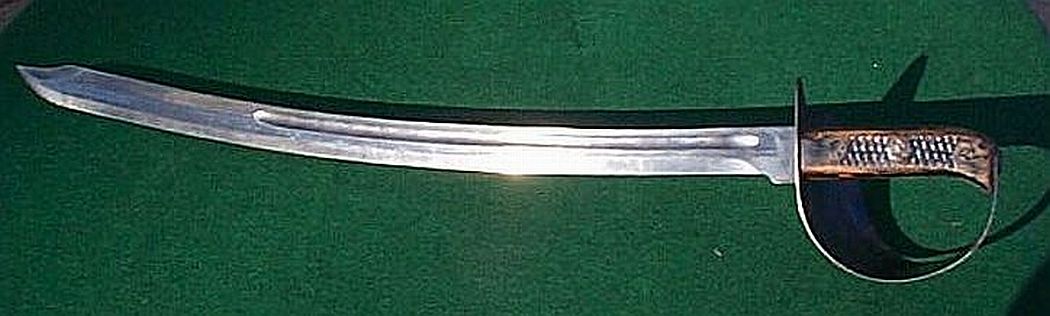
My second question is: why do we see so much material on the grosse messer, but essentially nothing on the krieg messer? Was the krieg messer that much rarer or did they just assume that you would combine what you knew of longsword and grosse messer in order to use the krieg messer?

User avatar
James Brazas
Posts: 229
Joined: Mon Jul 25, 2011 2:29 pm
Location: Virginia Beach, VA

Postby James Brazas » Tue Dec 13, 2011 6:07 pm

Oh, and here's a third question:

What is the messer's relationship to the falchion and to the saber? Was the saber an evolution of the messer?

Roger Norling
Posts: 140
Joined: Fri Nov 13, 2009 5:57 am
Location: Gothenburg, Sweden

Postby Roger Norling » Wed Dec 14, 2011 6:49 am

Here's my two cents...

Yep, the messer was a "common" weapon used by peasants and knights alike. The Falchion is a similar weapon but is the sword equivalent. Basically, the blade is the same, but the hilt is a sword hilt, not a knife grip. Btw, for those who don't know it, messer means "knife", as in "knifesmith"; "messerschmidt.

I think the Falchions became less common when plate armour becomes more common for the very reason you describe. Still a few large kriegs messers appear to have been in use on the battle field even in the 1500s. And peasants of course carry large messers at all times.

Considering this, the messer fighting probably has very old roots in traditional fencing and its use was probably more widespread than that of sword fencing. The same can be said for staff fencing and grappling which were common fun for any man.

I also think the knights often stood a substantially lower risk of permanent injury or death than we like to think. In many conflicts, the nobles were much more valued for ransom and there are instances where only 3-4 knights have died, while about 400 were caught for ransom. The foot soldiers death numbers were substantially higher though.

Basically what this means is that the tools of the knights were often used to knock the other knights silly and to kill the worthless and less armoured foot soldiers. A falchion or a messer is well suited for this and more so than thrusting weapons. But, with the plague, social societal changes and the religion wars, the war strategies changed and even the knights were killed instead of being taken for ransom. And the weapons are adapted to this. And as the risks increased, with time, the nobles move farther back from the front lines.

And yes, in a way the falchion and the messer were the precursors of the sabre. However, you need to add the dussacken in between them. They were the evolved messers and had more complex hilts. They are thereby part of that group of swords. They are also often called Sinclair hilts.

The dussacken has been theorized as being a training weapon for the German Landsknechtens Katzbalger, but I think this is wrong. The Katzbalger is a completely different weapon, with two edges, a distinct fishtail pommel that requires special gripping when striking and in some ways it is more reminiscent of the Gladius. It wouldn't surprise me if it was mostly used for thrusting.
The dussacken in its steel form was commonly used by the Swiss Reislaufer. Exactly why it is so prominent in the fencing guilds, the fechtschulen and the manuals in the 1500s is a puzzle that remains to be solved. Joachim Meÿer was of course born in Basel, which might explain his love of it, but not all of the others.
Quarterstaff instructor
Gothenburg Free Fencers Guild
http://www.gffg.se

Member of MFFG
http://www.freifechter.com

Member of HEMAC
http://www.hemac.org

HROARR
http://www.hroarr.com

Jonathan Hill
Posts: 111
Joined: Fri Sep 25, 2009 3:01 pm

Postby Jonathan Hill » Wed Dec 14, 2011 11:58 am

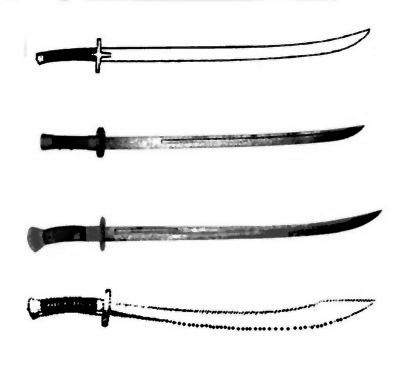
While the Sabre does seem to be the logical evolution of the Falchion, we do not see this evolution happening in Europe. When I mean evolution or lineage of the blade I am meaning what we see in the development of sword, like the Oakshot’s. We can see a Viking sword become an arming sword then a side sword, to a Rapier and eventually a small sword. We have swords that ‘transition’ between those types, but we don’t have those in Europe for the cutting weapons to the extent we have for strait blades. Ironically China has more evidence of this development with many different types of Dao, but I know very little of the Chinese blades, or their origins (which are most likely Mongolian.)

The Sabre in the current form is a descendant of the Turko-Mongolian sabre. While Western Europe was developing its strait blades the ‘east’ was developing a curved cutting sword. Many different factors go into this but the two biggest are the type of armor used and the predominance of cavalry in warfare. The curved cutting sword is a perfect weapon for light cavalry which by European definition is the main type of ‘cavalry’ used in the Middle East to the Mongolian Steppes. With the presence of chain and plate armor the cut is less effective against those who are armored, the Falchion becomes a glorified club when you strike someone wearing chain armor, so Europe focused on what worked just as everyone does. By the time Europe embraces the Sabre we see heavier armors being dropped and a primary cutting weapon becomes effective. As Eastern Europe, the Middle East and further east had already developed the Sabre at that point they basically adopted the designs used by the Turki, Moores and Mamalukes. The 1796 LC Sabre that is so popular now is basically a modification of an Austrian design. So while the Sabre may be a ‘descendant’ of the ‘Falchion,’ or similar design it was not really a European descendant of the sword. As the Falchion in shape existed in the Middle East and Asia, the development from the ‘Falchion’ to the Sabre is more likely to be seen there. There are a few designs of Dao that look to be the transition of blade design but perhaps those studying Chinese arts have a better grasp of their own blades.

User avatar
Corey Roberts
Posts: 223
Joined: Sat May 07, 2005 6:11 pm
Location: Pyeongtaek, South Korea

Postby Corey Roberts » Sat Dec 17, 2011 3:49 am

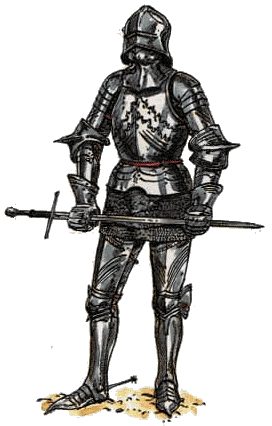
Well, anytime we consider the usage of weapons from this period, let's keep in mind that this:

Image

is roughly the equivalent to this today:

Image

How often, on a daily basis, do you see guys going around dressed like they just got off a battlefield?

Not that often. So remember, these arts have lots of applications outside of that context. There is a big civilian context as well as a military context these arts are used in. A messer is a great household or individual self-defence tool. Particularly when most of the people walking around on a typical renaissance German street are not going to be wearing full harness. Take a look at renaissance era art featuring crowd scenes, look at how many of the people are armed, even though they are not just coming off a battlefield. Packing a messer in that kind of environment is a pretty good idea in my view.
--Scholar-Adept
Pyeongtaek
Republic of Korea

User avatar
James Brazas
Posts: 229
Joined: Mon Jul 25, 2011 2:29 pm
Location: Virginia Beach, VA

Postby James Brazas » Tue Mar 06, 2012 9:22 pm

Thread resurrection:

On a related note, would the techniques for the falchion, messer, dussack, or saber differ much from one another?

I know that messers were used much differently than modern sport fencing sabers, but I wonder how different their use would be in the original eras?

User avatar
Corey Roberts
Posts: 223
Joined: Sat May 07, 2005 6:11 pm
Location: Pyeongtaek, South Korea

Postby Corey Roberts » Wed Mar 07, 2012 5:18 pm

Messer and Dussack I think are pretty much the same in technique, those who have studied it can correct me if I'm wrong. Falchion would probably be used very similarly but perhaps slightly differently as it's center of mass will be placed differently due to it's having a sword hilt rather than a knife hilt.

Later saber I haven't' studied, but I do know enough to know that real sabers were NOT used like modern sport fencing equipment, which does not handle like real weapons and provides no benefit in learning about real weapon usage. A present day sport fencing saber is manipulated mostly by the hand and fingers due to it being so light and insubstantial. I have heard it is actually bad technique in modern sport fencing saber to use too much of your arm. Try doing this with a real saber and it won't work.
--Scholar-Adept
Pyeongtaek
Republic of Korea

User avatar
James Brazas
Posts: 229
Joined: Mon Jul 25, 2011 2:29 pm
Location: Virginia Beach, VA

Postby James Brazas » Wed Mar 07, 2012 9:11 pm

That makes a lot of sense.

So what I really wonder is how much a difference there would be between messer/dussack on the one hand and battlefield sabers on the other. Would messer skills translate to saber skills?

The saber is longer and thinner, to be sure, but it would seem to me that most of it should transfer.

Of course, I've not done any work with sabers, so I wouldn't know for sure.

User avatar
Eddie Smith
Posts: 87
Joined: Fri Apr 11, 2003 9:41 pm

medieval sabres?

Postby Eddie Smith » Fri Mar 23, 2012 11:41 pm

but what of the 2 handed sabres of hand and a half grip used by the Swiss in the late middle ages and Renaissance? Also the single hand sabre attributed to Charlemagne? Wouldn't Charlemagne predate the up sweep of eastern light cavalry? and the 2 handed sabres seem to be a different lineage than the single handed ones of middle eastern and asian influence. so where do they fit in?

the Charlemagne sabre is here and two replica pics follow:
http://www.flickr.com/photos/paul_garland/669346215/
http://www.lawranceordnance.com/the_sha ... e_hilt.jpg
http://www.lawranceordnance.com/the_sha ... emagne.jpg

and some two handed sabres:
http://www.aceros-de-hispania.com/image ... -saber.JPG
http://img329.imageshack.us/img329/726/ ... berhy0.jpg
http://www.lutel.eu/files/products/11005_2.jpg
http://www.helsinki.fi/~pjojala/Swiss_S ... ssance.jpg

User avatar
James Brazas
Posts: 229
Joined: Mon Jul 25, 2011 2:29 pm
Location: Virginia Beach, VA

Postby James Brazas » Tue Mar 27, 2012 6:38 pm

Eddie,

Well, the two-handed sabres you mentioned appear to be Kriegmessers. According to everything I've read, the whole messer family is indigenous to Europe.

Regarding the sabre from Charlamagne, there are two options there.

The first is that Charlamagne got the idea of a sabre from the Middle East. He fought the Moors in Spain and he was well-respected by virtually everyone in the Middle East. They may not have always liked him, but they respected him as a wise and powerful emperor. So he had plenty of contact with the Middle East.

The second option is that maybe the sabre was developed in Europe independently. That seems less likely to me since Charlamagne's saber looks so much like the Middle Eastern blades.

Another big question we may never be able to answer is whether the Falchion was patterned after the Middle Eastern blades or whether it was developed independently. After all, it came into common use around the time of the Crusades. Yet the hilt of the Falchion is very European. So even if it was an imported idea, it was certainly adjusted to European tastes.

As for the sabres of the modern era, a big question is how much of sabre design and sabre fencing was based on earlier European single-edged curved blades (like the messer and falchion) and European complex hilts (like the sidesword and rapier) and how much was imported from the Hungarians, Turks, Mongols, and others in the East. It seems unlikely that it was purely Western, but equally unlikely that nothing of previous Western designs/techniques were incorporated.

Jonathan Hill
Posts: 111
Joined: Fri Sep 25, 2009 3:01 pm

Postby Jonathan Hill » Wed Mar 28, 2012 12:33 am

The Charlemaign ‘sabre’ is most likely a gift from a Middle Eastern Ruler. I believe some reference Harun al-Rashid of Baghdad as giving him the blade. This seems far more likely than him commissioning it himself as Joyeuse is far more accurate a blade for a Christian ruler. The existence of such a sabre in the 8-9th Century is interesting as I rarely see mention of them that early.

Europe did not develop the Sabre, period. The European sabre is a strait copy of eastern blades, adapted when using eastern mercenaries, and when fighting in the east. The sabre, just like the messer, is completely ineffective against heavy European armor, which is why you don’t see many cutting weapons in Europe where the basic chain armor defeats the cut, Falchion and Messer seem to be the only ones and based on surviving records or surviving blades, they were not the common blade for battlefield use. The Sabre is also a cavalry weapon, for use against ‘light’ armor (by Europe’s standard.) Even the Katana is a descendant of the Tachi which was the curved sword Japan adapted when starting to fight from horseback.

As to technique, most European technique is a strait adaptation of Broadsword. The English manuals are all Broadsword technique; you just ‘adjust’ them slightly depending on the strait blade or curved and basket hilt vs knuckle bow/cross guard. Broadsword is almost identical to Side Sword. I actually bring Messer work into sabre to supplement the ‘inside work.’ Grappling at the sword is pretty much abandoned by the time most Sabre manuals were written and the Messer work is perfect if you get ‘too close’ with the Sabre. The Sabre is a longer weapon thus you will not have the option to come into grips of even 'reach' your opponent to grab or use the left hand if you cut at the optimum cutting range. Cutlass also used Broadsword technique but Messer would be far more appropriate IMO.

Technique does change as you move east, India uses different technique with the Tulwar (the Indian version) than Europe used, for example they rarely thrust and do spend more time in ‘grappling distance’ as is apparent by them spending much time learning and practicing a draw cut, which only really has uses in close. They also most sensibly use a buckler with the Tulwar vs most Broadsword/Sabre work is done single handed using ‘fencing’ footwork. I have not seen much Middle eastern technique, but moving further east, the Shashka work I’ve seen is also different and would trace along different lines.

As to the Falchion, I personally believe they were ‘imported’ but I’ll agree we may never really know that one. Hilts for blades come and go easily. When England occupied India, it was common for the Indian swordsmen to re-mount English blades on their preferred hilts. They liked the blades fine they just didn’t like the grip and guard or the scabbard, so they threw the English versions away and made their own to suite their desires. This makes far too much sense to be an isolated occurrence.
Last edited by Jonathan Hill on Wed Mar 28, 2012 12:50 am, edited 3 times in total.

User avatar
James Brazas
Posts: 229
Joined: Mon Jul 25, 2011 2:29 pm
Location: Virginia Beach, VA

Postby James Brazas » Thu Mar 29, 2012 1:08 pm

Interesting. So for European sabres, it's essentially an Eastern blade used with Western techniques (sidesword/broadsword mixed with messer).

Would the hilt at least be European? I don't recall seeing any non-European blades with complex hilts.

Regarding Charlamagne's sabre, that makes a lot of sense. The entire design looked very Middle Eastern, so it would make sense for it to be a present from a Middle Eastern ruler.

Jonathan Hill
Posts: 111
Joined: Fri Sep 25, 2009 3:01 pm

Postby Jonathan Hill » Thu Mar 29, 2012 2:39 pm

These are just ‘typical’ naturally curvature and heft of blade varies.

Kilij (Turk)- http://medieval2.heavengames.com/m2tw/h ... ection.jpg
Shamshir (Persian) - http://www.russianswords.com/shamshir-jn3.JPG
Tulwar (India) - http://www.georgekidner.co.uk/auctionIm ... ge/151.jpg
Pulwar (Pashtun)- http://www.swordsantiqueweapons.com/images/s626.jpg
Szabla (Poland) - http://szabla.e.pl/bw_b_1.jpg
Shashka (Baltics) - http://www.russianswords.com/shashka-raz2.JPG
Dao (Mongol-China) - http://kungfu.chinese.cn/en/image/attac ... cde428.jpg
More Dao - http://3.bp.blogspot.com/-AHAByl7AGzE/T ... dao_02.jpg
Tachi (Japan)- http://cdn102.iofferphoto.com/img/item/ ... 103706.jpg


These are a very small subset of the shapes they came in but take the hilt off and…

1796 Sabre - http://media.photobucket.com/image/1796 ... Cav001.jpg
1860 - http://www.joewernerlodge553.org/MyImag ... 0sabre.jpg
The most ‘complex’ they got was the 1860 design, before going to more of a cup hilt like the later mostly ‘dueling’ blades. As I like to say ‘England put brass nucks on the sword.’


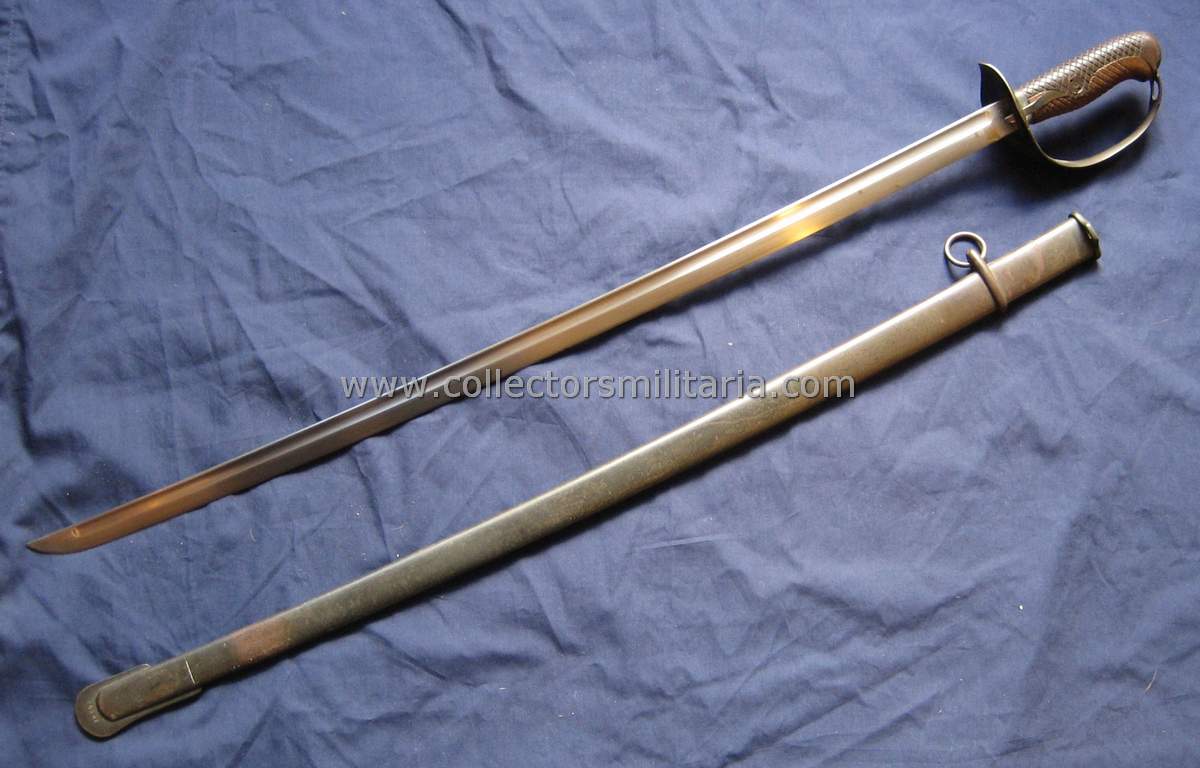
Interestingly when Japan ‘westernized’ they adapted the Sabre for a while and this is what came out of it - http://collectorsmilitaria.com/img/1206 ... G_3926.jpg
They went back to the Katana…

Now there is no historical teaching for Sabre that bring in Messer work, that’s just me it makes too much sense to me not to use it, so I do. It is not documented historically. Also I would say Broadsword technique is the natural ‘evolution’ of Side sword from a few hundred years in the future. It ‘evolved’ over time and place.

User avatar
Eddie Smith
Posts: 87
Joined: Fri Apr 11, 2003 9:41 pm

broad sword?

Postby Eddie Smith » Sun Apr 22, 2012 8:11 pm


Ian Mac Pharlaine
Posts: 37
Joined: Mon Sep 27, 2010 11:10 am
Location: Montgomery, Alabama
Contact:

Postby Ian Mac Pharlaine » Sat Jun 02, 2012 3:01 am

Roger, from what I have read about pike warfare, the idea of a thrusting katzbalger isnt all that farfetched given that it was a last resort weapon used once the formations got packed in very tightly and there was no room for pikes and longswords to be swung around.


Return to “Research and Training Discussion”

Who is online

Users browsing this forum: No registered users and 27 guests


Note: ARMA - The Association for Renaissance Martial Arts and the ARMA logo are federally registered trademarks, copyright 2001. All rights reserved. No use of the ARMA name or emblem is permitted without authorization. Reproduction of material from this site without written permission of the authors is strictly prohibited. HACA and The Historical Armed Combat Association copyright 1999 by John Clements. All rights reserved. Contents of this site 1999 by ARMA.